
TL;DR:
- Weekly pet yard upkeep combines routine waste removal with tailored lawn care to prevent damage and pollution. Consistent cleaning, proper fertilization, and designated pet zones help maintain a healthy, pet-friendly lawn while protecting waterways. Professional services like The Poopinator simplify weekly waste removal, saving time and ensuring yard health.
Weekly yard upkeep with pets is the practice of combining routine pet waste removal with tailored lawn care to keep your outdoor space clean, safe, and healthy. Pet owners who skip this routine deal with brown patches, bacterial runoff, and yards that smell bad by mid-week. The EPA classifies pet waste as a pollutant that carries bacteria and excess nutrients into storm drains when left on the lawn. The Poopinator, a professional pet waste removal service with over 20 years of combined experience, sees this problem in yards across the country every week. A consistent routine fixes it.
What are the essential weekly pet waste management practices?
Prompt waste removal is the single most effective step in weekly pet yard care. Pet waste left on the lawn washes bacteria and nitrogen into local waterways during rain events. Removing it at least once a week cuts that environmental risk significantly.
Follow these steps every week to stay ahead of the problem:
- Pick up solid waste at least twice a week. High-activity yards with multiple dogs may need daily scooping. Use a dedicated scooper and sealed bags to keep the process hygienic.
- Bag and bin waste properly. Place bagged waste in a lidded outdoor trash bin. Leaving bags on the ground defeats the purpose of picking up in the first place.
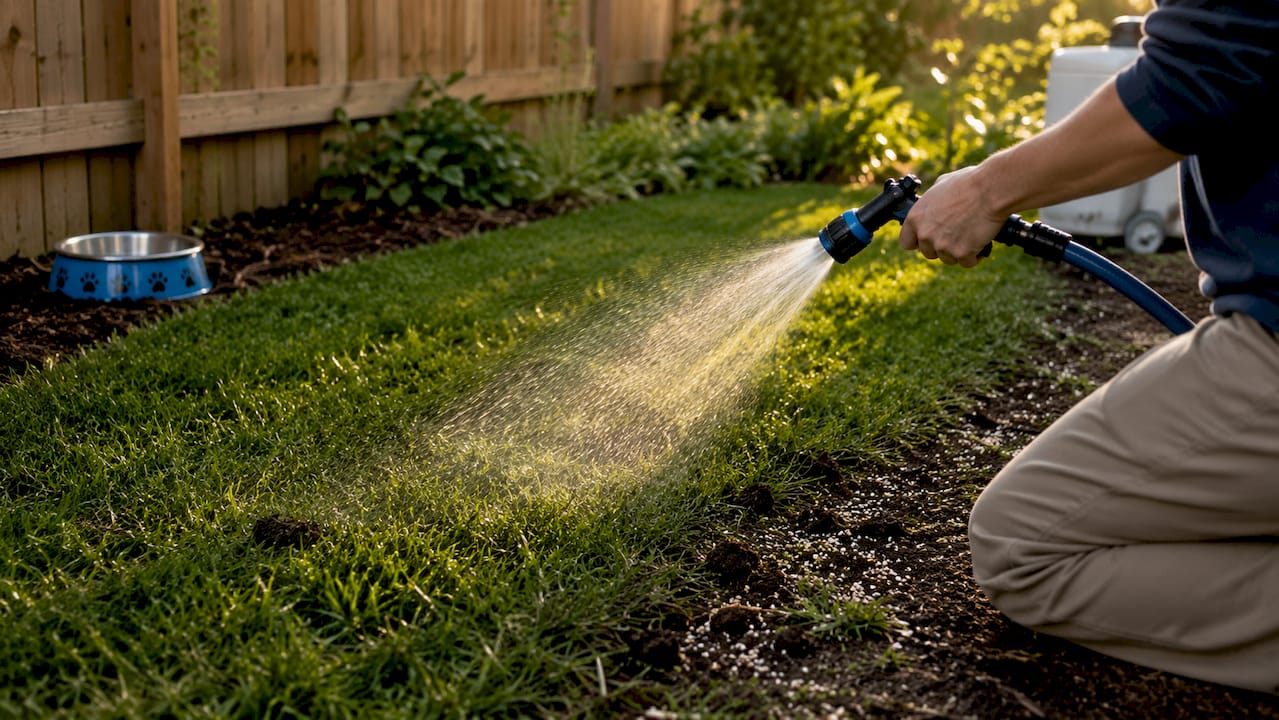
- Rinse urine spots immediately. Flushing urine spots with a garden hose right after your dog goes dilutes the nitrogen concentration and prevents the brown patches that show up days later.
- Designate a bathroom zone. Directing your dog to one corner of the yard concentrates the damage and makes cleanup faster every single week.
- Wear gloves and use a long-handled scooper. This protects you from bacteria and speeds up the process enough that it stops feeling like a chore.
Pro Tip: Keep your scooper, bags, and gloves in a small bucket near the back door. When everything is within arm’s reach, you actually do it.
Skipping even one week creates a backlog that takes far longer to address. Consistent pet waste cleanup habits are the foundation of every other lawn care effort.
How to maintain lawn health with pets
Lawn care with dogs requires a different approach than standard turf management. Pets compact soil, burn grass with urine, and wear down high-traffic paths. The good news is that a few targeted adjustments keep your lawn recovering faster than it gets damaged.
Mowing height and grass selection
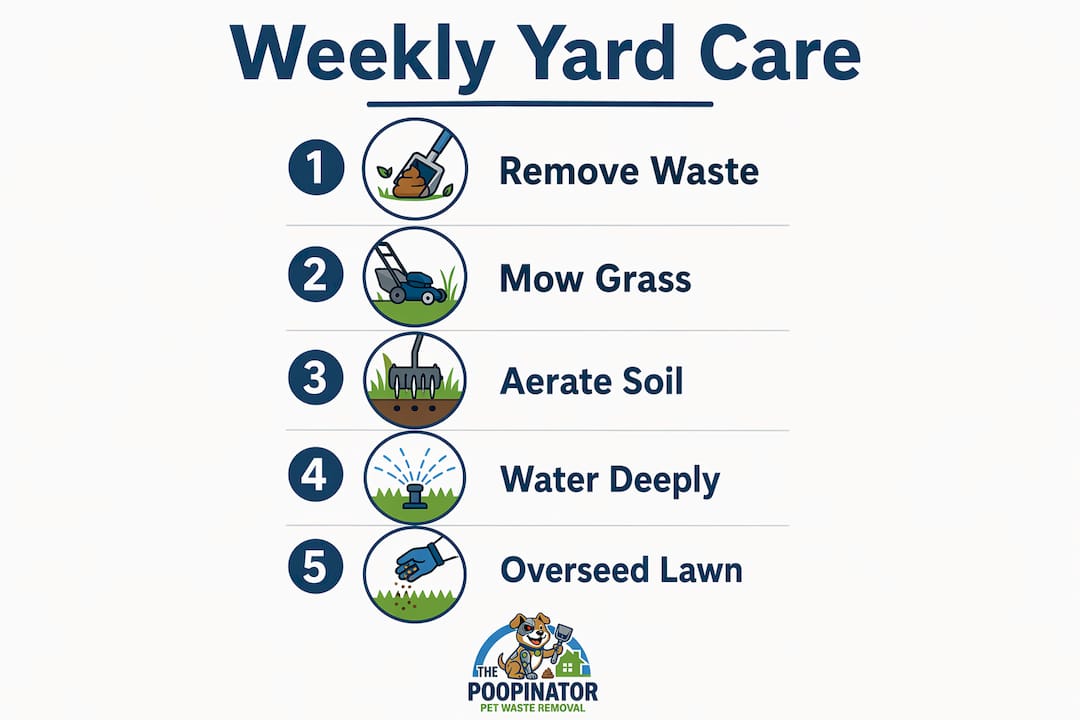
Mowing grass to 3–4 inches shades the root zone and retains soil moisture, which helps turf bounce back from urine damage. Shorter grass dries out faster and shows yellow patches sooner. Bermuda grass and Tall Fescue are both damage-resistant varieties that handle pet traffic better than fine fescues or Kentucky bluegrass.
Aeration and overseeding
Annual aeration breaks up the compacted soil that pet foot traffic creates over months. Compacted soil blocks water and nutrients from reaching roots, which weakens the turf and makes it more vulnerable to urine burn. After aerating, overseed bare or thin patches with a pet-safe seed mix suited to your climate.
Watering routine
Deep, infrequent watering encourages roots to grow downward rather than staying shallow and fragile. Morning watering is best. It gives the lawn time to dry before your dog goes out, which reduces mud and limits bacterial growth on wet grass.
Here is a quick reference for the core lawn care practices that support a pet-friendly yard:
| Practice | Recommended standard | Why it matters for pet owners |
|---|---|---|
| Mowing height | 3–4 inches | Protects roots and reduces urine damage visibility |
| Aeration | Once per year | Relieves compaction from pet foot traffic |
| Watering schedule | Deep, infrequent, morning | Reduces mud, disease, and nitrogen concentration |
| Overseeding | After aeration, as needed | Fills bare patches before weeds take hold |
| Grass variety | Bermuda or Tall Fescue | Handles wear and urine better than delicate varieties |
Scheduling and using pet-safe lawn treatments
Timing lawn treatments correctly protects your pets and makes the treatments work better. A product applied while your dog is running through it gets tracked inside and loses effectiveness outdoors. Scheduling is the part most pet owners overlook.
- Choose fertilizers labeled pet-safe. Organic options like seaweed or kelp-based fertilizers reduce chemical exposure risk and support soil health without synthetic compounds that irritate paws.
- Apply treatments on days when pets stay indoors. Pick a morning when you can keep your dog inside for the full re-entry period.
- Follow re-entry guidelines without shortcuts. Re-entry periods range from a few hours to a full day depending on the product. Letting pets back on the lawn too early exposes them to concentrated chemicals and reduces treatment effectiveness.
- Mow before treating, not after. Mowing after a treatment removes product from the grass blades. Always check the yard for toys, bones, and debris before starting the mower.
- Clear leaves and branches weekly. Regular debris removal reduces tick and flea habitat, which protects both your lawn and your pets from pest pressure.
Pro Tip: Build a simple yard care calendar with treatment dates marked in advance. Block out the re-entry window on the same day so you never forget to keep your dog inside.
Pet-safe landscaping ideas go beyond plant selection. The schedule you keep matters as much as the products you choose.
How do designated pet areas improve weekly yard upkeep?
Reducing the size of your pet’s “mess zone” is the most efficient change you can make to your weekly routine. Training pets to use a designated area concentrates waste in one spot, protects the rest of your lawn, and cuts cleanup time in half.
Setting up a designated pet zone works best with these elements:
- Surface material. Pea gravel, decomposed granite, or wood chip mulch all drain well and are easy to rinse. Avoid rubber mulch, which retains heat and can burn paws in summer.
- Clear boundaries. A low fence, garden edging, or a simple row of pavers gives your dog a visual cue about where the zone starts and ends.
- Consistent training. Walk your dog to the zone on a leash every time until the habit is established. Most dogs learn the routine within two to three weeks.
- Easy access for cleanup. Place the zone near a hose bib or water source so you can rinse it down immediately after use.
- Size. A zone that is too small gets saturated quickly. Aim for at least 6 feet by 6 feet for a single medium-sized dog.
A well-designed pet zone protects your main lawn from concentrated wear and makes your weekly yard cleanup faster and more predictable every single week.
Common mistakes in yard upkeep with pets
Most lawn problems in pet-friendly yards trace back to a small set of repeated errors. Recognizing them is the first step to fixing them.
- Skipping the urine rinse. Urine nitrogen burns grass within 24–48 hours of contact. Waiting until your weekly cleanup to address it is too late. Rinse spots the same day they happen.
- Using non-pet-safe chemicals. Conventional herbicides and pesticides can irritate paws, eyes, and respiratory systems. Always check the label before applying anything to a yard where pets spend time.
- Ignoring re-entry times. Letting your dog back on a treated lawn before the waiting period ends exposes them to concentrated product and reduces the treatment’s effectiveness on the grass.
- Skipping annual aeration. Compacted soil from pet traffic is invisible until your lawn starts thinning. Aeration prevents that decline before it becomes visible.
- Letting waste accumulate. Unmanaged pet waste creates runoff contamination risks, attracts flies, and produces odors that spread to neighboring properties. Weekly removal is the minimum standard.
- No designated bathroom zone. Without a defined area, waste and urine damage spread across the entire lawn, making every maintenance task harder.
Each of these mistakes has a straightforward fix. The pattern is always the same: consistent small actions prevent large, expensive problems.
Key takeaways
Consistent weekly pet yard care, built around prompt waste removal, pet-safe treatments, and a designated bathroom zone, is the most effective way to maintain a healthy lawn with active pets.
| Point | Details |
|---|---|
| Remove waste weekly at minimum | Prompt removal prevents bacterial runoff and keeps your lawn free of nitrogen buildup. |
| Rinse urine spots the same day | Immediate flushing with a hose stops brown patches before they form. |
| Mow at 3–4 inches | Taller grass protects roots and helps turf recover from pet traffic and urine damage. |
| Follow re-entry guidelines | Keep pets indoors after lawn treatments until the waiting period ends to protect them and the treatment. |
| Create a designated pet zone | Training your dog to use one area concentrates damage and cuts weekly cleanup time significantly. |
What I’ve learned after years of watching yards fail
The pet owners who struggle most with yard maintenance are not lazy. They are inconsistent. They do a big cleanup once a month instead of small tasks every week, and by the time they get outside, the damage is already done and the smell has already traveled.
The single habit that changes everything is the urine rinse. Most pet owners do not know that nitrogen burn sets in within a day or two of contact. By the time you see the yellow patch, the grass is already dead in that spot. Rinsing immediately after your dog goes out takes 30 seconds and saves you from reseeding that patch in six weeks.
Designated pet zones get dismissed as too much work to set up. In practice, a bag of pea gravel and an afternoon of training pays back in hours of saved cleanup time over the course of a year. The math is obvious once you do it.
Professional help is not a sign that you have given up on your yard. It is a sign that you understand your time. Services like The Poopinator handle the part of yard upkeep that most pet owners dread most, which frees you to focus on the lawn care tasks that actually require your attention.
— William
The Poopinator makes weekly yard care easier
Keeping up with pet waste removal every week is the hardest part of maintaining a clean yard with dogs. Life gets busy, and that task is the first one to slip.
The Poopinator offers bi-weekly and twice-weekly professional waste removal plans designed for exactly this situation. With over 20 years of combined experience and hundreds of five-star reviews, The Poopinator handles the cleanup on a reliable schedule so your lawn stays clean between your own maintenance sessions. Eco-friendly disposal methods mean the service is good for your yard and your neighborhood. Check service areas near you to see if The Poopinator covers your location.
FAQ
How often should I remove pet waste from my yard?
Remove solid pet waste at least twice a week, and daily in high-traffic yards with multiple dogs. The EPA classifies pet waste as a non-point source pollutant, so frequent removal also protects local waterways.
What grass types hold up best with dogs?
Bermuda grass and Tall Fescue are the most durable options for yards with active dogs. Both varieties handle foot traffic and urine exposure better than finer grass types.
How do I stop dog urine from killing my grass?
Rinse urine spots with a garden hose immediately after your dog goes out. Diluting the nitrogen concentration on the same day prevents the brown patches that appear 24–48 hours later.
Are organic fertilizers safer for pets?
Yes. Organic fertilizers like seaweed or kelp-based products carry lower chemical exposure risk than synthetic options. Still follow re-entry guidelines and keep pets off treated areas for 24–48 hours after application.
What is the easiest way to reduce yard damage from pets?
Train your dog to use a designated bathroom zone surfaced with pea gravel or wood chip mulch. Concentrating waste in one area protects the rest of your lawn and makes weekly cleanup faster and more manageable.