TL;DR:
- Unmanaged dog waste contains billions of bacteria and harmful parasites that contaminate soil and waterways, posing health and environmental risks. Neighbors primarily complain about odor, visual mess, and property damage caused by inconsistent waste management practices. Regular, responsible cleanup and community support infrastructure are essential to reducing pet waste complaints effectively.
A single gram of dog waste contains up to 23 million fecal coliform bacteria. Most dog owners have no idea that what gets left on a lawn or sidewalk is quietly generating real health hazards, damaging property, and frustrating neighbors. Understanding why unmanaged pet waste causes complaints is the first step toward being a responsible dog owner in your community. This article breaks down the science, the social friction, and the practical habits that separate owners who create problems from those who prevent them.
Table of Contents
- Key Takeaways
- Health and environmental impacts of unmanaged pet waste
- Why unmanaged pet waste causes complaints beyond health concerns
- Common mistakes dog owners make with pet waste
- Best practices to reduce pet waste complaints
- My take on the one change that actually matters
- Keep your yard clean and your neighbors happy
- FAQ
Key Takeaways
| Point | Details |
|---|---|
| Pet waste is a health hazard | Dog feces contains pathogens and bacteria that persist in soil and water for months, posing risks to people and pets. |
| Complaints go beyond smell | Neighbor disputes stem from property damage, contaminated water, and repeated visual nuisance in shared spaces. |
| Common disposal mistakes backfire | Bagging and abandoning waste or skipping cleanups makes problems worse, not better. |
| Consistent removal is the fix | Regular, thorough waste pickup prevents buildup, bacteria spread, and the complaints that follow. |
| Community tools help everyone | Waste bag dispensers, collection programs, and professional services reduce complaints more than fines ever will. |
Health and environmental impacts of unmanaged pet waste
Most people think of pet waste as a nuisance. It’s actually a recognized pollutant. The EPA classifies pet waste as a nonpoint source pollutant on the same level as oil, chemicals, and herbicides. That framing matters because it changes how you think about what gets left behind on a walk.
The bacteria problem is bigger than you think
Dog waste carries nearly double the fecal coliform bacteria of human waste. These bacteria do not disappear when waste dries out or gets rained on. They leach into the soil and travel directly into storm drains, streams, and local water sources. In some urban areas, 20% of waterway contamination traces directly to dog waste.
Beyond bacteria, dog feces commonly contains roundworms, hookworms, giardia, parvovirus, and salmonella. These organisms can survive in soil for months, sometimes years. Children playing in yards or parks are especially vulnerable because they frequently touch the ground and then their faces. Anyone with a compromised immune system faces real risk from contact with contaminated soil or grass.
Did you know? Roundworm eggs in dog waste can remain infectious in the soil for up to four years. Rain and foot traffic spread them far beyond the original deposit.
How waste reaches your waterways
When rain falls on a yard or sidewalk where waste has been left, it picks up bacteria and parasites and carries them through storm drains. Unlike sewage systems, most storm drains flow directly into local waterways without any treatment. That means a pile left on a lawn during Tuesday’s dry weather becomes a water quality problem by Thursday’s rain.
Unmanaged pet waste also attracts flies and rodents. Both spread bacteria further across the neighborhood. The waste does not stay put. It moves, and it multiplies the number of surfaces that become contaminated.
Why unmanaged pet waste causes complaints beyond health concerns
The health risks are real but largely invisible to neighbors. What drives community complaints pet waste generates is much more immediate. It is what people see, smell, and step in.
The smell, the sight, and the damage
Odor is the most frequent trigger for neighbor complaints. Waste left on lawns or near property lines creates an unpleasant environment for everyone nearby, especially during warm months when heat accelerates decomposition. Dog waste damages grass due to its acidic and high-nitrogen content, leaving yellow and brown dead patches that require reseeding to fix. When that happens on a shared lawn, near a building entrance, or in a park, the frustration is immediate and understandable.
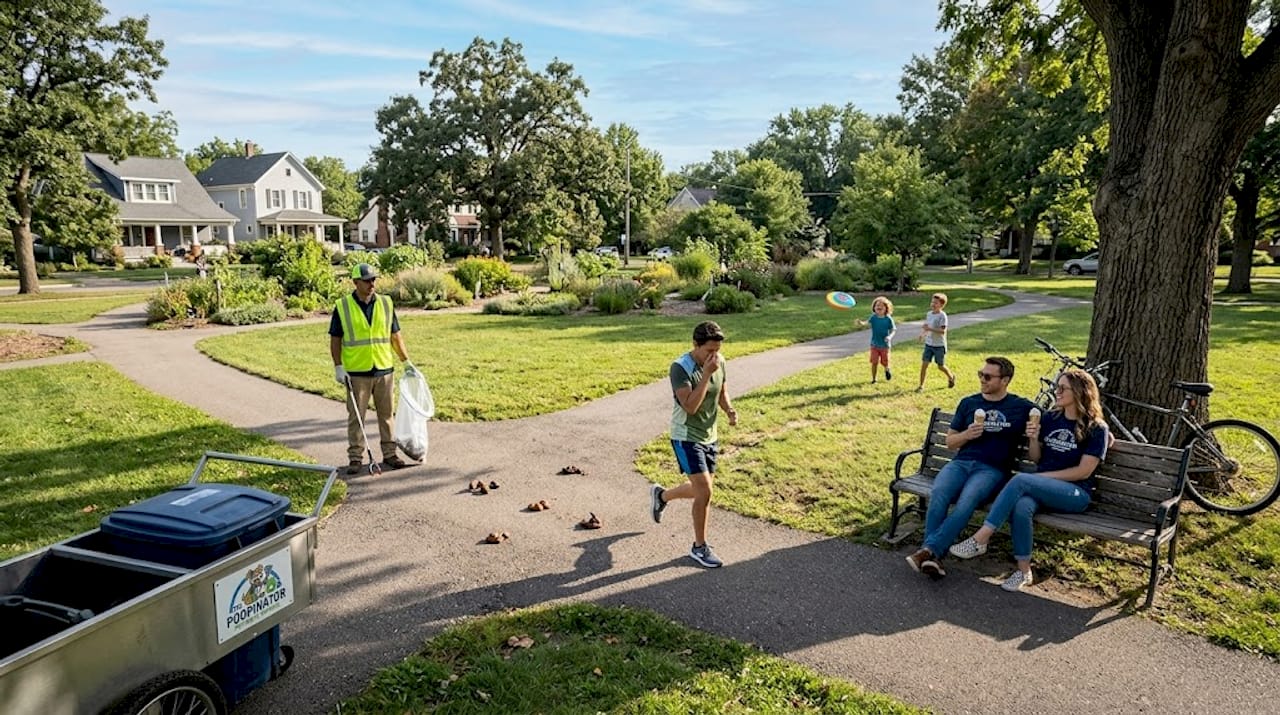
Visual nuisance in public spaces drives the same reaction. Parks and sidewalks with visible waste send a clear message to residents: someone does not care. That perception erodes community morale faster than most people realize.
The social friction that follows
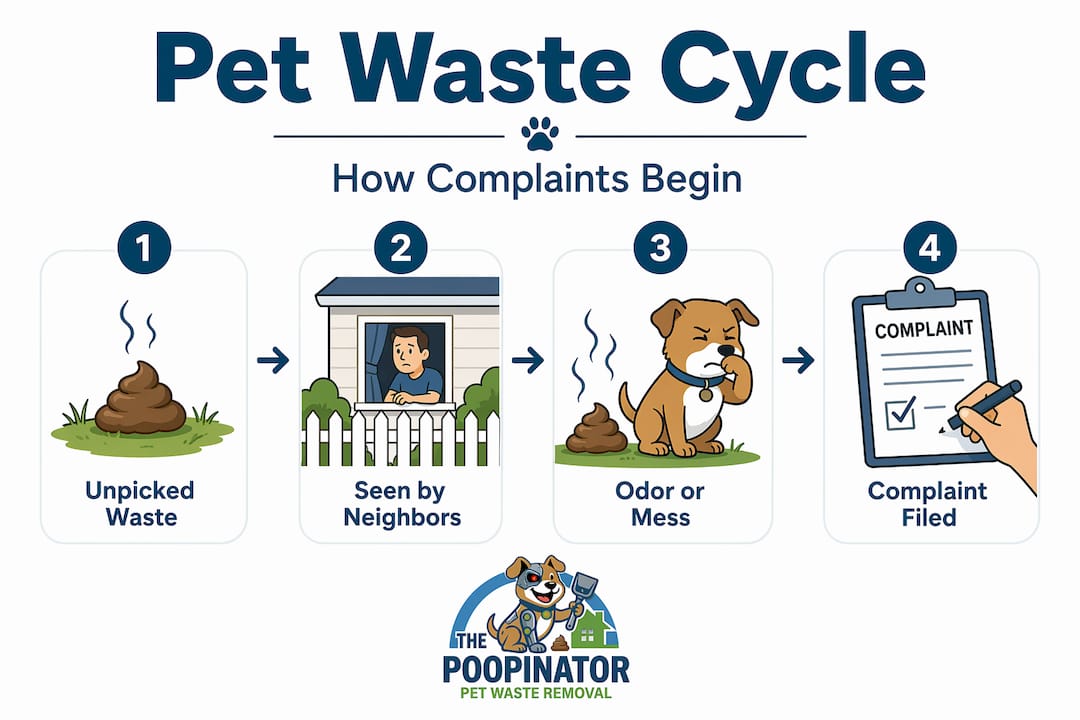
Repeated incidents become personal. What starts as a neighbor spotting waste on the sidewalk becomes a formal complaint when it keeps happening. In New York City alone, 821 complaints were filed in just the first two months of 2026, a 35.8% increase from the previous year. That is not a minor irritation. That is a documented, escalating community problem.
Many owners genuinely do not know the impact they are creating. Lack of awareness on health and environmental impact is consistently cited as the primary barrier to resolving pet waste complaints. Ignorance does not prevent the damage, but it does explain why education matters more than punishment in most cases.
Here is what drives the pattern of repeated complaints:
- The same high-traffic spots get used repeatedly without cleanup.
- Neighbors observe the pattern and lose patience before reporting it.
- A single formal complaint rarely stops behavior without awareness or accountability.
- Once a location is known for waste issues, it becomes a magnet for others doing the same.
Pro Tip: If you know your dog uses a specific corner of your yard or a regular spot on your walk, mark it mentally and clean it up immediately. Consistency is the only thing that actually prevents accumulation.
Common mistakes dog owners make with pet waste
Understanding unmanaged pet waste problems starts with recognizing what counts as mismanagement. Many owners who consider themselves responsible are still making mistakes that fuel neighborhood complaints.
The bagged waste trap
Picking up waste and placing it in a bag is half the job. Leaving that bag on a trail, in bushes, or on a curb is not completion. It is a different kind of hazard. Bagged waste left in the environment prevents natural decomposition while the waste inside continues to harbor dangerous pathogens for months. The plastic does not make it safe. It just makes it last longer.
The other common error is treating dog waste as fertilizer. This is a misconception worth putting to rest directly. Dog waste is not compost and should never be applied to soil. Its chemistry differs significantly from livestock manure, and its pathogen content makes it hazardous in any gardening context.
| Mistake | What it actually does |
|---|---|
| Bagging waste and leaving it in bushes | Prolongs pathogen survival; creates long-term biohazard |
| Leaving waste on the lawn | Kills grass, acidifies soil, attracts flies and rodents |
| Skipping cleanups for weeks | Causes dangerous buildup and compounds the cleanup problem |
| Believing waste is natural fertilizer | Spreads parasites and bacteria into soil and water |
The mowing problem nobody talks about
Mowing a lawn with pet waste present spreads bacteria and parasites across a much larger area in seconds. It also damages mower blades and coats the equipment with pathogens. Most people do not connect the two events. They mow, then wonder why the lawn smells or why the kids are getting sick. Regular waste removal before mowing is not optional. It is the baseline.
Pro Tip: Before any lawn maintenance, do a full yard check for waste. What takes two minutes before mowing prevents a bacterial spread that could affect every barefoot step taken on that grass for weeks.
Best practices to reduce pet waste complaints
Solving pet waste management issues does not require perfect behavior from every dog owner in your neighborhood. It requires consistent habits from enough of them to shift the baseline.
Here are the habits that actually move the needle:
- Pick up immediately and every time. Carry bags on every single walk. No exceptions. Delaying pickup means the waste dries, spreads, and gets harder to contain.
- Dispose of waste in designated bins or your household trash. Never leave bags on the street, trail, or near someone’s property. A bagged deposit left in the wrong place is worse optics than no bag at all.
- Set a cleanup schedule for your yard. At minimum, once a week. Twice a week for multiple dogs or high-use areas. Inconsistent cleanup leads to buildup that generates both complaints and significantly harder removal tasks.
- Support community waste infrastructure. Advocate for waste bag dispenser stations in your local park or HOA common area. Waste stations and community outreach consistently outperform enforcement-only approaches in reducing complaint rates.
- Talk to other dog owners. Normalized behavior in a neighborhood spreads both ways. Responsible habits are contagious when enough people model them.
| Practice | Impact on complaints |
|---|---|
| Immediate pickup on walks | Eliminates most public space complaints directly |
| Weekly yard cleanup | Prevents buildup that triggers neighbor reports |
| Proper bag disposal in trash bins | Removes visual and health hazards completely |
| Community bag dispenser access | Reduces missed pickups due to lack of supplies |
| Professional service use | Ensures no gaps in cleanup schedule regardless of owner availability |
Cities that have shifted from fines to infrastructure and education over enforcement consistently see better outcomes. Catching someone in the act is rare. Creating an environment where cleanup is easy and expected is not.
My take on the one change that actually matters
I have seen neighborhoods where the complaint boards are full of dog waste reports, and I have seen neighborhoods where this is essentially a non-issue. The difference is never about fines or ordinances. It is about whether responsible behavior has become the visible norm.
Here is what I have learned from working with hundreds of dog owners: most people who leave waste behind are not malicious. They are inconsistent. They forget a bag one day, feel embarrassed, and walk on. They mean to clean the yard and do not get to it for two weeks. Intention does not protect anyone from the consequences of accumulated waste.
What I consistently tell dog owners is this: the single biggest change you can make is to treat waste removal as non-negotiable, not as a chore you fit in when it is convenient. The moment it becomes as automatic as feeding your dog, the complaints stop. The grass recovers. Your neighbors notice, even if they do not say anything.
I have also found that people underestimate how much one proactive owner in a neighborhood can shift the culture. When you are visibly responsible, consistently, it sets a standard. Others follow. The problem does not have to be a community-wide initiative to start shrinking. It starts with you.
— William
Keep your yard clean and your neighbors happy
Staying on top of pet waste is easier when you have professional support behind you. The Poopinator has helped hundreds of dog owners across Indiana and Florida maintain genuinely clean yards without making it a daily source of stress.
Whether you are managing one dog or three, The Poopinator’s service plans are built around your yard’s actual needs. Bi-weekly and twice-weekly cleanups mean waste never builds up long enough to create health hazards or generate complaints. If you are in the area, pet waste removal in Westfield gives you a professional, eco-conscious option backed by over 20 years of experience. You can also explore what a poop scooper visit includes to see exactly what you get before committing. A clean yard is not complicated when the right people are handling it.
FAQ
Why does pet waste cause so many neighbor complaints?
Pet waste triggers complaints because of odor, visible mess, property damage, and health concerns. When waste accumulates in shared or visible spaces, it becomes a repeated source of frustration that neighbors report formally.
Is dog waste actually bad for the environment?
Yes. Dog waste contains pathogens and bacteria that contaminate soil and waterways, and the EPA classifies it as a nonpoint source pollutant equal to oil and chemicals in its potential to harm water quality.
How often should I clean up pet waste from my yard?
At minimum, once per week for a single dog. Twice per week for high-activity yards or multiple dogs. Waiting longer allows buildup that worsens complaints and makes eventual cleanup significantly harder.
Does picking up waste in a bag solve the problem completely?
Only if you dispose of the bag properly in a trash or designated waste bin. Bagged waste left on trails, in bushes, or on curbs still harbors pathogens for months and contributes to the same complaint cycle as uncollected waste.
Can dog waste really contaminate water near my home?
Yes. Rain carries bacteria and parasites from unmanaged waste through storm drains directly into local waterways without treatment. Studies show dog waste accounts for up to 20% of bacterial contamination in some urban water sources.
Recommended
- Dog Waste Problems in Westfield, IN? Here’s the Pooper Scooper Service That Actually Works – The Poopinator – Professional Pooper Scooper and Pet Waste Removal Service
- Why Dog Waste Ruins Outdoor Events for Planners
- Home – The Poopinator – Professional Pooper Scooper and Pet Waste Removal Service
- What to Expect From a Pet Waste Service