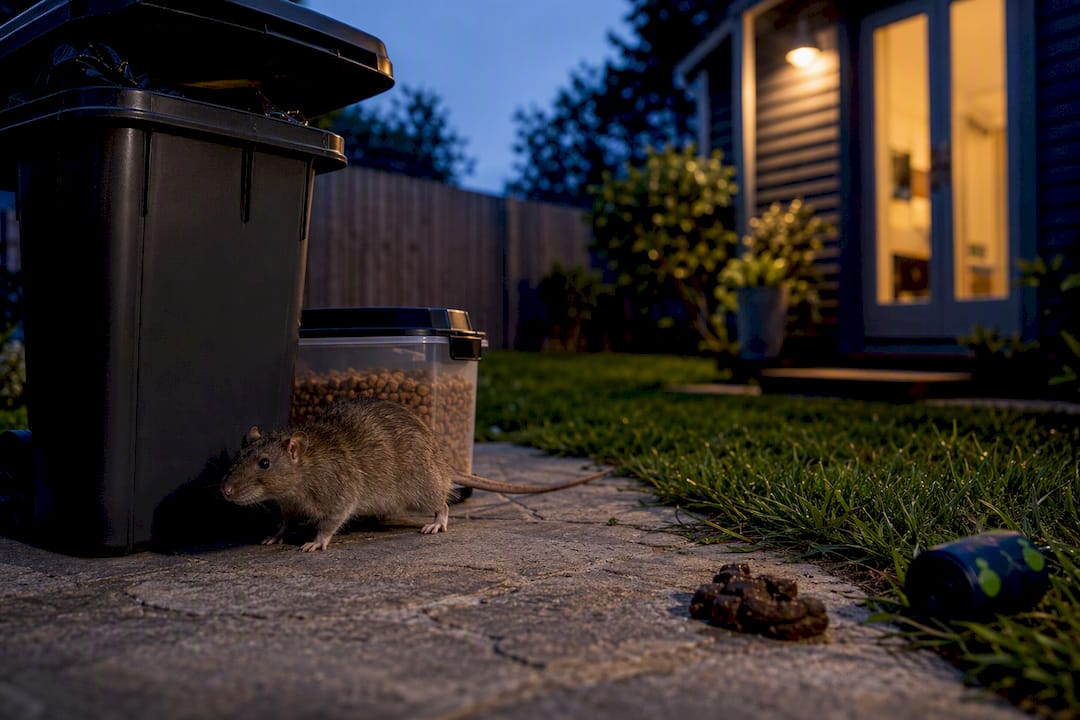
Dog poop alone rarely draws rats to a yard. A single fresh pile isn’t a meaningful food source, and no credible pest research names it as a primary rat attractant. The real risk shows up when waste piles up, attracts flies, and sits alongside the things rats actually want: easy trash access, spilled pet food, and cluttered hiding spots. Handle those, and dog waste stops being a factor at all.
TL;DR:
- Dog waste alone is unlikely to attract rats unless it accumulates over time alongside other conditions like clutter or unremoved trash.
- Proper sanitation, such as securing trash cans and removing fallen pet food, is far more effective than cleaning up dog poop, which is rarely a primary rat attractant.
- Flies breeding in old feces and lingering odors from neglected yards can indirectly draw rats, especially if waste is left for weeks without cleanup.
- Structural issues like open trash containers, dense vegetation, and accessible shelter provide the main habitat for rodents, far outweighing the impact of dog feces.
- When rat signs persist after two to three weeks of sanitation efforts, professional pest control should be considered to address an active infestation.
Table of Contents
- What Rodent Experts Actually Say About Rats and Dog Poop
- How Dog Waste Can Still Invite Rodents Indirectly
- The Attractants That Matter More Than a Pile of Poop
- Your Prevention Checklist: Keeping Rats Out for Good
- Safe Disposal Matters for Reasons Beyond Rats
- When to Stop DIY-ing It and Call Pest Control
- What The Poopinator Sees in Real Yards
- Why the Conventional Advice Gets This Half Right
- A Cleaner Yard Without Adding It to Your Own List
- Sources
- FAQ
What Rodent Experts Actually Say About Rats and Dog Poop
Pest professionals have studied this question for decades, and the consensus doesn’t match the backyard rumor mill. Rats need to eat roughly a third of their body weight in food daily, and they get that from garbage, bird seed, and pet food left out overnight, not feces. Rodentologist Dr. Bobby Corrigan has said directly that dog waste isn’t a meaningful food source for Norway rats. What actually pulls rats into a property is poor sanitation and accessible garbage, not what your dog left behind that morning.
Rats can eat close to a third of their body weight every day, which explains why they gravitate toward calorie-dense trash and pet food rather than scavenging feces when better options exist nearby, according to Oregon State University Extension.
How Dog Waste Can Still Invite Rodents Indirectly
Dog poop’s real danger isn’t as food. It’s as an accessory to conditions rats like. A neglected yard sends signals rats respond to even when the waste itself isn’t on the menu.
- Flies and other insects breed in old feces, and those insects become a secondary food source rodents will forage for.
- Strong, lingering odors can mask other scent trails, changing how rats move through a yard at night.
- One pile from this morning is low risk. Weeks of accumulated waste across a lawn is a different story entirely, since it usually signals a yard nobody’s maintaining.
Pro Tip: If you’re going more than a few days between cleanups during warm months, you’re giving flies time to breed in the waste, and that’s the part that actually invites rodent attention.
The Attractants That Matter More Than a Pile of Poop
If you’re worried about rats, dog waste should be near the bottom of your checklist. These are the conditions that actually build rat populations in residential yards:
- Unsecured trash cans. Loose lids and overflowing bins are the single biggest draw for urban and suburban rats.
- Outdoor pet food and bird feeders. Bowls left out overnight and spilled seed under feeders provide a steady, reliable food source.
- Fallen fruit and compost. Unharvested fruit trees and open compost piles feed rodents for weeks at a time.
- Clutter and dense vegetation. Woodpiles against the house, thick shrubs, and stacked debris give rats cover and nesting material.
- Standing water and structural gaps. Rats need a water source daily, and gaps under sheds or foundations give them a way in.
Your Prevention Checklist: Keeping Rats Out for Good
Sanitation, not poop removal alone, is what actually keeps rats away. UC IPM and extension researchers both point to habitat reduction and exclusion as the real levers homeowners have.
- Scoop waste on a schedule. Daily during summer, at minimum every few days the rest of the year, especially in yards with more than one dog.
- Lock down your trash. Use bungee straps or locking lids, and clean up any spills immediately.
- Bring pet food indoors overnight, and sweep up fallen bird seed regularly.
- Trim shrubs back from the house, clear ground clutter, and stack firewood at least 18 inches off the ground and away from the foundation.
- Seal foundation gaps larger than a quarter inch. That’s all a rat needs to get inside.
Pro Tip: If your yard has more than one dog, a large lot, or you simply don’t have time to stay on top of daily scooping, a scheduled cleanup routine closes that gap without adding it to your own to-do list.
Safe Disposal Matters for Reasons Beyond Rats
Bagging dog waste and putting it in the trash is the disposal method most municipal health guidance recommends, and it’s not just about rodents.
- Dog feces carry pathogens like Giardia, Salmonella, and E. coli that survive in soil far longer than most owners assume.
- Burying or home composting waste doesn’t reliably kill these pathogens, which is why most guidance discourages both.
- Rain washes uncollected waste into storm drains, and the EPA treats pet waste runoff as a genuine water-quality issue for local waterways.
- Double-bag in warm weather to control odor and slow fly breeding between pickups.
When to Stop DIY-ing It and Call Pest Control
Good sanitation solves most rat problems before they start. But some signs mean it’s time to bring in a licensed professional instead of tackling it alone.
- Droppings, gnaw marks, or greasy rub marks along fences, walls, or foundations are the clearest signs of active rat activity.
- Burrows near foundations, woodpiles, or dense vegetation, plus shredded material used for nesting, point to an established presence, not a passing visitor.
- If signs persist after two to three weeks of tightened sanitation, the population is likely bigger than home fixes can handle. Call a licensed pest control service rather than reaching for DIY poison, which can seriously harm dogs and other pets in the yard.
What The Poopinator Sees in Real Yards
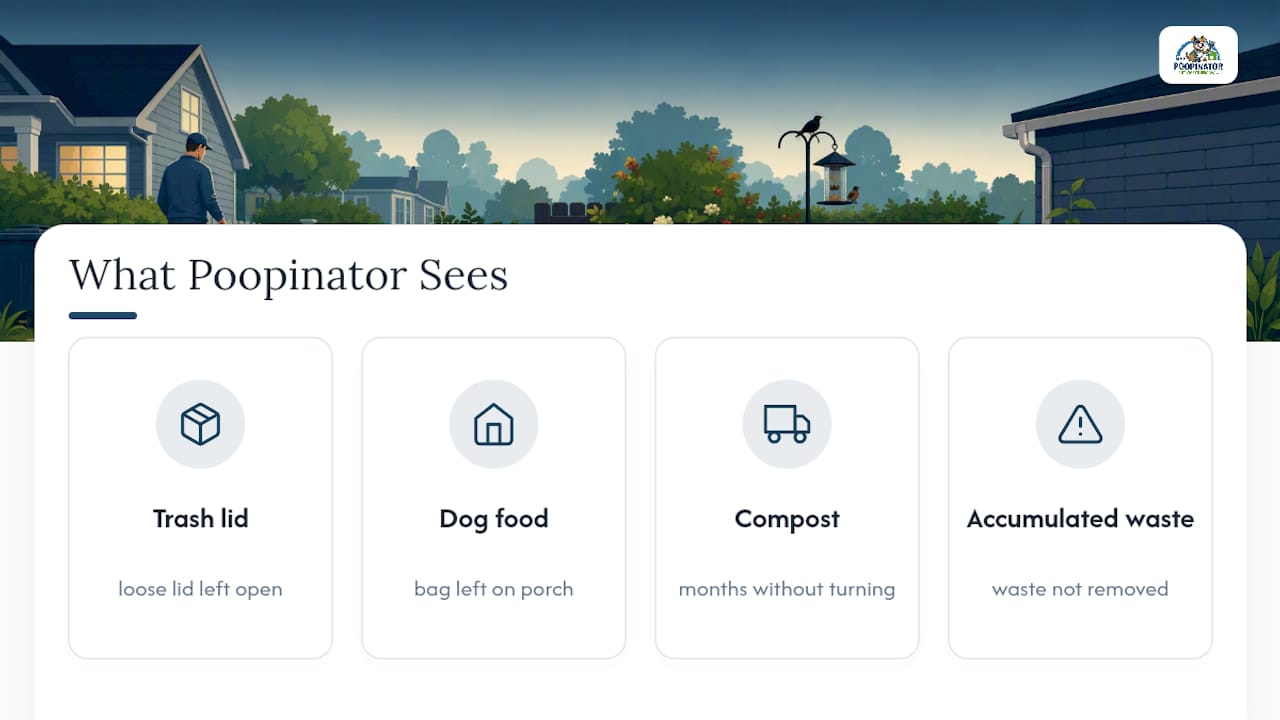
Across the yards our teams service, the pattern rarely involves poop alone. It’s a loose trash lid, a bag of dog food left on the porch, or a compost pile nobody’s turned in months, sitting a few feet from where waste has piled up because nobody kept up with it. Regular removal doesn’t solve a rodent problem by itself. It removes one variable from a mix that, left unchecked, tends to get worse together rather than one piece at a time.
Why the Conventional Advice Gets This Half Right
Most advice about rats and dog poop stops at “clean up after your dog,” which is true but incomplete enough to be misleading. The bigger levers, trash security, pet food storage, and yard clutter, get a passing mention instead of the priority they deserve.
The gap between the advice and the outcome is where I think people get frustrated. They scoop diligently for a month, still see rat activity, and conclude the internet was wrong. It wasn’t wrong. It was incomplete. Rats respond to the whole system of a yard’s food, water, and shelter access, not to any single input.
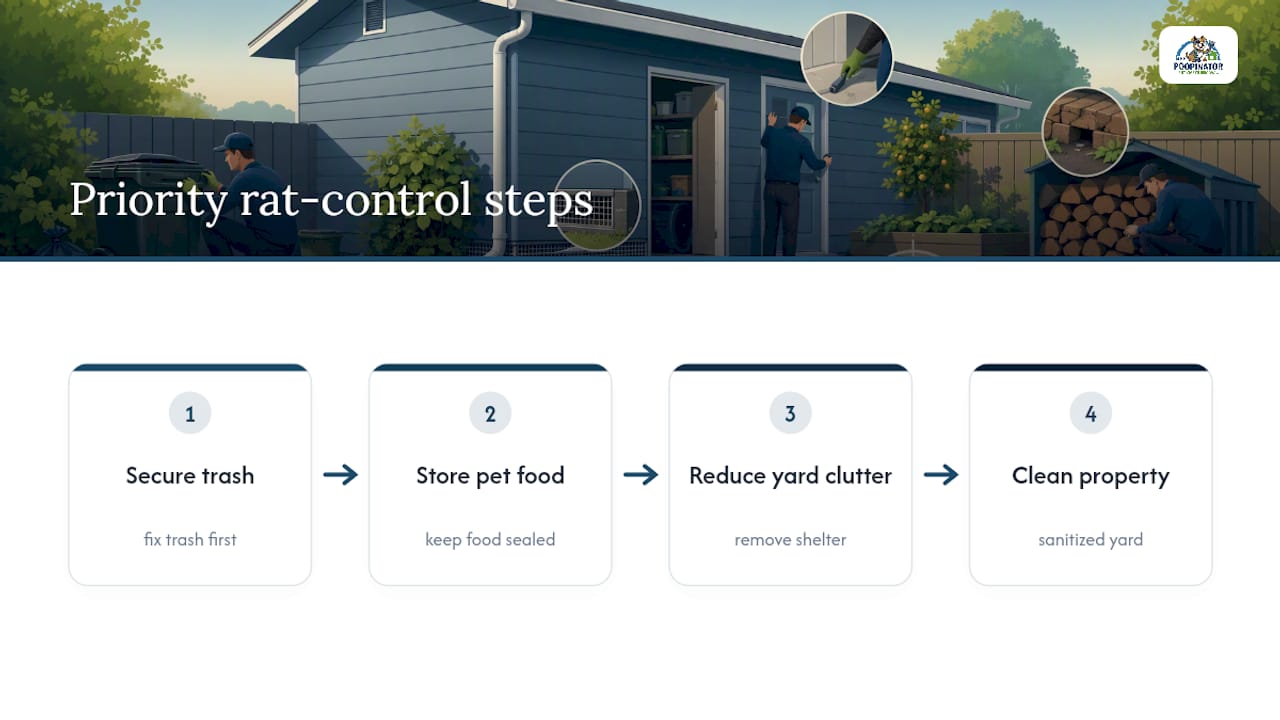
If you take one thing from this: fix your trash situation first, your pet food storage second, and treat waste pickup as good hygiene rather than rat prevention. It’s still worth doing daily, just not for the reason most people assume.
— William
A Cleaner Yard Without Adding It to Your Own List
Scooping daily during a hot Indianapolis or Orlando summer isn’t realistic for most households, and that’s exactly the gap The Poopinator fills. The service offers various scheduled cleanup options with eco-friendly disposal handled on every visit to reduce your chores.
This fits best for households with more than one dog, larger yards, or anyone who’s noticed waste piling up between good intentions. If you’re in the Indianapolis area, scheduled removal in Westfield keeps yards clean without the daily scramble. Orlando readers dealing with heat and humidity that speed up odor and fly breeding can check out dog poop pickup in Orlando to see cadence options and get a quote started today.
Sources
- The truth about rats (feat. Dr. Bobby Corrigan) — Daily Detroit
- Pet waste FAQ and guidance — City of Bothell
- Pet waste best management practices — EPA (BMP document)
FAQ
Will dog poop keep rats away?
No. There’s no evidence that dog waste repels rats, and treating it as a deterrent leaves the real attractants, trash and food access, unaddressed.
Will rats leave a yard if they smell a dog?
Not reliably. Some rats avoid areas with heavy dog activity out of caution, but scent alone won’t drive out an established population if food and shelter are still available.
What repels rats immediately?
Nothing works instantly and permanently. Removing food sources, sealing entry points, and clearing shelter (woodpiles, dense brush) are the fastest ways to make a yard less appealing, though results take days to weeks, not hours.
Can my dog get sick from rat droppings?
Yes. Rat droppings can carry pathogens like leptospirosis and salmonella, which dogs can pick up through sniffing, licking, or drinking contaminated water, so keep pets away from areas with visible rodent activity.