

Most homeowners pay $12 to $18 per visit for weekly dog poop removal with one dog, which works out to roughly $50 to $75 a month. Biweekly service runs $18 to $30 per visit, landing between $36 and $60 monthly. One-time cleanups, the kind you book before a backyard barbecue or after months of neglect, cost anywhere from $75 to $250 as a lump sum depending on how bad the yard has gotten.
Four things move that price up or down: how many dogs you have, how often the crew visits, how big your yard is, and where you live. A single dog in a small suburban Indianapolis yard sits at the low end. Three dogs on two acres near a dense urban core sits at the high end, sometimes well past $100 a month. The Poopinator, which serves the Indianapolis and Orlando areas, prices within these same national bands, so the numbers below double as a real budgeting tool, not just industry trivia.
- Weekly, 1 dog: $12 to $18 per visit, $50 to $75 per month
- Biweekly, 1 dog: $18 to $30 per visit, $36 to $60 per month
- One-time cleanup: $75 to $250 depending on yard size and buildup
- Extra dogs: add $3 to $8 per visit depending on frequency and provider
Key Takeaways
Weekly dog poop removal for one dog typically costs $50 to $75 a month, and every added dog, acre, or urban ZIP code shifts that number predictably.
| Point | Details |
|---|---|
| Weekly costs more monthly | Weekly service runs $12 to $18 per visit but totals $50 to $75 a month, more than biweekly overall. |
| Multi-dog uplifts are standard | Expect $3 to $5 per visit for a second dog and $5 to $8 for three or more. |
| One-time cleanups cost more per job | Initial or backlog cleanups range from $75 to $250 depending on yard size and buildup. |
| Compare monthly all-in totals | Convert every quote to a full monthly figure, including add-ons, before comparing providers. |
| The Poopinator matches these bands | The Poopinator offers weekly, biweekly, twice-weekly, and one-time plans with eco-friendly disposal across Indianapolis and Orlando. |
Table of Contents
- How Much Does Dog Poop Removal Cost by Schedule?
- What Factors Change Your Dog Waste Removal Quote?
- How Do You Estimate Your Own Monthly Cost?
- What Does a One-Time Cleanup Cost?
- What Should You Ask Before Booking a Provider?
- What’s the Real Monthly Cost Once You Add Everything Up?
- Is DIY Cheaper Than Hiring a Dog Waste Removal Service?
- What’s Actually Included in a Dog Poop Removal Package?
- How Can You Lower Your Dog Poop Removal Cost?
- What Contract Terms Should You Watch For?
- How The Poopinator Fits Into These Price Bands
- Why Most Cost Guides Miss the Real Question
- Get a Local Quote for Recurring or One-Time Cleanup
- Sources
- FAQ
How Much Does Dog Poop Removal Cost by Schedule?
Frequency changes the math more than most people expect. Weekly service costs less per visit but adds up to more per month than biweekly, simply because a crew shows up twice as often. Twice-monthly plans split the difference, and one-time cleanups carry a flat fee that has nothing to do with a monthly rate at all.
| Service Schedule | Per-Visit Cost (1 Dog) | Monthly Cost (1 Dog) |
|---|---|---|
| Weekly | $12–$18 | $50–$75 |
| Twice-monthly | $15–$25 | $30–$50 |
| Biweekly | $18–$30 | $36–$60 |
| One-time cleanup | $75–$250 (flat) | Not applicable |
Separate market data from HomeGuide puts weekly service closer to $15 to $30 per visit and biweekly at $20 to $40 per visit, a slightly higher band than the figures above. That gap usually comes down to region and yard size, not inconsistent pricing. A second calculator lands on monthly totals of $75 to $110 for weekly plans and $45 to $75 for biweekly, which tracks closely with both sources once you average the ranges out.
A few quick notes on where your quote will fall in these bands:
- Every additional dog typically adds a per-visit fee on top of the base rate.
- Deodorizer treatments are the most common add-on, usually $5 to $10 per visit.
- Dense urban ZIP codes tend to sit near the top of each range because of travel time and parking.
- Rural properties with easy access often land near the bottom, even with larger yards.
Statistic Callout: National figures put the average monthly cost of recurring dog poop removal for one dog at roughly $50 to $75 for weekly service, a number that holds up across three independent industry calculators.
What Factors Change Your Dog Waste Removal Quote?
Number of dogs is the single biggest lever after frequency. Most providers add $3 to $5 per visit for a second dog and $5 to $8 per visit for a third or more, though some flat-rate providers charge a single multi-dog price regardless of the exact count. If you have four dogs, ask directly whether the provider uses per-dog uplifts or a flat multi-dog tier, because the difference can swing your monthly bill by $20 or more.
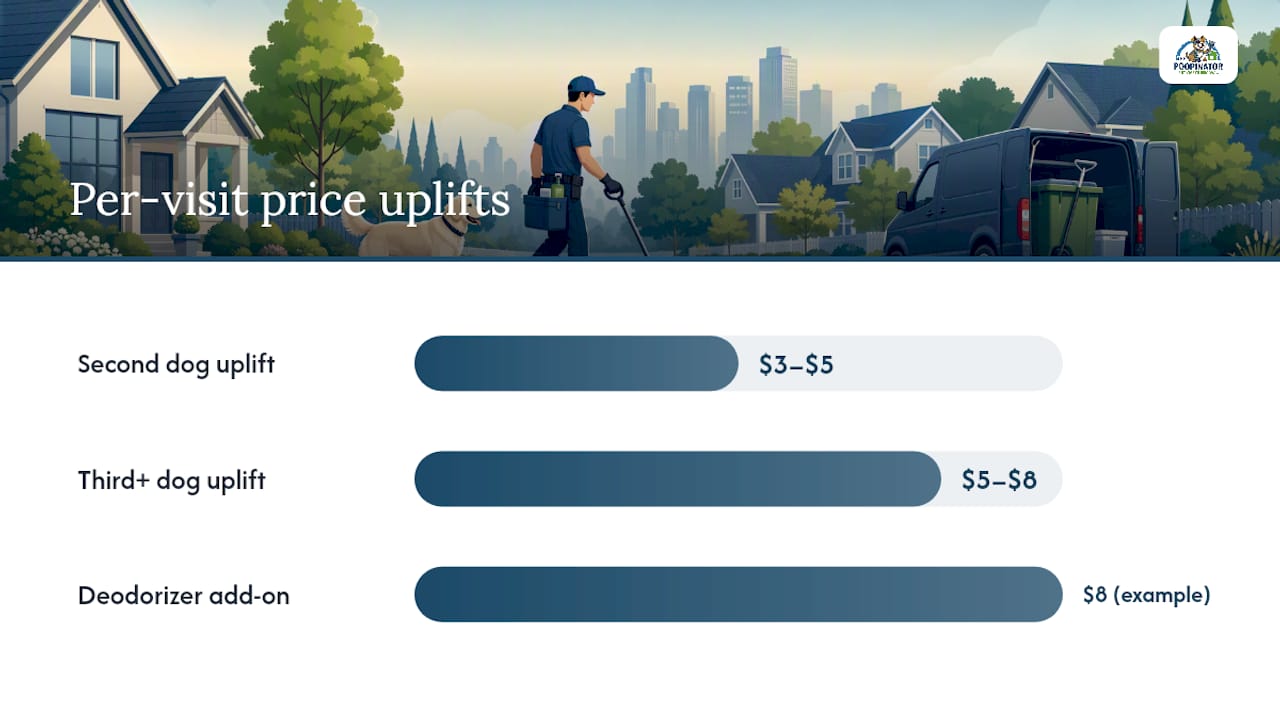
Frequency cuts the other way from what people assume. Weekly visits cost less individually, but four visits a month beats two, so weekly almost always costs more overall than biweekly, even though the per-visit price looks cheaper on paper.
Yard size and region stack on top of that:
- Yards over one acre typically carry a 20% to 40% acreage surcharge, since more square footage means more time on-site.
- Dense urban markets run 15% to 30% above suburban averages, largely because of travel time and limited parking near the property.
- Rural properties sometimes see rates 10% to 20% below the suburban norm, even with more land, because access is simple and drive times are short.
- Backlog from a lapsed service or a brand-new client with weeks of accumulation almost always triggers an initial cleanup surcharge before recurring visits begin.
Pro Tip: Ask any provider whether their quoted price already includes the deodorizer add-on. A $15 weekly quote that jumps to $23 once deodorizer gets added is a different price than it looked on the phone.
How Do You Estimate Your Own Monthly Cost?
Building your own estimate takes four steps, and you can do it with a calculator app in about a minute.
- Start with the base rate. Use $12 to $18 per visit for one dog as your floor.
- Multiply by visits per month. Weekly is four visits; biweekly is two.
- Add per-dog uplifts. Add $3 to $8 per visit for each dog beyond the first.
- Layer on acreage and add-ons. Add 20% to 40% for yards over an acre, plus $5 to $10 per visit for deodorizer if you want it.
| Scenario | Calculation | Estimated Monthly Cost |
|---|---|---|
| 1 dog, weekly, standard lot | $15 × 4 visits | $60 |
| 2 dogs, biweekly, standard lot | ($18 + $4) × 2 visits | $44 |
| One-time cleanup, large/neglected yard | Flat fee, no multiplier | $150–$250 |
When comparing providers, always convert quotes to a monthly all-in figure. A provider advertising a low per-visit rate that hides the initial cleanup fee or deodorizer charge can end up costing more than a provider whose quote looks higher up front but includes everything.
What Does a One-Time Cleanup Cost?
One-time cleanups solve a specific problem: you are moving into a new house, prepping the yard for a party, or restarting service after months of buildup. These jobs get priced as a flat fee rather than a per-visit rate, because the labor and disposal volume scale with weeks of accumulation rather than with a normal maintenance visit.
Typical ranges break down by yard condition:
- Small to medium yard, light to moderate buildup: $75 to $150
- Large or heavily neglected yard: $150 to $250 or more
- Dense urban properties with limited access: occasionally $300 or higher, due to disposal logistics
HomeGuide’s cost data notes that any yard with 30 or more days of accumulation usually gets bumped into this higher tier automatically, since the job stops being routine maintenance and becomes a genuine cleanup project. Deodorizer treatment and disposal of heavy debris like sticks or leaves mixed into the waste are the most common extra charges tacked onto a one-time job.
What Should You Ask Before Booking a Provider?
Getting quotes that are actually comparable means asking the same six questions of every provider you call.
- What is the base price for one dog at my chosen frequency?
- How much does each additional dog add per visit?
- Is there a surcharge for yards over a certain acreage?
- Is there a separate initial cleanup fee, and how is it calculated?
- How is the waste disposed of, and is it eco-friendly?
- What is the policy for skipping a visit or canceling service?
Watch for a few red flags while you’re at it: no written price breakdown, an introductory rate that seems too low once you read the fine print, or vague answers about multi-dog pricing that only get specific after you’ve booked. Compare at least two or three local quotes side by side, and always normalize them to a monthly all-in number before deciding.
Pro Tip: Ask specifically whether the initial cleanup fee is waived or reduced if you sign up for recurring service. Some providers fold it into the first month; others charge it as a separate, unavoidable line item.
What’s the Real Monthly Cost Once You Add Everything Up?
The advertised per-visit rate is rarely the number that hits your bank account. A realistic monthly total for one dog on a weekly plan usually lands between $50 and $75, but that number can climb once you factor in deodorizer treatments, occasional backlog fees after a skipped visit, and any seasonal surcharge some providers apply during peak growing months when yards get harder to navigate.
Sales tax on service labor varies by state and even by municipality, so it’s worth asking your provider directly whether their quoted price includes tax or not. Most residential pet waste removal falls under general service categories rather than a specific pet-care tax code, which means the treatment can differ from one city to the next.
The honest way to budget is to ask for a written monthly total, not just a per-visit number, before you sign up. A provider quoting $15 per visit for weekly service should be able to hand you a number close to $60 to $65 once deodorizer and any standard fees are included. If the total they give you is dramatically lower than the math suggests, ask what’s missing. If it’s dramatically higher, ask what’s being added that wasn’t disclosed on the phone. Either way, get it in writing before the first visit, so there’s no confusion when the first invoice arrives.
Is DIY Cheaper Than Hiring a Dog Waste Removal Service?
On paper, DIY costs almost nothing. A pooper scooper runs $10 to $25, biodegradable bags cost a few dollars a month, and there’s no recurring invoice. But that comparison ignores the real cost: time. Scooping a standard yard twice a week takes 15 to 30 minutes per session, more if you have multiple dogs or a larger lot. Over a month, that’s two to four hours of physical labor most people would rather not do, especially in July heat or January cold.
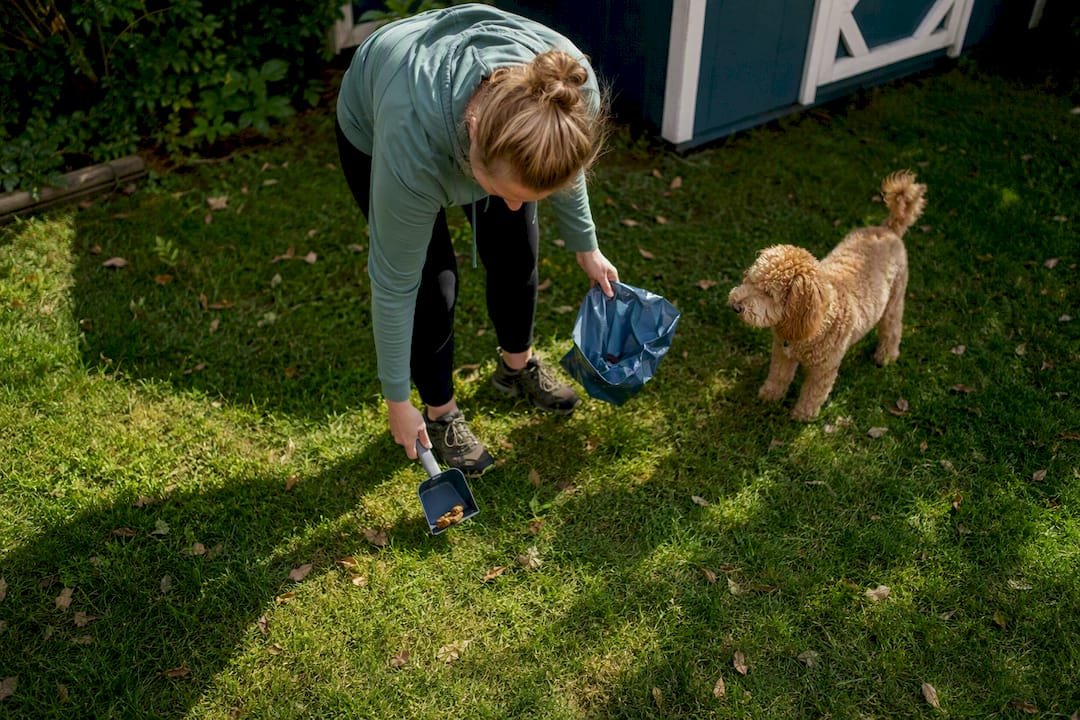
There’s also a consistency gap that DIY rarely closes. Life gets busy, and skipped scooping sessions compound fast. Waste left in a yard for even a week starts creating lawn burn spots, attracting flies, and becoming a genuine hygiene issue, particularly for households with young kids who play on the best pet turf installation grass. A professional service builds that consistency into the plan itself, since missing a scheduled visit isn’t an option the way skipping a Saturday chore is.
The financial case for hiring out gets stronger the more dogs you have. One dog on a small lot might make DIY genuinely reasonable for a budget-conscious owner with free time. Three dogs on a larger property turns scooping into a near-daily task, and at that point, $50 to $90 a month for professional service often costs less than the value of the hours you’d spend doing it yourself, especially once you count disposal trips and bag costs that add up over a year.
What’s Actually Included in a Dog Poop Removal Package?
Not every service that calls itself “pet waste removal” does the same job, and the differences matter for what you’re actually paying for. Standard recurring plans almost always include walking the yard, bagging visible waste, and hauling it off-site for disposal. That’s the baseline, and it’s what most weekly and biweekly quotes cover.
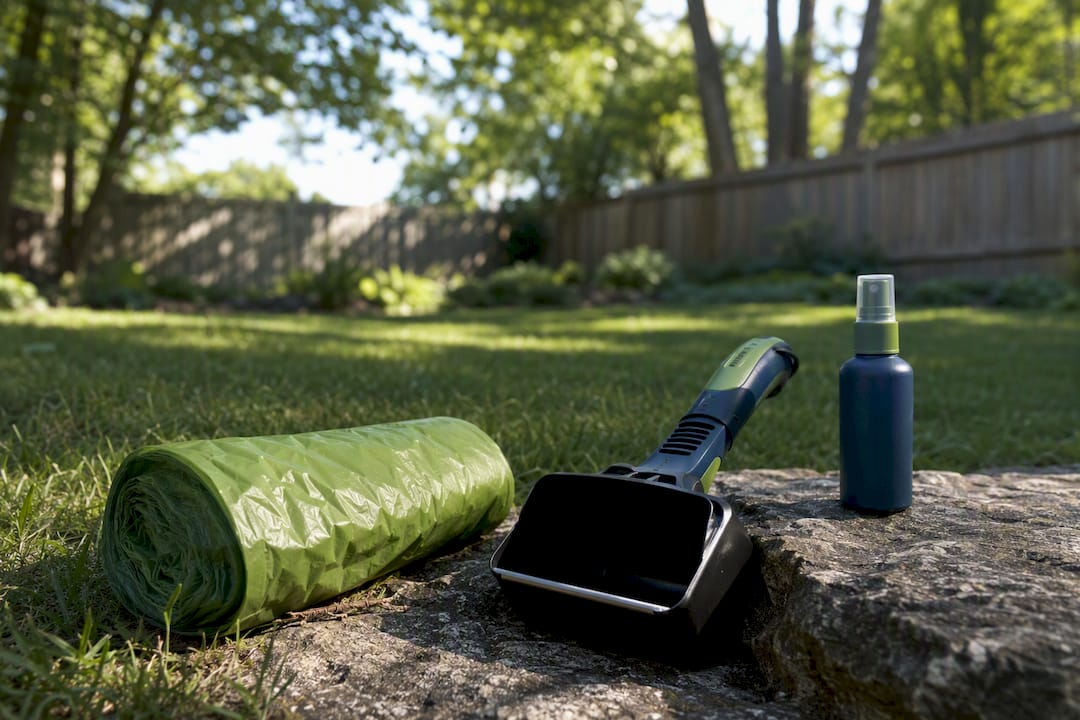
Deep yard cleaning is a separate tier. This covers debris caught in tall grass, waste hidden along fence lines or under decks, and spot-treating stained areas where waste sat too long. Some providers bundle this into every visit; others charge it as an add-on or reserve it specifically for the one-time cleanup category described earlier.
Disposal method is worth asking about directly, since it varies by provider and matters if eco-friendly practices are a priority for your household. Some services bag waste for standard trash pickup, while others use composting or waste-digestion methods designed to reduce landfill impact. If sustainable disposal matters to you, ask before booking rather than assuming every provider handles it the same way.
Gate-latching, yard inspection notes, and photo confirmation after each visit have become common extras among higher-tier plans, giving owners proof the job got done even when they’re not home. None of these are universal, so read the plan description carefully rather than assuming “pet waste removal” means the exact same scope from one company to the next.
How Can You Lower Your Dog Poop Removal Cost?
The easiest lever is frequency. Switching from weekly to biweekly service can cut your monthly bill by roughly a third, and for a single dog in a small yard, biweekly is often enough to keep things manageable without letting waste pile up to backlog levels.
Bundling helps too. Households with multiple dogs sometimes assume more dogs means a proportionally higher bill, but many providers cap the per-dog uplift after the second or third dog, since the added time per visit shrinks once the crew is already on-site. It’s worth asking directly whether a flat multi-dog rate beats the per-dog add-on math for your specific household.
Committing to a longer service term can also unlock a lower rate. Skipping the deodorizer add-on if it’s not essential is another simple way to shave a few dollars off every visit. And if you’re willing to handle the acreage surcharge yourself by mowing or clearing overgrown areas before the crew arrives, some providers will reduce or waive that fee since it cuts down their time on-site.
Finally, referral programs are common in this industry. Many local providers offer a free month or a discounted rate for referring a neighbor, which costs you nothing but a conversation and can meaningfully offset your annual total.
What Contract Terms Should You Watch For?
Contract length affects price more than most new customers expect. Month-to-month plans offer flexibility but rarely come with a discount, while three-month or seasonal commitments often unlock a lower effective rate in exchange for predictability on the provider’s end.
Cancellation policies vary widely, so read this section of any agreement before signing. Some providers require 30 days’ written notice to cancel without penalty; others allow cancellation anytime with no fee at all. A cancellation fee, when one exists, is usually modest, but it’s worth knowing upfront rather than discovering it when you try to pause service for a vacation or a move.
Skip policies matter almost as much as cancellation terms. Ask whether skipping a single visit (say, because you’re out of town) carries a fee, reduces your monthly total, or simply rolls the missed visit into the next scheduled cleanup, which often means a slightly larger job and sometimes a small backlog charge. Auto-renewal clauses are common too. If your agreement automatically renews into a new term unless you cancel by a specific date, mark that date somewhere you’ll actually see it.
The safest approach is to ask for the full written terms, not just the price, before your first visit. A provider confident in their service should have no problem sending contract details by email so you can review skip fees, cancellation windows, and renewal terms on your own time.
How The Poopinator Fits Into These Price Bands
The Poopinator’s plan structure mirrors the frequency options covered above: weekly, biweekly, and twice-weekly for high-activity yards, plus one-time cleanups for move-ins and event prep. Pricing sits within the national bands described earlier, and every plan uses eco-friendly disposal practices rather than the standard bag-and-landfill approach some competitors default to.
With more than 20 years of combined experience and hundreds of five-star reviews, The Poopinator tends to be the right fit for busy households that don’t have two spare hours a week, multi-dog homes where DIY scooping becomes a real chore, and anyone prepping a yard for a party, open house, or new baby. If your situation matches any of those, a recurring plan usually pays for itself in reclaimed time alone.
Why Most Cost Guides Miss the Real Question
Most articles on this topic treat price like the only variable that matters, and that misses the point entirely. The real question isn’t “what’s the cheapest per-visit rate I can find.” It’s “what happens the week I get busy and skip a session.” That’s where DIY quietly falls apart and where professional service earns its cost back.
I’d also push back on the instinct to chase the absolute lowest quote. A provider charging $10 per visit with vague disposal practices and no written cancellation policy usually costs more in hassle than a provider charging $18 per visit with clear terms and consistent eco-friendly disposal. The cheapest number on the phone call is rarely the cheapest number over a full year, once you factor in hidden fees, inconsistent scheduling, and the occasional backlog surcharge that shows up because a provider missed a visit and never told you.
The households that get the best value aren’t the ones who negotiate the hardest. They’re the ones who ask the right six questions upfront, get a written monthly total, and pick a frequency that actually matches how their yard and their dogs behave, not just what looks cheapest on a landing page.
— William
Get a Local Quote for Recurring or One-Time Cleanup
Comparing per-visit rates and building your own estimate only gets you so far. The fastest way to know your real monthly cost is to get an actual quote for your yard, your dog count, and your schedule. The Poopinator offers weekly, biweekly, twice-weekly, and one-time cleanup plans across the Indianapolis and Orlando areas, with transparent pricing that already accounts for yard size and dog count instead of surprising you with add-ons after you’ve signed up.

If you’re in the Indianapolis area, The Poopinator’s Westfield service page covers local pricing and availability directly. Orlando-area readers can check plan options and current rates on the Orlando pickup service page. Either way, request a quote today and get a real monthly number for your yard instead of a national average.
Sources
- Pet Waste Removal Service Cost Calculator — 2026 Pooper Scooper Quote | UseCalcPro
- How Much Does Dog Poop Removal Cost? (2026) | HomeGuide
- Dog Poop Removal Calculator | Find Poop Scoopers
FAQ
How much does it cost to remove dog poop?
Weekly service for one dog typically runs $12 to $18 per visit, or $50 to $75 a month; biweekly service runs $18 to $30 per visit, or $36 to $60 monthly.
How much do people get paid for picking up dog poop?
Pay varies widely by region and whether the scooper is an independent contractor or employee, but earnings generally track the per-visit rates charged to customers minus overhead like fuel, bags, and disposal costs.
Is dog poop pickup worth it?
For multi-dog households or anyone without a spare hour or two each week, professional pickup usually pays for itself in reclaimed time and avoids the lawn damage and hygiene issues that come from inconsistent DIY scooping.
Is dog poop removal a good business?
It can be a steady, low-overhead business given consistent demand from busy households, though profitability depends heavily on route density, per-dog pricing, and how efficiently a provider like The Poopinator manages scheduling and disposal logistics.
Should I choose recurring service or a one-time cleanup?
Choose recurring service if you want consistent yard maintenance and lower cost per visit; choose a one-time cleanup for move-ins, event prep, or clearing months of backlog before starting a regular plan.