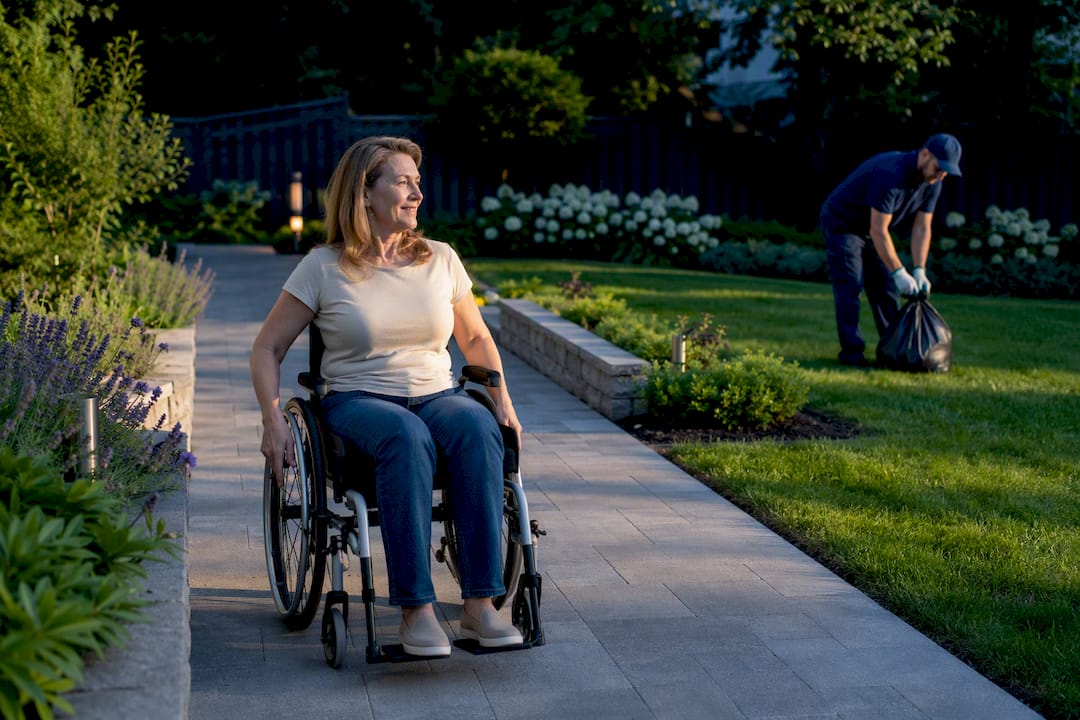
If you can’t bend to scoop, your safest options are a no-bend long-handle no-touch scooper for the yard, a catcher for walks, a reacher-plus-bag setup for emergencies, or a scheduled cleanup service like The Poopinator. Some institutions exempt handlers who are physically unable to clean up after their service dogs, but pairing that policy protection with an actual tool or service keeps you covered and your dog welcome everywhere.
TL;DR:
- Long-handle no-touch scoopers are best for yard cleanup, while catcher devices improve outdoor use on uneven surfaces during walks.
- Handles should be 32 to 37 inches long, and grip mechanisms need to match the user’s strength to prevent pain or difficulty.
- Repeated clenching causes discomfort for those with joint issues, so low-effort, bag-based designs are often more suitable.
- When mobility is limited, portable, collapsible tools or scheduled services are more practical than traditional scoopers.
- Institutional policies may exempt handlers from cleanup for disability reasons, but local ordinances usually require specific arrangements or paid services.
Table of Contents
- Quick Options for Disability Dog Poop Cleanup
- How to Choose the Right Cleanup Tool for Your Situation
- Step-by-Step Techniques for Each Cleanup Method
- Assistance and Legal Considerations for Handlers Who Can’t Clean Up
- Adaptive Innovation Beyond the Mass-Market Scooper
- Living With a Service Dog: My Cleanup Routine
- When a Scheduled Service Makes More Sense Than Any Tool
- Sources
- FAQ
Quick Options for Disability Dog Poop Cleanup
Different situations call for different tools. A yard needs something different than a sidewalk, and an emergency needs something different than both.
- At home, in the yard: A long-handle no-touch scooper is usually your best bet. It stays upright, needs no bending, and the bag does the dirty work instead of your hand or a jaw mechanism.
- On walks: A catcher device, essentially a shallow scoop you position behind your dog before they go, avoids the timing pressure of chasing waste after the fact. It takes practice but pays off fast.
- Emergency or unplanned outing: A reacher/grabber tool paired with an inverted bag over your hand or the reacher’s tip gets you through a one-off situation without a dedicated device.
- When you need help right now: Ask. A neighbor, a companion, or venue staff can step in for a single incident, and most people are glad to help when asked directly and specifically.
- For anything recurring: A paid cleanup plan, whether that’s a weekly yard visit or a one-time event cleanup, removes the physical task from your routine altogether.
The yard and the walk are genuinely different problems. At home, you control the terrain, the lighting, and the timing, so a stable long-handle tool makes sense. On a walk, you’re often on uneven pavement or grass, holding a leash, and dealing with a dog who may not pause long enough for careful positioning. That’s why catchers, not the same scooper you use at home, tend to work better outdoors.
For handlers who use a wheelchair or have limited reach, portability matters as much as function. A tool that works beautifully in your yard but doesn’t collapse for transport is only solving half your problem. If none of the immediate options fit your situation on a given day, a scheduled service resets the whole equation. You’re not choosing a tool at all. You’re choosing to hand the physical task to someone else entirely, which for many handlers with progressive or fluctuating conditions is the more sustainable long-term answer.
How to Choose the Right Cleanup Tool for Your Situation
Picking a scooper isn’t about brand names. It’s about matching four physical variables to your actual body and daily routine.
- Check the handle length against your posture. Ergonomic guidance recommends handles in the 32 to 37 inch range for most adults, since anything shorter forces the same forward bend you’re trying to eliminate.
- Match the grip mechanism to your hands. Spring-clamp jaw scoopers require repeated clenching, which creates real pain for anyone with arthritis or limited grip strength. A no-touch bag-frame design or a low-effort trigger avoids that motion entirely.
- Confirm it collapses or telescopes for storage. If you use a wheelchair or a walker, a rigid 36 inch tool that won’t fold down becomes a hallway obstacle, not a solution.
- Think about your dog’s stool consistency. Soft or loose stool slips through rigid jaw scoopers, but catcher-style and bag-frame designs handle it more reliably because the bag conforms rather than tries to grip.
- Ask direct questions before you rely on someone else. If a caregiver, building manager, or service will be doing this for you, ask about frequency, disposal method, and what happens if they miss a scheduled visit.
Pro Tip: Test any new tool indoors first, with an empty bag, before you’re relying on it outside in real conditions. A tool that feels awkward on a dry run will feel worse in the rain with a full bag.
Repeated spring-clenching is the detail most buying guides skip entirely. If you have any joint condition in your hands or wrists, that single mechanical difference, clamp versus bag-frame, matters more than price, color, or brand reputation combined.
Step-by-Step Techniques for Each Cleanup Method
Once you’ve picked a method, technique is what actually makes it work day to day.
No-bend long-handle scooper:
- Stand with the tool angled roughly 45 degrees toward the waste rather than straight down.
- Slide the open bag frame or jaw underneath from the side, not from above.
- Lift to roughly waist height before closing or tying the bag, which keeps the motion within a comfortable range instead of forcing a full-arm reach downward.
- Tie off and drop directly into a trash receptacle without lowering the tool again.
Catcher for walks:
- Watch for your dog’s pre-squat signal (circling, sniffing in one spot, a stilled posture) and position the catcher behind them in advance.
- Hold steady through the full elimination rather than moving the catcher partway through.
- For soft stool, tilt the catcher slightly to avoid spillover before transferring to a bag.
- Practice this for about a week using treats and rehearsal so your dog’s timing becomes predictable, which genuinely improves catcher accuracy over time.
Reacher plus bag improvisation:
- Invert a waste bag over your hand or over the reacher’s gripping end before approaching the waste.
- Use the reacher to grasp through the bag, then pull the bag inside out over the waste in one motion.
- Tie the bag one-handed by looping it around the reacher’s shaft for leverage if your grip strength is limited.
- For loose stool, use a second bag as a backup liner to prevent tearing.
Scripting help from someone else:
Give a helper three sentences, not a paragraph: “The bags are in my left bag on the wheelchair. Pick up with the bag inverted over your hand. Tie it off and drop it in the nearest bin.” Specific instructions get faster, cleaner results than general requests.
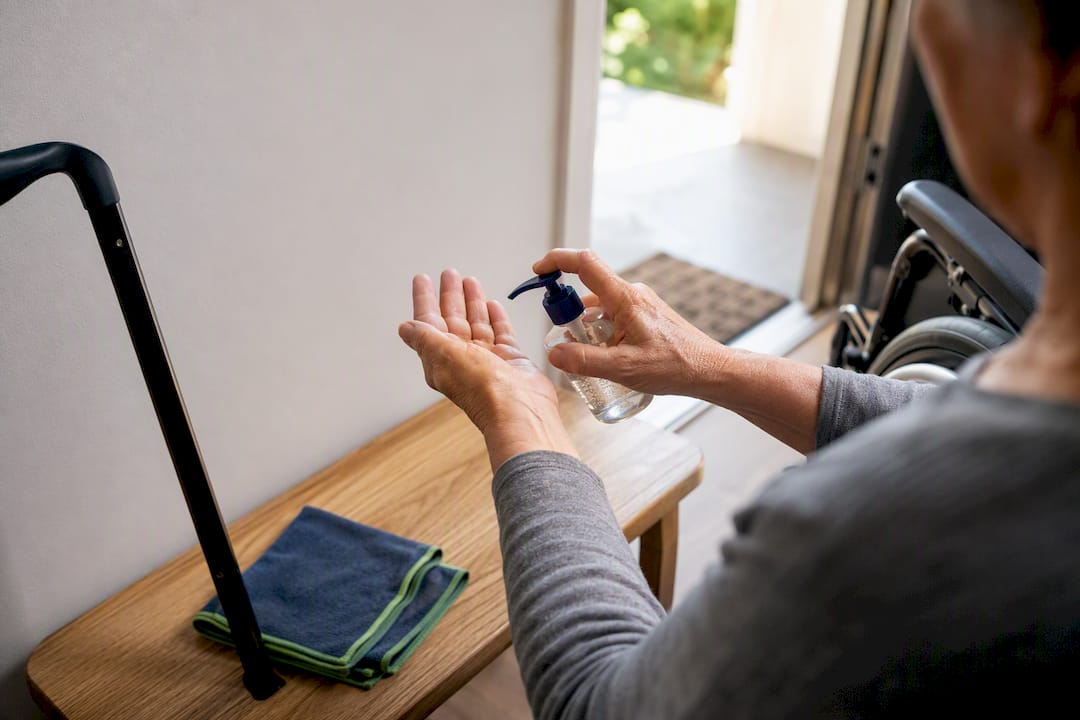
After any method, a quick sanitation pass matters: hand sanitizer or a wipe before touching your chair, cane, or any surface you’ll touch again, and a fresh glove if you’re using them for a second cleanup that day.
Assistance and Legal Considerations for Handlers Who Can’t Clean Up
Some institutional policies explicitly recognize that physical cleanup isn’t possible for every handler. Lincoln Land Community College’s service animal guidance states that individuals who are physically unable to pick up and dispose of their service dog’s waste are not required to do so, while still encouraging use of designated toileting areas where they exist. That’s a meaningful precedent, but it’s institution-specific, not a universal law, so it’s worth checking the actual policy of any campus, workplace, or housing complex you’re relying on.
Most city pickup ordinances don’t build in a disability exemption the way campus policy sometimes does. The practical fix isn’t to test the ordinance. It’s to reduce friction before it becomes a problem:
- Use marked or designated dog-relief areas when your building or city provides them.
- Keep a visible kit (bags, gloves, a compact tool) attached to your chair or bag, since visible effort changes how bystanders and enforcement react even when you can’t complete the task alone.
- Ask a companion or neighbor for one-off help rather than skipping cleanup entirely.
- Put a standing request in writing to your landlord or employer if you need a reasonable accommodation, such as a designated relief spot closer to your unit or entrance.
If you’re requesting a formal accommodation, document the request and any response in writing. If hiring a cleanup service is your chosen mitigation, keep the service receipts or your booking confirmation. Both create a paper trail that supports you if a cleanup dispute ever comes up with a landlord, HOA, or property manager.
Adaptive Innovation Beyond the Mass-Market Scooper
Most commercial scoopers are designed for someone standing at full height with two free hands, which leaves wheelchair users and people with limited reach poorly served by default. Tetra Society volunteers have prototyped retractable, transportable scooper designs built specifically around reachability and portability rather than adapting a standing tool after the fact.
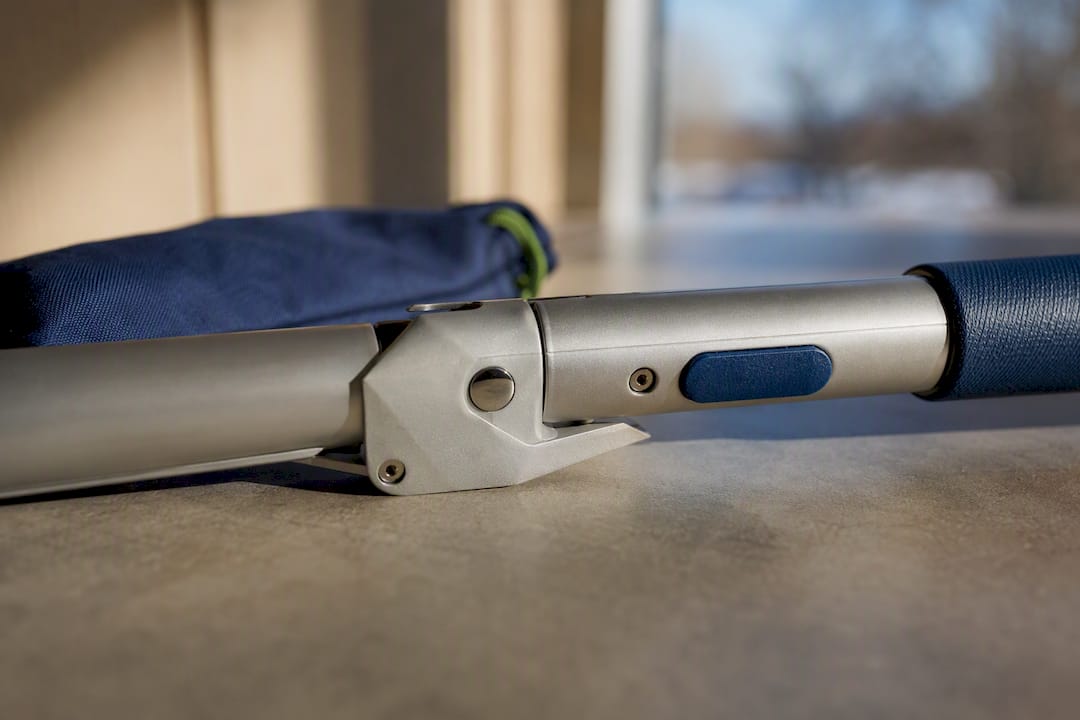
A grassroots example makes the gap concrete: a Hamilton inventor built “PooperScooper 2.0,” a retractable telescopic design made for wheelchair access, after finding that most store-bought scoopers were too bulky or required too much force.
If you’re considering a custom build, a few tradeoffs matter:
- Telescoping shafts save storage space but add moving parts that can wear out or jam without regular cleaning.
- Magnetic or retractable bag frames reduce grip demand but often cost more and take longer to source.
- A mechanical stop that resists inward collapse under pressure is worth prioritizing regardless of design, since it’s the difference between a tool that works reliably and one that folds under real use.
Reaching out to a nonprofit like Tetra Society, or a local maker space familiar with assistive devices, is a reasonable next step if nothing on the market fits your reach or grip. On the service side, some providers offer recurring bi-weekly, weekly, or twice-weekly cleanup plans with eco-friendly disposal, giving handlers a tested alternative when a custom device isn’t practical or isn’t ready yet.
Living With a Service Dog: My Cleanup Routine
My actual routine is boring, and that’s the point. A compact catcher lives clipped to my chair for walks, and I’ve stopped treating the yard as something I need to solve myself. A scheduled cleanup handles that end entirely, so the only tool I think about daily is the one that fits in my bag.
Every morning I check three things: bags loaded, gloves in the side pocket, catcher clipped where I can reach it without looking. That five-second check has saved me more embarrassment than any single tool ever has. Independence with a service dog was never about doing every task yourself. It’s about building a system reliable enough that you stop worrying about it.
— William
When a Scheduled Service Makes More Sense Than Any Tool
Some situations don’t have a good tool answer. Heat and humidity turn a five-minute yard task into a health risk. A busy household with multiple pets outpaces what any single scooper can keep up with. And for many handlers, a mobility limitation makes daily bending simply off the table, no matter how good the tool. That’s exactly the gap a scheduled service is built to close.
The Poopinator runs recurring yard cleanup plans, bi-weekly, weekly, or twice-weekly, plus one-time cleanups for events or move-outs, with eco-friendly disposal built into every visit. Before booking any provider, ask about visit frequency, what happens on missed visits, how waste is disposed of, and whether the crew follows sanitation protocols between yards. If you’re weighing whether a recurring service fits your household better than a one-time visit, that depends mostly on how many dogs you have and how quickly your yard fills back up. Check service availability in your area and get a plan quote before your next flare-up or heat wave makes the decision for you.
Sources
For policy questions, Lincoln Land Community College’s service animal guidance is a useful reference point. For adaptive tool projects, see Tetra Society’s accessible scooper prototypes and the PooperScooper 2.0 coverage from TheSpec. For yard design that reduces mess buildup over time, pet-friendly turf installation is worth a look.
- Service Animal Guidelines & Procedures | Lincoln Land Community College
- Accessible pooper scooper project | Tetra Society
- Hamilton man developing pooper scooper for wheelchair users | TheSpec
- How to Pick Up Dog Poop Without Bending Over | GoGo Stik
FAQ
How Much Do Cleanup Services Charge for Dog Poop Removal?
Pricing varies by yard size, dog count, and visit frequency, with most companies offering tiered plans rather than a single flat rate. Contact a provider directly, such as through The Poopinator’s Orlando service page, for an exact quote based on your yard.
How Do Blind or Physically Limited Handlers Clean Up After a Service Dog?
Many use catcher devices trained to a dog’s elimination cue, ask a companion for direct one-off help, or rely on scheduled cleanup services for recurring needs. Some institutions, including Lincoln Land Community College, formally exempt handlers who are physically unable to clean up.
Can You Get in Trouble for Not Cleaning Up After Your Dog?
Most city ordinances don’t include an automatic disability exemption, so it’s worth using designated relief areas, asking for help, or hiring a service to reduce enforcement risk. Institutional policy exemptions exist in some settings, but they don’t override every city’s local pickup ordinance.
How Much Do People Get Paid to Pick Up Dog Poop Professionally?
Pay for professional pet waste technicians varies widely by region, route density, and whether the role is independent or with an established company. Rates aren’t standardized industry-wide, so specifics depend on the individual employer or service area.
What’s the Best No-Bend Tool for Someone With Limited Grip Strength?
A no-touch bag-frame scooper with a low-effort trigger works better than a spring-clamp jaw scooper for most people with arthritis or weak grip, since it removes the repeated clenching motion entirely. Pair it with a handle length in the 32 to 37 inch range to also protect your back and posture.