Rain does not clean up dog poop. It softens the pile, breaks it into smaller pieces, and lets runoff carry those pieces into your grass, soil, and storm drains. If you can safely get to it before or right after a storm, bag it and put it in the trash. Skipping that step just spreads the contamination further.
TL;DR:
- Rain breaks down dog feces into smaller particles, causing contamination to spread across larger areas and into storm drains over time.
- Pathogens like roundworm eggs, Giardia, Salmonella, and E. coli can survive for years in soil, especially after rain disperses waste.
- Immediate cleanup should be prioritized after rain, using tools like long-handled scoops and sealing bags to prevent pathogen spread.
- Avoid hosing down contaminated surfaces heavily, as this can push waste deeper into soil or toward storm drains, worsening water pollution.
- Scheduled, eco-friendly cleanup plans help prevent accumulation during rainy weeks and reduce long-term health and environmental risks.
Table of Contents
- Why Rain Makes Dog Poop Cleanup Worse
- When Is It Safe to Wait, and When Should You Act Now?
- How to Remove Wet or Softened Dog Poop the Right Way
- Cleaning Dog Waste Off Different Yard Surfaces
- What’s the Safest Way to Dispose of Dog Poop?
- Your Before and After Storm Cleanup Checklist
- Why Rainy Weeks Are When Most Yards Fall Behind
- Book a Cleanup Instead of Chasing the Weather
- Sources
- FAQ
Why Rain Makes Dog Poop Cleanup Worse
A pile of dog poop that sits through a rainstorm looks smaller the next morning, but that’s not good news. Water breaks down the outer layer, and runoff carries the loosened material into the grass, down slopes, and toward storm drains. What used to be one visible problem becomes a thin, invisible layer of contamination spread across a much bigger area, according to a pet-waste hazard breakdown covering exactly this dispersion pattern.
That matters because dog waste carries more than an unpleasant smell. It’s a known source of several pathogens that survive well outside the body:
- Roundworm eggs (Toxocara), which can persist in soil for several years according to municipal pet-waste guidance
- Giardia, a parasite the CDC links directly to pet waste exposure
- Salmonella and E. coli, both common bacterial contaminants in dog feces
Toxocara eggs surviving up to five years in soil is the single fact that should change how you think about a “missed” pickup. It’s not a one-week problem. It’s a multi-year one, sitting in the soil where kids and other pets play.
Rain doesn’t just threaten your yard, either. Runoff carrying pet waste is a recognized contributor to nutrient pollution in local waterways, and the EPA’s best management practices for pet waste specifically call out the nitrogen and phosphorus load it adds, which can feed algae blooms downstream. The AKC makes the same point in plainer terms: dog waste isn’t fertilizer, no matter how natural it looks decomposing in the grass. Leaving it out during wet weather isn’t neutral. It’s actively working against your yard and, in aggregate, your local water quality.
When Is It Safe to Wait, and When Should You Act Now?
You don’t need to sprint outside mid-downpour with a flashlight. But you do need a few rules to judge when waiting is fine and when it isn’t.
- Pick up as soon as it’s safe to do so. Lightning, flooding, or slick footing are good reasons to wait. Light drizzle isn’t.
- Sweep the yard before a forecasted storm. A quick pass to clear visible piles before heavy rain arrives cuts down dramatically on what gets pushed into runoff, a habit pet-waste pickup guidance recommends as a baseline routine.
- Never let a yard go longer than a week without a full sweep. Even without rain in the forecast, waste sitting that long starts breaking down and releasing pathogens into the soil underneath it.
Overnight poop before a morning storm is the classic miss. Your dog goes out at 9 p.m., you don’t see it in the dark, and by 7 a.m. it’s already half dissolved into the lawn. Repeated rain events without pickup compound the problem: each storm moves a little more residue a little further, until you’ve got contamination spread across a section of yard instead of contained in one spot. Given that roundworm eggs alone can persist in soil for years, treating “it rained already, so it’s basically gone” as an excuse to skip pickup is exactly backward.
How to Remove Wet or Softened Dog Poop the Right Way
Wet poop behaves differently than the firm, easy-to-scoop kind. It smears, it sticks to grass blades, and it’s harder to see against dark, saturated soil. You need the right tools and a technique that avoids turning one mess into three.
Build a rainy-day cleanup kit
- A long-handled scooper (keeps you from crouching directly over the mess)
- A rake-and-pan set for larger or spread-out piles
- A no-touch catcher if you want zero direct contact
- Sturdy, tear-resistant bags (thin bags fail on wet, heavy material)
- A flashlight or headlamp for early mornings and evenings
- Disposable gloves for extra hygiene when hands get close
The step-by-step technique
Confirm the location first. Wet grass hides poop far more effectively than dry grass. If you’re cleaning up at dawn, dusk, or after dark, use a flashlight and sweep it low across the lawn instead of straight down. Piles blend into shadows and puddles more than most owners expect.
Approach from the side, not from directly above. Coming straight down over a softened pile increases the odds you’ll press it flatter and spread it, rather than lift it clean.
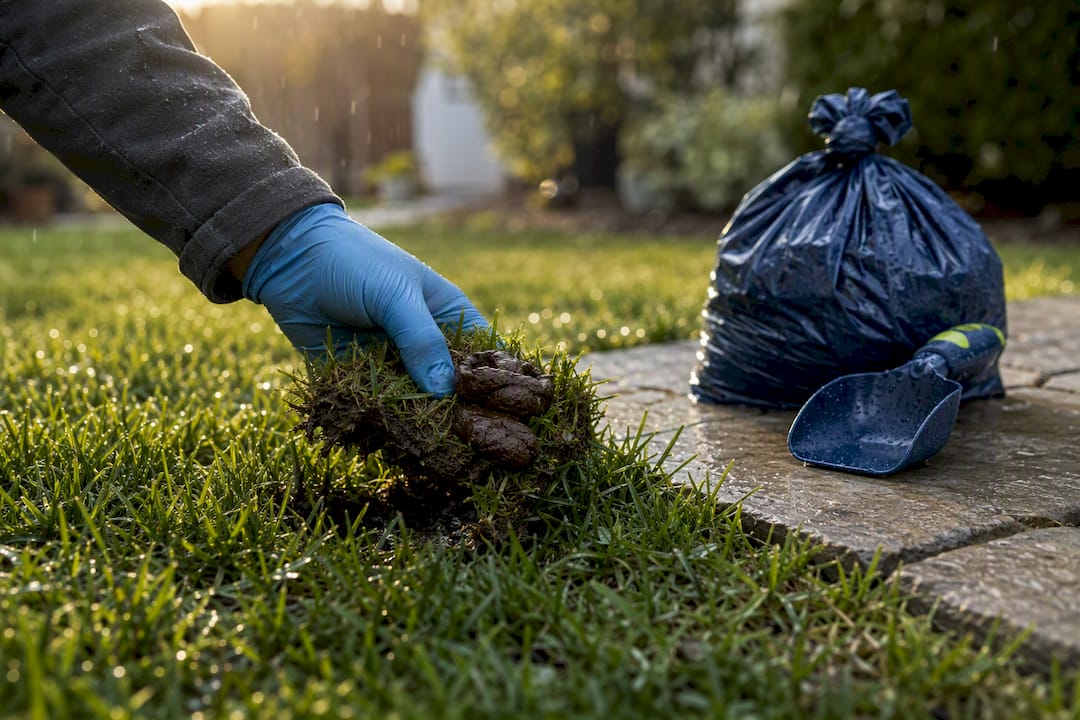
Scoop a thin layer of turf along with the mess. This is the single most useful trick for rainy-day pickup. Instead of trying to isolate the poop from the grass around it, take a shallow slice of the grass surface underneath it. The gogostik technique guide recommends this because the extra structure keeps loose stool from smearing across your scooper or bag as you lift it.
Transfer directly into a sealed bag. Don’t set the scooper down or walk across the yard with an open bag. Bag it at the site, then seal it immediately.
Tie it off and dispose in the trash. Double-bagging is worth the extra thirty seconds if the material is especially loose or if you’re dealing with diarrhea.
Pro Tip: If your dog has diarrhea or the stool is badly smeared across a patch of grass, don’t just scoop the visible clump. Lift the entire contaminated section of turf, bag it, and consider spot treating the spot underneath with a pet-safe enzyme cleaner. Leaving smeared residue behind means pathogens keep leaching into that exact patch every time it rains again.
Afterward, rinse your tools with plain water, then wipe them down with soap or a pet-safe enzyme cleaner rather than just letting rain “handle it.” Wash your hands even if you wore gloves. If a patch of mulch or grass stays discolored or smelly after multiple rinses, that’s your signal to remove and replace the material rather than keep spot-treating it indefinitely.
Cleaning Dog Waste Off Different Yard Surfaces
Not every surface holds onto contamination the same way, and hosing everything down indiscriminately can actually make runoff worse. Here’s how to handle the surfaces most yards actually have.
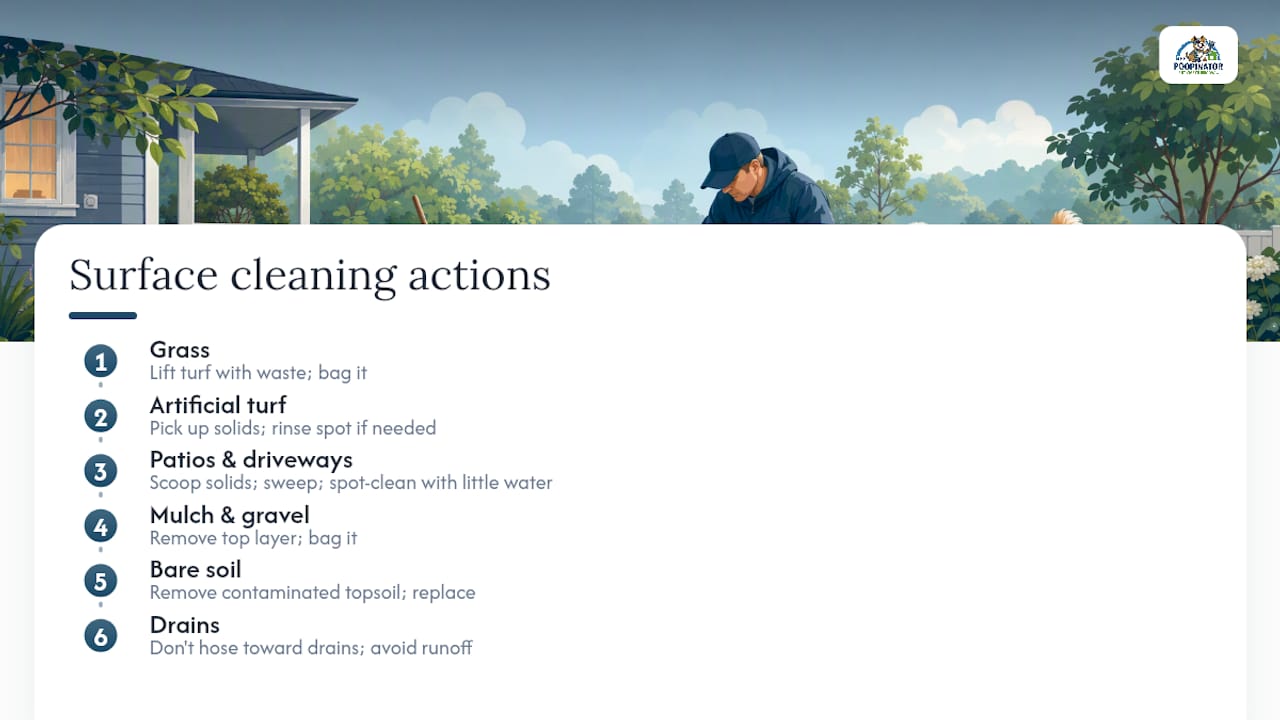
Grass. Lift a thin cushion of turf along with the waste, as described above, and bag the whole thing. Resist the urge to hose the area down heavily afterward. Heavy hosing doesn’t clean grass; it just pushes fecal particles deeper into the soil or toward the nearest drain, which runs against the EPA’s core recommendation to minimize water used around pet waste.
Artificial turf. Pick up solids first, then rinse only the affected spot with a pet-safe enzyme cleaner if odor lingers. Artificial turf doesn’t absorb waste the way soil does, so residue tends to sit on the surface, which is actually easier to manage as long as you don’t flood it with water that runs straight toward a storm drain.
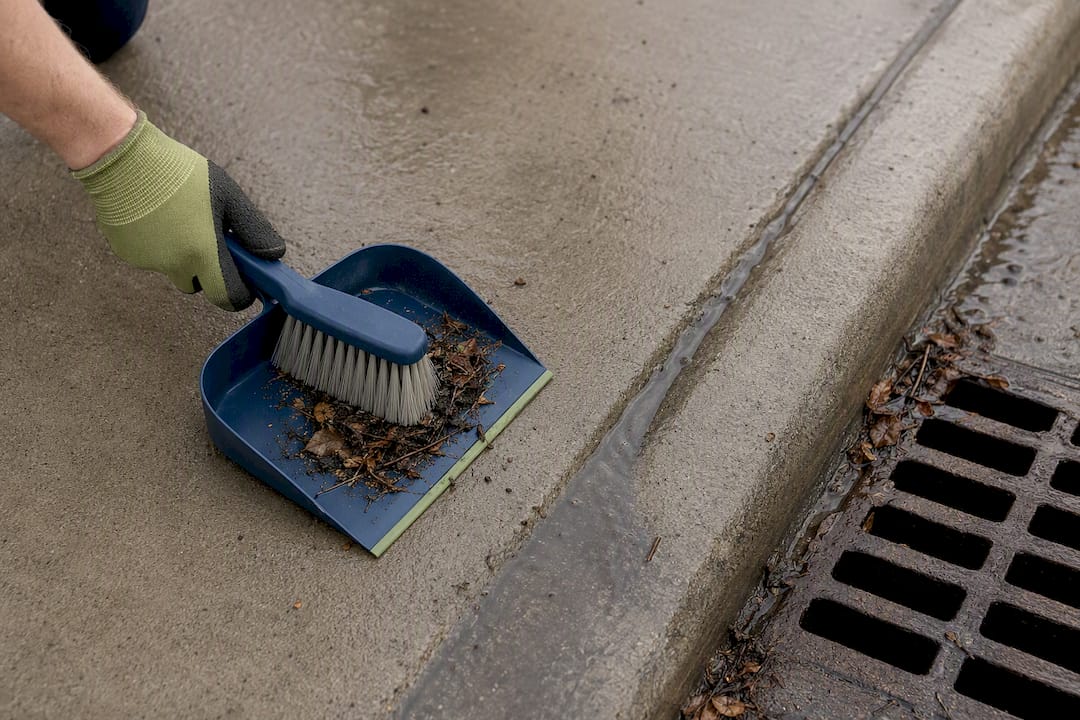
Patios, driveways, and other hardscapes. Scoop up solids, then spot-clean with a minimal amount of water and a pet-safe cleaning product rather than a hose on full blast. Sweep loose material into a dustpan before you introduce any liquid at all; wetting solid material first just turns it into a bigger cleaning job.
Mulch, gravel, and bare soil. These are the toughest surfaces because waste can soak in before you even notice it. If a section is saturated or smells off after rain, remove the top layer of material entirely, bag it, and replace it rather than trying to clean around it.
Drains. Never hose contaminated material directly toward a storm drain. Storm drains typically run untreated into local waterways, which is exactly the runoff pathway the EPA’s pet waste guidance warns against. A biodegradable cleaner application guide is a useful reference if you need a spot-treatment product that’s gentler on runoff than standard household cleaners.
What’s the Safest Way to Dispose of Dog Poop?
The simplest, safest disposal method is also the most boring one: bag it, seal it, and put it in your regular household trash. That’s the baseline every major guidance source, from municipal FAQs to the AKC, keeps coming back to.
A few common shortcuts deserve a closer look before you try them:
- Flushing. Only flush dog waste if your local sewer system explicitly accepts pet waste, and never flush it if your home is on a septic system without confirming it’s approved. Rules vary by municipality, so check before assuming it’s fine.
- Home composting. Skip it unless you have a specialized, high-heat composting setup. Standard backyard compost bins usually don’t get hot enough to kill the pathogens in dog waste, a point NRCS composting guidance makes clear when explaining why pet waste needs a different protocol than kitchen scraps or yard clippings.
- Bag choice. Standard plastic bags are durable and cheap but not biodegradable. “Biodegradable” and “compostable” bags sound greener, but most still end up in a landfill environment where they break down slowly, the same way regular plastic does, since landfills lack the oxygen and heat needed for true decomposition.
None of these shortcuts are disasters if you get them wrong once. But the AKC’s repeated warning that dog waste “is not fertilizer” exists because so many owners assume nature will just handle it. It won’t, especially not in wet weather.
Your Before and After Storm Cleanup Checklist
A little routine goes a long way toward keeping one missed pickup from turning into a yard-wide mess. Here’s the short version worth pinning to your fridge:
- Before a forecasted storm: Do a full yard sweep and pick up every visible pile you can find.
- Stage your supplies: Keep bags, a scooper, and gloves somewhere easy to grab, even in bad weather.
- Concentrate your dog’s bathroom trips to one section of the yard if possible, so you have fewer spots to check after the rain passes.
- After the storm: Inspect yard edges, low spots, and anywhere water pools. Residue collects there first.
- Spot-treat and sanitize: Clean any smeared or discolored patches with a pet-safe cleaner, and rinse your tools before storing them.
- Maintain the cadence: Pick up daily, or at minimum every other day, in high-traffic yards. Do a full sweep at least once a week even in dry stretches, since pet-waste pickup guidance consistently points to weekly as the outer limit before pathogen buildup becomes a real concern.
For a broader spring cleanup routine that pairs well with this checklist, see this seasonal yard cleanup plan.
Why Rainy Weeks Are When Most Yards Fall Behind
Rainy stretches are exactly when DIY pickup schedules fall apart. Nobody wants to walk a soggy yard in a downpour, and that’s precisely when waste needs the most attention, not the least. A scheduled cleanup service exists for exactly that gap.
Scheduled cleanup plans built around eco-friendly disposal help prevent a missed rainy week from turning into a month of buildup and lingering odor. For households juggling work, kids, and unpredictable weather, having a set day someone shows up, rain or not, removes the guesswork of “did I get to it before the storm.” Fewer missed pickups also means less residue working its way into soil and drainage over time, which lines up with everything the pathogen persistence data above suggests matters most.
— William
Book a Cleanup Instead of Chasing the Weather
If you’re tired of racing storms with a scooper, a scheduled plan solves the timing problem for good. Busy households, yards with more than one dog, and anyone living somewhere rain shows up on short notice are the clearest candidates for handing this off.
Recurring plans (bi-weekly and twice-weekly) are available alongside one-time cleanups for events or catch-up visits, all with eco-friendly disposal built in. If you’re in the Orlando area, check out the Orlando dog poop pickup service page to see plan options and get a quote for your yard. It takes a few minutes to check availability, and you’ll never have to guess whether last night’s rain undid your Sunday cleanup.
Sources
- Frequently Asked Questions – Bothell municipal site
- BMP: Pet waste management (EPA)
- About Giardia and pets (CDC)
- Dog Poop Disposal: The Importance of Cleaning Up After Your Dog (AKC)
FAQ
Will rain wash away dog poop?
No. Rain softens dog poop and breaks it into smaller particles that runoff carries into soil, grass, and drains, spreading contamination rather than removing it.
How long do dog poop germs live on surfaces or in soil?
It varies by pathogen, but roundworm (Toxocara) eggs can persist in soil for up to five years, while bacteria like Salmonella and E. coli typically survive for shorter periods depending on conditions.
How do I decontaminate soil from dog feces naturally?
There’s no reliable natural fix once soil is contaminated. Remove the affected topsoil layer, bag and trash it, and avoid replanting or letting pets or kids use that spot until it’s been replaced or has had significant time to break down.
How long can I leave my dog outside in the rain?
That depends on the dog’s breed, coat, and the storm’s severity, but it’s a separate question from waste pickup. Even a quick bathroom break can leave waste on the ground, so plan to check the yard as soon as it’s safe, regardless of how long the dog itself is out.
Is it okay to skip pickup if it’s been raining all week?
No. Repeated rain without pickup means contamination keeps spreading across a wider area each time it rains. A quick sweep before the next storm, or a scheduled cleanup plan, keeps a rainy week from turning into a lingering yard problem.