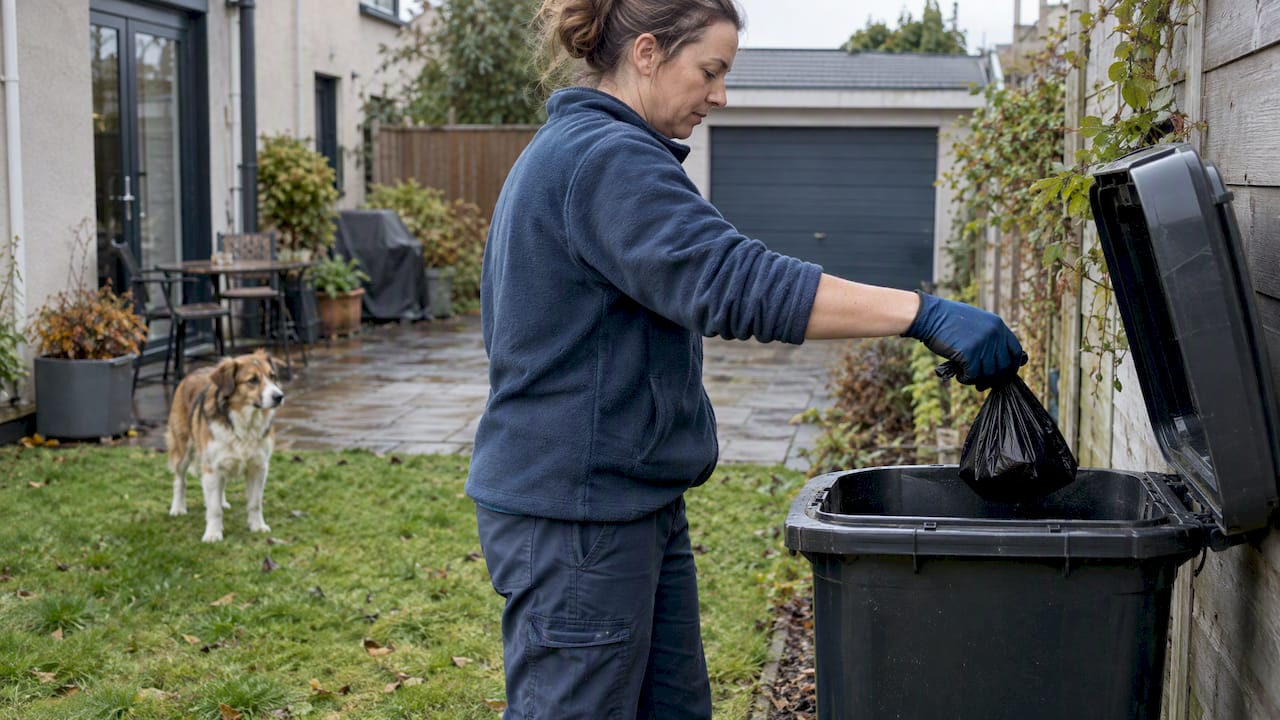
If your yard has a dog in it, hiring scheduled pet waste removal, whether twice-weekly, weekly, bi-weekly, or a one-time visit, is the fastest way to make the space usable and safer again. We handle regular pickup that cuts odor, protects kids and pets from parasites, and disposes of waste responsibly so you get your lawn back without lifting a scooper.
TL;DR:
- Twice-weekly service is recommended for yards with multiple dogs or heavy daily use to prevent waste buildup.
- A standard visit involves full yard walk-through, hand pickup, bagging, and sometimes deodorizing, with duration depending on yard size and dog count.
- Prompt waste removal is critical to reduce health risks from parasite eggs and prevent soil and water contamination.
- Disposal methods vary: trash is slow to decompose; flushing is only viable for sewage systems; industrial composting is limited by local programs.
- Confirm that providers are insured, clarify waste disposal procedures, and choose options that match your yard’s specific needs and local regulations.
Table of Contents
- Which Pet Waste Removal Plan Fits Your Yard
- What to Expect During a Visit and How to Prepare
- Why Prompt Removal Protects Health and Soil
- How Eco-Friendly Disposal Actually Works
- How to Choose a Pet Waste Removal Service
- Local Rules Around Commercial Yard Maintenance
- Insurance and Liability for Providers and Homeowners
- What Years in Yards Teaches You About Dog Owners
- Getting Started With a Cleanup Plan
- FAQ
- Sources
Which Pet Waste Removal Plan Fits Your Yard
The right frequency depends on how many dogs you have, how often they use the yard, and how much mess you can tolerate before it becomes a problem. Matching the plan to your household avoids both overpaying and letting waste pile up between visits.
- Twice-weekly suits multi-dog households or yards with heavy daily use, where waste accumulates fast enough that a single weekly visit leaves buildup.
- Weekly works for most single-dog households with a fenced yard and moderate outdoor time.
- Bi-weekly fits lighter use, smaller dogs, or owners who supplement with occasional DIY pickup between visits.
- One-time cleanups suit move-ins, open houses, parties, or anyone who just needs a reset before starting a recurring plan.
A standard visit covers a full walk of the yard, hand pickup and bagging of waste, a quick tidy of visible mess near patios and play areas, and often an optional deodorizing step for yards with strong odor buildup. You can read more about how scheduled cleanup reduces trash odor between visits.
Visit length depends mostly on dog count and yard size. A small yard with one dog might take a few minutes, while a larger property with multiple dogs and dense grass takes longer. That difference is also the main driver behind pricing, along with access difficulty and whether waste has built up from a long gap in service. If your situation is unusual, such as a very large lot or an overgrown yard needing an initial deep clean, consider services like forestry mulching, stump grinding, and demolition and ask for a custom quote rather than assuming the standard rate applies.
What to Expect During a Visit and How to Prepare
A typical visit starts with access, whether that is a gate code, a side door left unlocked, or a scheduled time when someone is home. Technicians walk the yard systematically, using gloved hand tools and sealed bags to collect waste, then do a final sweep to catch anything missed on the first pass.
To make visits faster and more thorough:
- Move toys, hoses, and furniture out of the main pickup zones.
- Secure other pets indoors or in a separate area during the visit.
- Flag any hazards, like a hole in the fence or a broken step.
- Point out heavy buildup zones if it’s a first visit or there’s been a long gap.
- Mention any sandbox or play area that needs extra care or covering.
Pro Tip: Leave a note or text the day before your first visit listing any trouble spots. It saves time and gets everything handled on the first pass instead of a follow-up.
Special cases, like a yard that has gone unserviced for weeks or a sandbox that needs protective covering, are usually handled as add-ons rather than folded into the standard rate.
Why Prompt Removal Protects Health and Soil
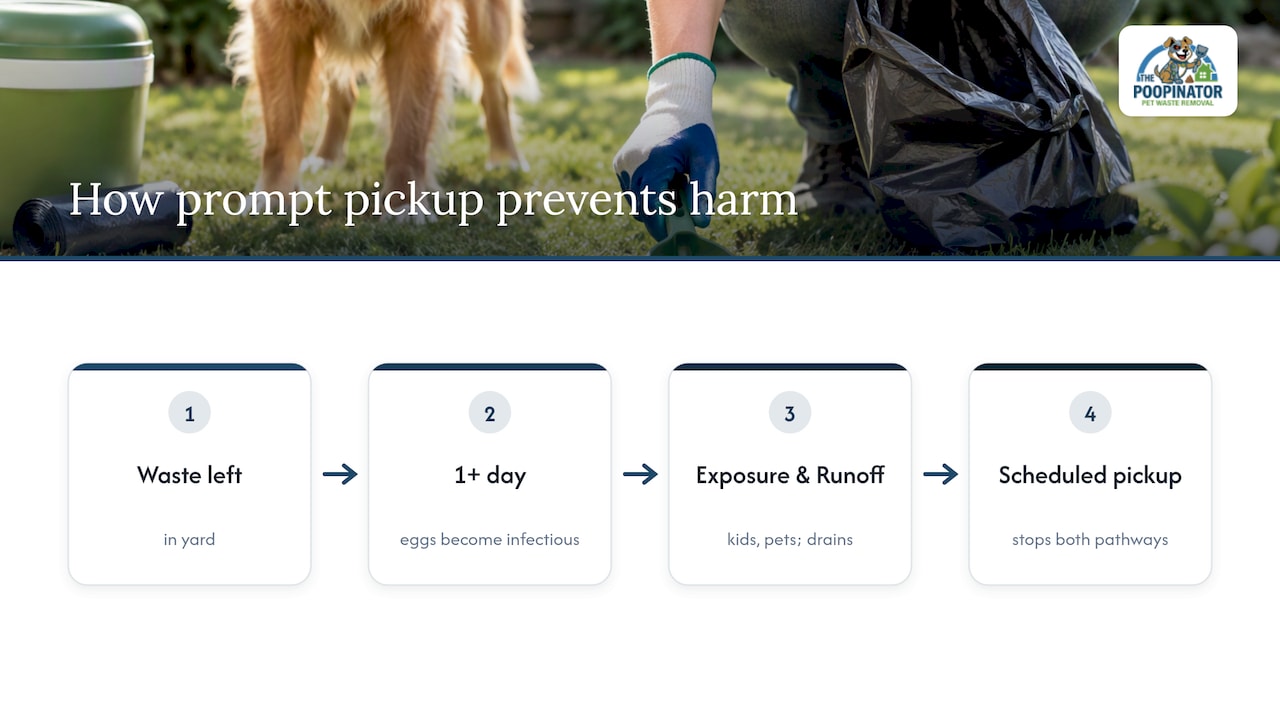
Dog waste left in a yard is not just unpleasant. Parasite eggs in feces can become infectious in as little as one day after being shed, according to the Oregon Veterinary Medical Association, which means a short gap between visits already carries risk for both kids and pets who use the yard.
The exposure window is short: once waste sits for even a day, the Oregon Veterinary Medical Association notes the risk of soil contamination and reinfection rises sharply.
Roundworms and other intestinal parasites spread through contact with contaminated soil, which is why the American Veterinary Medical Association recommends immediate pickup along with basic hygiene steps like washing hands after handling waste and keeping sandboxes covered. Dogs can also reinfect themselves by sniffing or licking contaminated grass, turning a single missed cleanup into a recurring health issue.
Beyond parasites, waste left on the ground washes into storm drains and soil, contributing to nutrient runoff and water contamination. Burying it or leaving it to “break down naturally” does not solve either problem. Scheduled removal closes that exposure window before it opens, which is the core reason recurring service matters more than a once-in-a-while cleanup.
How Eco-Friendly Disposal Actually Works
Not every disposal method marketed as “eco-friendly” holds up once you look closer. According to the American Kennel Club, the real options are trashing, flushing where sewage systems accept it, or industrial composting where a municipal program exists, and each comes with limits worth understanding before you trust a provider’s claims.
- Trash disposal is the most universally available option but sends waste to a landfill where it decomposes slowly.
- Flushing works only where waste enters a sewage system designed to treat it, not a septic system, and never with the bag attached.
- Municipal or industrial composting breaks waste down safely, but availability depends entirely on whether your city runs a program that accepts pet waste.
- Home composting is generally discouraged because backyard setups rarely reach the heat needed to kill pathogens safely.
“Compostable” and “biodegradable” bag labels sound similar but are not interchangeable. Compostable bags typically need industrial composting conditions to break down fully, and in a standard landfill they often behave much like regular plastic. Before trusting an eco claim, ask a provider where waste actually ends up and whether local composting facilities accept it.
How to Choose a Pet Waste Removal Service
Picking a provider comes down to a short list of checks you can run during a single phone call or quote request. Skip providers who dodge direct answers on any of these points.
- Confirm frequency options match your yard’s needs, from twice-weekly to one-time.
- Ask for clear, written pricing with no vague “it depends” without a follow-up quote process.
- Verify insurance coverage in case of property damage during a visit.
- Ask exactly where collected waste goes and whether composting is genuinely available locally.
- Check for local experience and read actual customer reviews, not just a star rating on the homepage.
| Criteria | What to ask | Red flag |
|---|---|---|
| Pricing | “What’s included at this price, and when would it change?” | Pricing that shifts after the first visit with no explanation |
| Disposal | “Where does the waste go after pickup?” | No clear answer or a vague “we handle it eco-friendly” |
| Insurance | “Are you insured for property damage?” | Refusal or hesitation to confirm coverage |
| Reviews | “Can I see recent customer feedback?” | No visible reviews or only a handful with no detail |
| Scheduling | “What happens if a visit gets missed or delayed?” | No defined policy for missed visits |
If a provider cannot answer these clearly, treat it as a disqualifier rather than a minor gap. Booking a one-time cleanup or a short trial period before committing to a recurring plan is the lowest-risk way to judge thoroughness, punctuality, and communication firsthand.
Local Rules Around Commercial Yard Maintenance
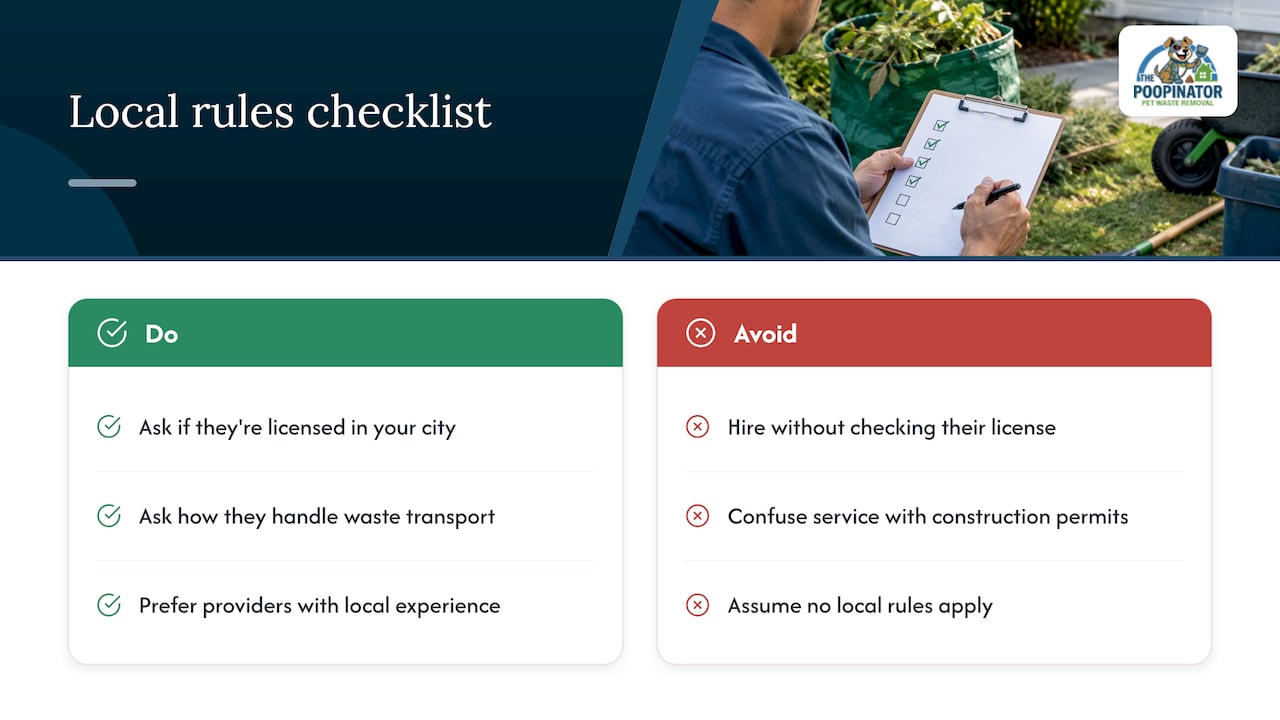
Pet waste removal companies operating in residential neighborhoods generally fall under local business licensing rules rather than specialized environmental permits, but requirements vary by city and county. Some municipalities require a general business license for any service entering private property for pay, while others have specific rules about waste transport and disposal if a provider moves collected waste off-site in bulk.
Zoning and noise ordinances can also apply indirectly, particularly for providers using motorized equipment or operating early morning routes in residential areas. None of this changes what a cleanup includes, but it does affect which providers are operating properly versus cutting corners on paperwork.
When vetting a provider, it is reasonable to ask whether they are licensed to operate in your city and how they handle waste transport if your municipality has specific rules on that. A provider with established local experience, rather than one working remotely or managing multiple distant markets, is more likely to already understand these requirements.
For what it is worth, none of this should be confused with real estate-related permitting around landscaping or property staging work, which falls under an entirely different set of commercial construction and zoning rules. Pet waste removal is a maintenance service, not a construction or land-disturbance activity, so it typically does not require the kind of permits tied to grading, drainage, or major landscaping changes.
Insurance and Liability for Providers and Homeowners
A provider working in your yard regularly should carry general liability insurance that covers accidental property damage, whether that is a broken sprinkler head, a damaged fence latch, or an injury on your property during a visit. Asking about this upfront protects you from being on the hook for an incident that was not your fault.
From the homeowner’s side, liability mostly comes down to access and property condition. If you know about a hazard, like a loose stair or an aggressive second dog, flagging it ahead of a visit is both a safety courtesy and a way to avoid disputes later if something goes wrong.
Most homeowner’s insurance policies do not specifically address pet waste removal visits, since they treat it like any other service provider entering the property, similar to a landscaper or a dog walker. If you are a landlord booking service for a rental property, it is worth confirming whether your property insurance or the tenant’s lease terms address third-party service visits, since that can affect who is responsible if an issue comes up.
Choosing an insured, locally established provider is one of the simplest ways to limit your own liability exposure without needing to change your policy or add anything out of pocket.
What Years in Yards Teaches You About Dog Owners
After more than 20 years of combined experience and hundreds of five-star reviews across our team, a few patterns show up constantly. The most common mistake is waiting too long between cleanups, which turns a five-minute job into a slow buildup problem. The second is ignoring disposal method entirely, assuming “picked up” automatically means “handled responsibly.”
DIY shortcuts, like skipping gloves or reusing yard tools meant for food gardens, create hygiene risks that are easy to avoid. Recurring service, even at a modest frequency, almost always costs less in time and aggravation than sporadic cleanups, and it keeps yards presentable enough that neighbors never have a reason to complain.
— William
Getting Started With a Cleanup Plan
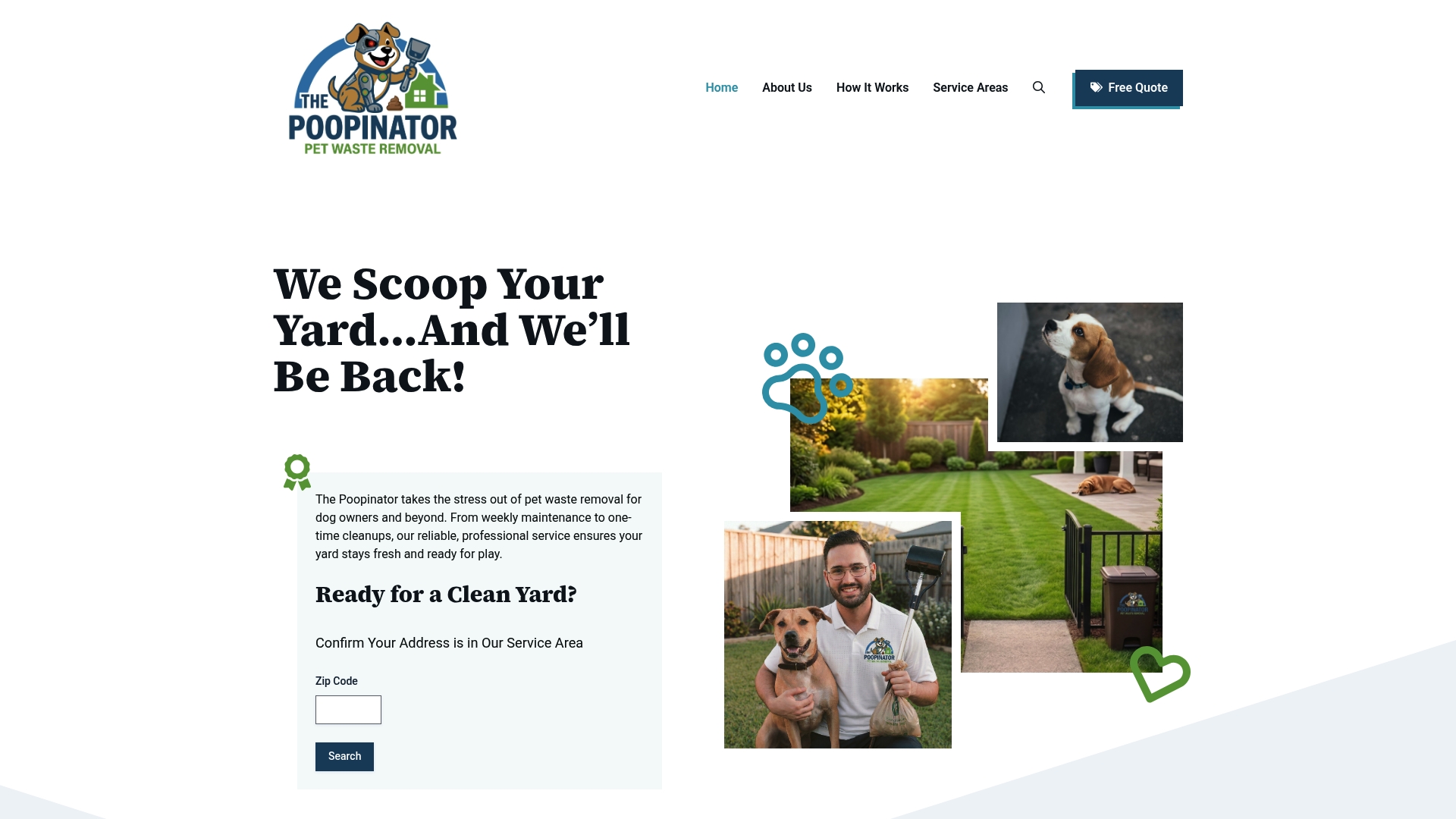
Once you know roughly how often your yard needs attention, booking is straightforward. There are several ways to get started including twice weekly, weekly, bi-weekly, and one-time pet waste removal plans.
- Twice-weekly and weekly plans suit active, multi-dog yards that need frequent attention.
- Bi-weekly fits lighter use or households supplementing with some DIY pickup.
- One-time cleanups are a low-commitment way to try the service before scheduling anything recurring.
If you are not sure which cadence fits, starting with a one-time visit is the easiest way to see how thorough and fast the process is before committing. You can see exactly how our plans work and what each one includes before booking.
FAQ
How often should I schedule pet waste removal?
Most single-dog households do well with weekly service, while multi-dog or high-activity yards often need twice-weekly visits to avoid buildup. Lighter use cases can stretch to bi-weekly, especially when paired with occasional spot cleaning between visits.
What does a one-time cleanup typically include?
A one-time visit covers a full walk of the yard with hand pickup, bagging, and a tidy of visible waste near patios and play areas. It is a practical way to reset a yard before starting recurring service or ahead of an event.
Is composting a realistic disposal option for dog waste?
Composting is only realistic where a municipal or industrial program specifically accepts pet waste, since backyard composting rarely reaches the heat needed to neutralize pathogens, according to the American Kennel Club. Availability varies by city, so it is worth asking a provider directly rather than assuming compostable bags solve the problem on their own.
How much does professional pet waste removal cost?
Pricing depends on the plan: twice-weekly visits cost $15 per visit, weekly visits cost $20 per visit, bi-weekly visits cost $30 per visit, and a one-time cleanup costs $100 per visit through our pricing page. Costs can shift with yard size, dog count, or buildup from a long gap between visits.
What should I ask before hiring a pet waste removal service?
Ask where collected waste actually goes, whether the provider carries liability insurance, and how pricing changes with yard size or dog count. A provider who cannot answer clearly on disposal or insurance is worth skipping in favor of one who can.
Sources
- The Importance and Safety of Proper Dog Poop Cleanup | AKC
- Pets & Parasites | Oregon Veterinary Medical Association
- Intestinal parasites in cats and dogs | American Veterinary Medical Association