
Scheduled professional dog-waste removal is the fastest, most reliable fix for persistent dog poop trash odor in a yard. Mechanically removing feces before it breaks down stops the smell at its source instead of just masking it, and providers like The Poopinator build plans around exactly that principle. The rest of this guide covers how the service works, which plan fits your yard, and what to ask before you book.
TL;DR:
- Frequent, scheduled waste removal prevents nutrient hotspots and the buildup of odor-causing compounds in soil, especially in high-traffic or multi-dog yards.
- A single cleanup visit typically involves thorough yard-wide scanning, scooping, hauling waste off-site, and spot-treating persistent odor zones for maximum effectiveness.
- More frequent visits are necessary during humid months or with multiple dogs to counteract faster bacterial breakdown and odor growth.
- Relying on household products like baking soda or enzyme cleaners only masks symptoms, as they do not eliminate waste still decomposing underground.
- Proper disposal methods, clear scheduling policies, and reputable local experience distinguish trustworthy pet waste providers from less reliable services.
Table of Contents
- What Professional Dog-Waste Removal Actually Does
- Which Cleanup Schedule Fits Your Yard
- Why Removal Stops Odor at the Chemical Level
- What Happens During a Cleanup Visit
- How to Choose a Trustworthy Provider
- Common Household Products People Try First
- Preventing Odor Before It Starts
- Health Risks Tied to Dog Waste Odor
- A Practitioner’s View on Getting Odor Control Right
- How The Poopinator Handles Yard Dog-Poop Odor
- Sources
- FAQ
What Professional Dog-Waste Removal Actually Does
A trash can, a bin, or a yard corner that reeks of dog poop usually has one root cause: waste that’s been sitting long enough to fully decompose in place. Professional cleanup interrupts that process before odor compounds build up and before pathogens spread through soil and groundwater.
A typical visit covers more than a quick scoop. Technicians work the entire yard, not just the obvious spots, because dogs deposit waste in patterns owners often miss.
- Scanning the full yard, including fence lines, mulch beds, and under decks
- Scooping and bagging every deposit, fresh or aged
- Hauling waste off-site rather than leaving it in an outdoor trash can to bake in the sun
- Spot-treating stubborn odor zones where waste has broken down repeatedly
Passive decomposition, by contrast, leaves nutrient hotspots behind. A review of dogs’ environmental impact found that feces and urine release nitrogen, phosphorus, and organic matter into soil and water long after the visible waste seems to disappear. That’s why “it’ll break down eventually” isn’t a real odor strategy. It’s a slow leak.
Which Cleanup Schedule Fits Your Yard
Not every yard needs the same visit frequency, and picking the wrong one is the most common mistake dog owners make. The right schedule depends on how many dogs you have, how big your yard is, and how much foot traffic the space gets.
- One-time or event cleanup: best before a party, home sale, or move-in, or as a first deep clean before starting a recurring plan.
- Bi-weekly service: works for one dog in a moderate-sized yard with average activity, where waste doesn’t accumulate fast enough to cause daily odor.
- Weekly service: a middle ground for two-dog households or yards with heavier use, where a two-week gap starts to smell noticeable by day 10 or so.
- Twice-weekly service: recommended for multi-dog households, small yards where waste concentrates, or high-activity yards during summer and humid months when bacterial breakdown and odor both accelerate.
The general rule: more dogs and smaller yards mean shorter gaps between visits. Humidity speeds up decomposition, so a plan that felt adequate in spring often needs bumping up before peak summer. If you’re unsure, start with weekly and adjust after a month based on how quickly odor returns between visits.
Why Removal Stops Odor at the Chemical Level
Odor isn’t just unpleasant. It’s a signal that nitrogen compounds, ammonia, and bacterial byproducts are actively forming in your soil. Understanding that process explains why scooping matters more than spraying.
Dog urine and feces don’t just sit inert on grass. A study on urban greenspaces found significantly higher soil nitrate, ammonium, total nitrogen, and electrical conductivity near spots dogs frequently used, compared to samples just 8 meters away. Those localized nutrient hotspots are where odor tends to concentrate and persist, even after the visible waste is gone.
- Feces left in place continues releasing ammonia and volatile compounds as bacteria break it down
- Nitrogen and phosphorus buildup can alter soil chemistry enough to kill grass in “hot spots,” creating bare patches that hold odor
- Untreated waste contributes to nutrient runoff that degrades nearby water quality after rain
One dog produces a substantial amount of waste per year, according to extension research on pet waste issues. Multiply that by two or three dogs and it’s clear why yards with multiple pets need shorter intervals between cleanups. That volume, left unmanaged, is what turns a yard corner into a permanent odor zone rather than an occasional smell after rain.
What Happens During a Cleanup Visit
A cleanup visit follows a predictable sequence, which is worth knowing so you can judge whether a provider is doing a thorough job or rushing through.
Technicians typically arrive, do a quick walkthrough to note gates, dog locations, and problem areas, then work the yard systematically from one end to the other. Waste gets bagged on-site and hauled away rather than left in your outdoor bin, and any residual odor spots get treated before the crew leaves.
- Arrival and walkthrough: confirming access and flagging high-traffic zones
- Systematic removal: covering the entire yard, not just visible piles
- Bagging and hauling: waste leaves the property instead of sitting in your trash can
- Odor spot-treatment: targeting areas with heavier accumulation or lingering smell
Pricing varies with a handful of predictable factors: yard size, number of dogs, how long it’s been since the last cleanup, and terrain (a fenced flat yard takes less time than a sloped, wooded, or obstacle-heavy one). Travel distance from the provider’s service area can also factor into cost. Expect one-time cleanups to run higher per visit than recurring plans, since a first visit often clears months of accumulation.
Pro Tip: Book your first cleanup as a one-time “reset” visit even if you plan to switch to recurring service. Starting recurring service on top of months of built-up waste means your first few visits will feel incomplete no matter how good the crew is.
How to Choose a Trustworthy Provider
Not all pet waste companies operate the same way, and the difference usually shows up in three places: what they do with the waste, how they schedule, and how they price.
- Ask about disposal methods. A provider should have a clear answer, whether that’s sealed-bag trash disposal, a licensed digester, or another documented method. University guidance on pet waste disposal specifically warns against backyard composting unless the system is designed to handle pathogens safely, so a vendor who says “we just compost it” without specifics is worth questioning.
- Confirm insurance and scheduling terms. Ask what happens if a visit gets missed due to weather, and how cancellations work.
- Check reviews for specifics, not just star counts. Look for mentions of thoroughness, communication, and consistency across visits.
- Ask how long they’ve operated locally. Experience in your specific climate and soil conditions matters more than a national footprint.
Red flags include vague answers about where waste actually goes, no proof of insurance, or scheduling language that leaves cancellation and rescheduling undefined. A provider confident in its process will answer these questions without hesitation.
Common Household Products People Try First
Before calling a professional, most owners try to fight yard odor with whatever’s under the sink, and it’s worth knowing what actually helps versus what just masks the problem temporarily.
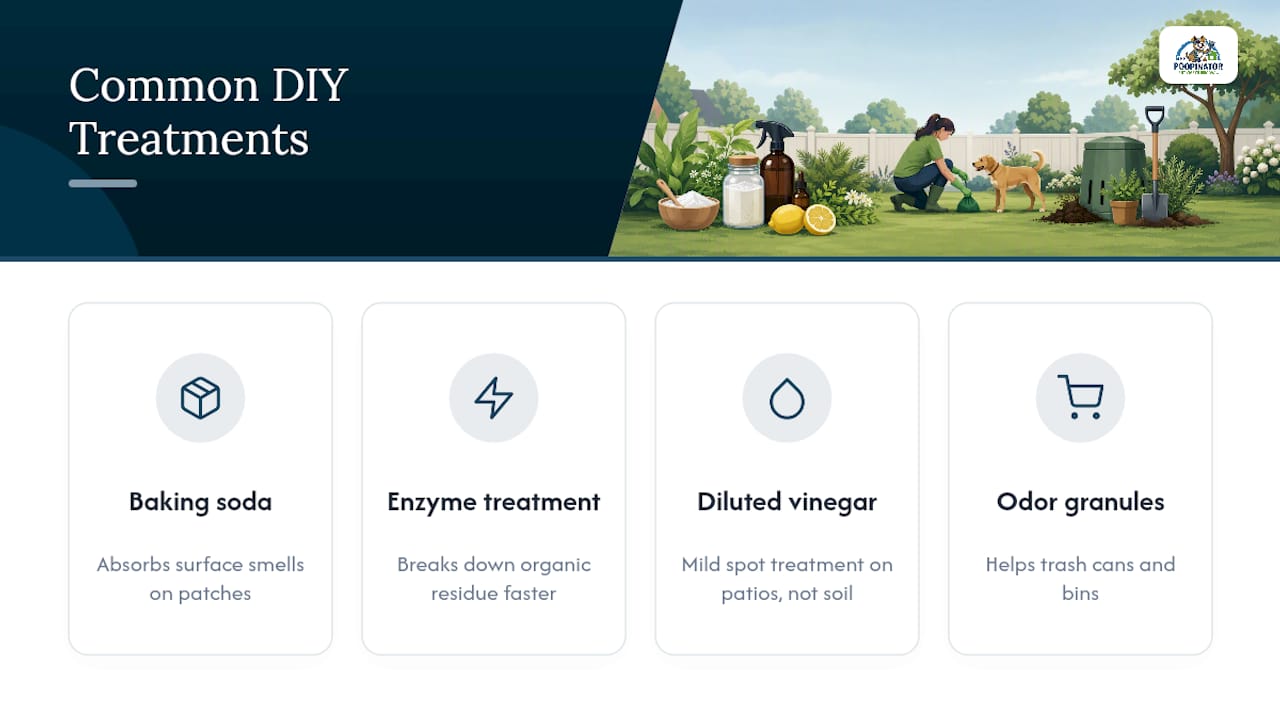
Baking soda sprinkled on odor-prone patches can absorb some surface smell, and enzyme-based yard treatments (different from indoor enzyme cleaners) are designed to break down organic waste residue faster than it would decompose naturally. White vinegar diluted with water works as a mild, non-toxic spot treatment on hardscape areas like patios, though it does nothing for soil that’s already saturated with waste byproducts. Outdoor odor-neutralizing granules, often sold at garden centers, can help with trash cans and bins specifically.
The honest limitation of all these products: they treat symptoms, not the source. If feces is still sitting in the grass while it decomposes, spraying enzyme treatment nearby buys you a day or two, not a lasting fix. Odor-control tactics that work well indoors, like activated carbon filters, don’t translate directly to an open yard where the odor source keeps regenerating as long as waste remains in place. That’s the core difference between deodorizing and actually solving dog poop trash odor: one covers the smell, the other removes what’s causing it.
Preventing Odor Before It Starts
The bags and storage habits you use between pickups matter more than most owners realize, especially in the window before waste actually leaves the property.
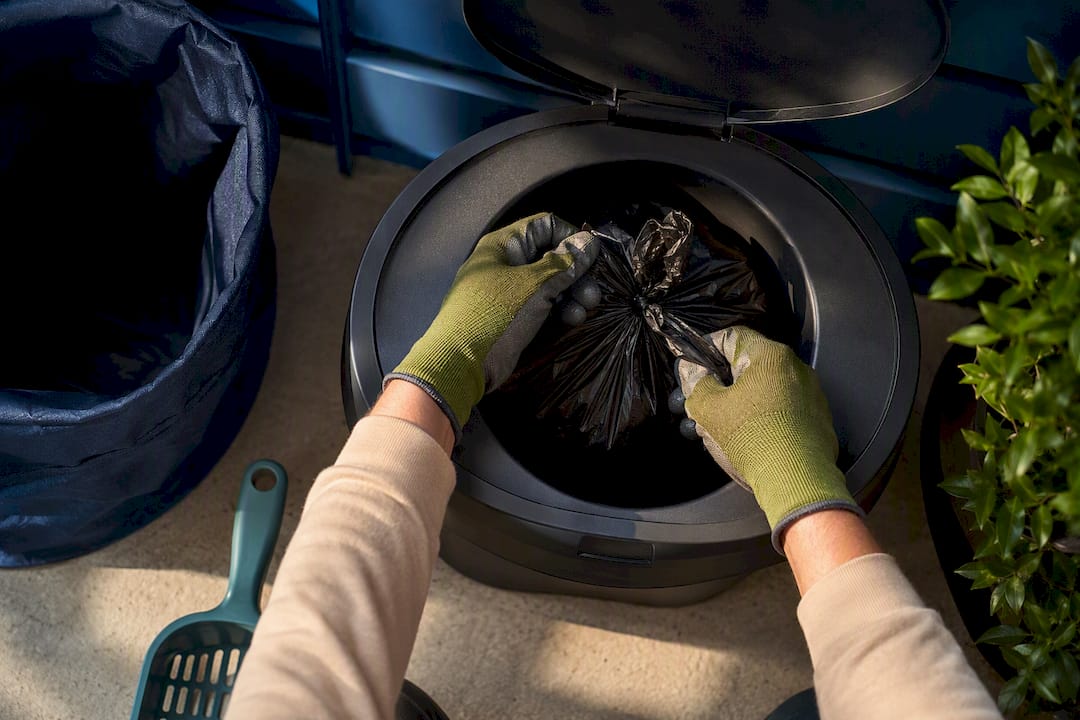
Thin, single-ply bags let odor escape almost immediately and tear easily when hauling waste to an outdoor bin. Thicker, scented poop bags or double-bagging reduces smell transfer, and bags labeled for pet waste specifically tend to hold up better than generic thin plastic. Whatever bag you use, storage location matters just as much: an outdoor trash can in direct sun accelerates decomposition and turns a mild smell into an overwhelming one within a day, especially in summer.
A few habits that make a real difference:
- Keep the outdoor waste bin in shade, not direct sun, to slow bacterial activity
- Use a bin with a tight-sealing lid rather than a loose-fitting one
- Empty outdoor pet-waste bins more frequently in summer, since heat speeds up odor development
- Avoid letting bagged waste sit for more than a day or two before trash pickup, even if the bin seems to be handling it
None of this replaces removing waste from the yard itself. Prevention tactics slow odor buildup in storage; they don’t stop feces from breaking down on the lawn and creating the nutrient hotspots discussed earlier. Think of bag and bin habits as damage control between the real fix: regular removal.
Health Risks Tied to Dog Waste Odor
The smell itself isn’t just unpleasant. It’s often a sign of active bacterial and pathogen activity that carries real health implications for people and pets who spend time in the yard.
Dog feces can carry parasites like roundworms and giardia, along with bacteria such as E. coli and salmonella, and pet waste is a documented contributor to water quality problems when it washes into storm drains after rain. Strong, persistent odor usually signals a higher concentration of these organisms breaking down in place, which raises exposure risk for kids playing on the lawn, dogs sniffing the same spots repeatedly, or anyone doing yard work barefoot or with bare hands.
Respiratory irritation from ammonia off-gassing is a secondary concern in yards with heavy accumulation, particularly in enclosed spaces like small fenced yards with poor airflow. It’s rarely severe, but it’s uncomfortable enough that most owners notice it before they identify the actual cause. The practical takeaway: treating odor as just a nuisance misses the point. It’s a proxy for pathogen load, and reducing one reduces the other.
A Practitioner’s View on Getting Odor Control Right
After watching hundreds of yards go from odor complaints to genuinely clean, the biggest mistake I see isn’t lack of effort. It’s mismatched frequency. Owners with two dogs try to make a bi-weekly plan work because that’s what worked with one dog, and then wonder why the smell keeps coming back by day nine.
The second mistake is seasonal complacency. A schedule that handles odor fine in March often falls apart by July, when heat and humidity speed up decomposition and bacterial activity. If you notice smell returning faster than usual, that’s your signal to shift frequency before it becomes a recurring problem, not after.
Between visits, keeping grass mowed short in problem areas helps sunlight and airflow do some of the work naturally. It’s not a substitute for removal, but it slows how fast odor rebuilds in the gaps.
— William
How The Poopinator Handles Yard Dog-Poop Odor
If you’ve read this far, you already know the fix isn’t a spray or a better trash bag. It’s consistent removal, done right and disposed of responsibly. That’s the entire premise behind The Poopinator’s plans.
The Poopinator offers bi-weekly, weekly, and twice-weekly recurring plans alongside one-time cleanups for move-ins, events, or that first deep reset before starting a schedule. Every visit uses eco-friendly disposal practices instead of leaving waste to break down in your yard or bin, backed by over 20 years of combined experience and hundreds of five-star reviews from local customers in Indianapolis and Orlando. Technicians know the seasonal patterns in these climates, including when humidity means it’s time to bump up your frequency before odor becomes a problem instead of after.
If your yard has reached the point where you notice the smell before you notice the mess, it’s time for a schedule built around your specific dogs and space. Check The Poopinator’s Orlando service plans and get a quote based on your yard size and dog count.
Sources
- Dog urine has acute impacts on soil chemistry in urban greenspaces
- Environmental pawprint of dogs as a contributor to environmental emissions (review)
- Pet waste and water quality (environmental extension material)
- Pet waste disposal guidance (university extension)
FAQ
How Often Should I Schedule Dog Poop Cleanup to Stop Odor?
Most single-dog households do well with weekly service, while multi-dog homes or high-activity yards typically need twice-weekly visits, especially during humid summer months.
Does Leaving Dog Poop to Decompose Naturally Get Rid of Odor?
No. Decomposition releases nitrogen and ammonia compounds into soil that can persist and create ongoing odor and nutrient hotspots rather than resolving the smell.
What Should I Ask a Pet Waste Removal Company Before Hiring?
Ask specifically about disposal methods, insurance coverage, cancellation policy, and how they handle missed visits due to weather; providers like The Poopinator can answer all four clearly.
Can Household Products Fully Eliminate Yard Dog Poop Odor?
Baking soda, enzyme treatments, and diluted vinegar can reduce surface odor temporarily, but none of them address waste still decomposing in the soil.
Are There Health Risks From Smelling Dog Waste Odor in My Yard?
Strong, persistent odor often signals active bacteria and parasites like E. coli, salmonella, or giardia, which raises exposure risk for children and pets in the yard.