
TL;DR:
- Dog waste is a significant environmental pollutant containing pathogens and nutrients that harm water quality and pose health risks. Proper daily removal and responsible disposal prevent contamination spread, protect public health, and maintain a clean community space. Home composting is unreliable, making bagging and trash disposal the safest method for dog waste management.
Most dog owners assume that poop left in the yard will just break down and disappear. It’s organic matter, after all. But why dog poop removal matters goes much deeper than keeping your lawn looking tidy. Dog waste is classified by the EPA as a pollutant in the same category as toxic chemicals and oil spills. It carries a cocktail of pathogens that survive in soil for months, contaminates local water sources, and poses real health risks to your kids, your dog, and your neighbors. What you do with it, and how quickly, changes the outcome entirely.
Table of Contents
- Key takeaways
- Why dog poop removal matters for the environment
- Health risks hiding in your yard
- The fertilizer myth, debunked
- Practical tips for keeping your yard clean
- Community and environmental benefits of consistent cleanup
- My take on why most people underestimate this
- Keep your yard clean with The Poopinator
- FAQ
Key takeaways
| Point | Details |
|---|---|
| Dog poop is not fertilizer | Unlike cow manure, dog waste contains pathogens that harm soil and water rather than enrich them. |
| Parasites outlast the smell | Parasite eggs survive in soil for up to 2 years, staying infectious long after waste appears to have decomposed. |
| Rain spreads the problem | Runoff carries waste nutrients and pathogens directly into storm drains and local waterways. |
| Daily removal is the standard | Removing waste every day cuts infection risk for both pets and people by limiting pathogen exposure time. |
| Bagging beats composting | Home composting dog waste carries unresolved pathogen risks; bagging and trash disposal remains the safest method. |
Why dog poop removal matters for the environment
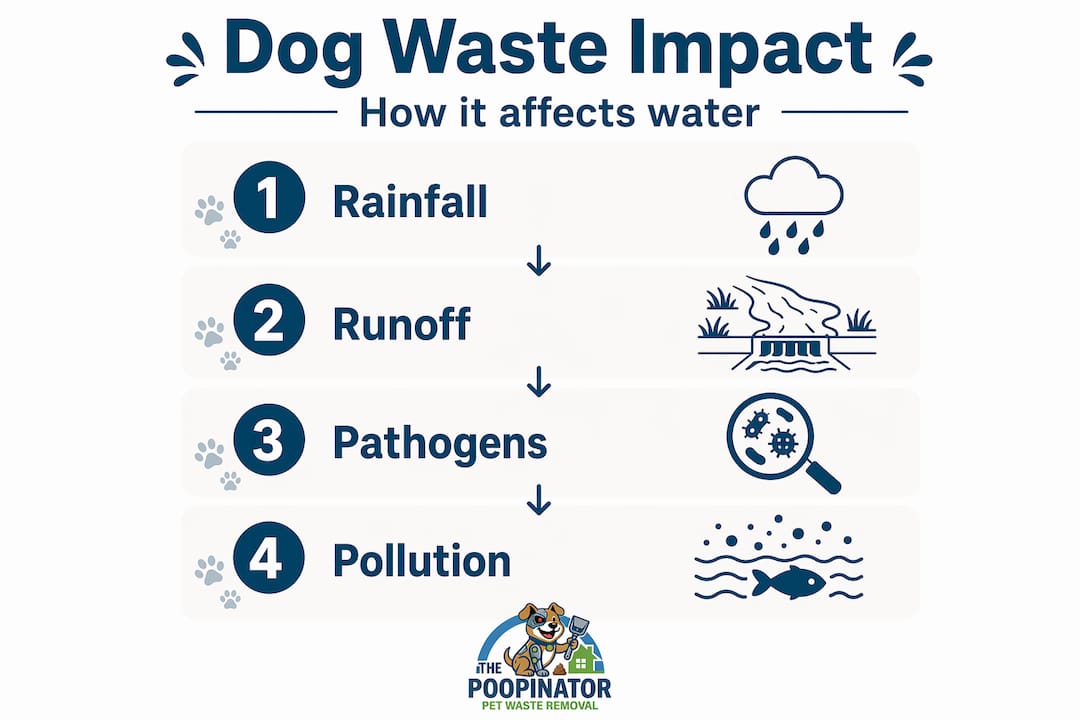
Dog waste does not just sit there. Every time it rains, water picks up whatever is in your yard and carries it somewhere else. That somewhere else is usually a storm drain, and from there, directly into a local creek, river, or lake. Treatment plants handle sewage, but stormwater bypasses treatment entirely before reaching natural waterways. What enters those drains arrives unfiltered.
Here is what makes dog waste particularly damaging to water quality. It contains high concentrations of nitrogen and phosphorus, two nutrients that feed algae and weeds. When those nutrients flood a lake or river, algae blooms and weed overgrowth choke out oxygen, kill fish, and turn recreational water into a green, murky mess. One study found that in some urban watersheds, pets are responsible for a significant share of total fecal bacteria loads, rivaling agricultural and wildlife contributions.
The pollution does not stop at nutrients. Dog waste carries tapeworms, roundworms, parvovirus, and E. coli, all of which linger in soil and water long after the original deposit disappears. These are not just problems for your yard. They affect the health of local wildlife, aquatic ecosystems, and anyone who uses a nearby park or beach.
Key environmental impacts of leaving dog waste unmanaged:
- Excess nitrogen and phosphorus degrade water quality in rivers and lakes
- Bacteria and parasites contaminate public parks, trails, and recreational water
- Foot traffic and rain spread fecal particles well beyond the original spot on the ground
- Wildlife that drinks from or lives near contaminated water can ingest these pathogens
Pro Tip: Place a designated waste station near your yard exit with bags and a sealed bin. Removing waste before a rainstorm prevents the runoff problem entirely.
Health risks hiding in your yard
This is the part that surprises most dog owners. A healthy-looking dog can still shed pathogens in its stool. You will not see Giardia, Salmonella, E. coli, or roundworm eggs. They are microscopic, and they are present in waste from symptom-free dogs too.
The table below breaks down the most common pathogens found in dog feces and their specific risks.
| Pathogen | Type | How it spreads | Who is most at risk |
|---|---|---|---|
| Giardia | Protozoan parasite | Soil, water, hand-to-mouth contact | Children, immunocompromised adults |
| Roundworm (Toxocara) | Helminth | Contaminated soil contact | Children, pets |
| Salmonella | Bacteria | Direct contact, contaminated water | All ages, especially young children |
| E. coli | Bacteria | Water contamination, contact | All ages |
| Parvovirus | Virus | Soil contact, unvaccinated dogs | Puppies, unvaccinated dogs |
What makes these pathogens especially concerning is their durability. Parasite eggs survive in soil for up to two years. Your yard can look completely clean while still harboring infectious material from waste that decomposed months ago. Giardia cysts are immediately infectious upon contact and thrive in damp environments, which describes most grass during spring and fall.
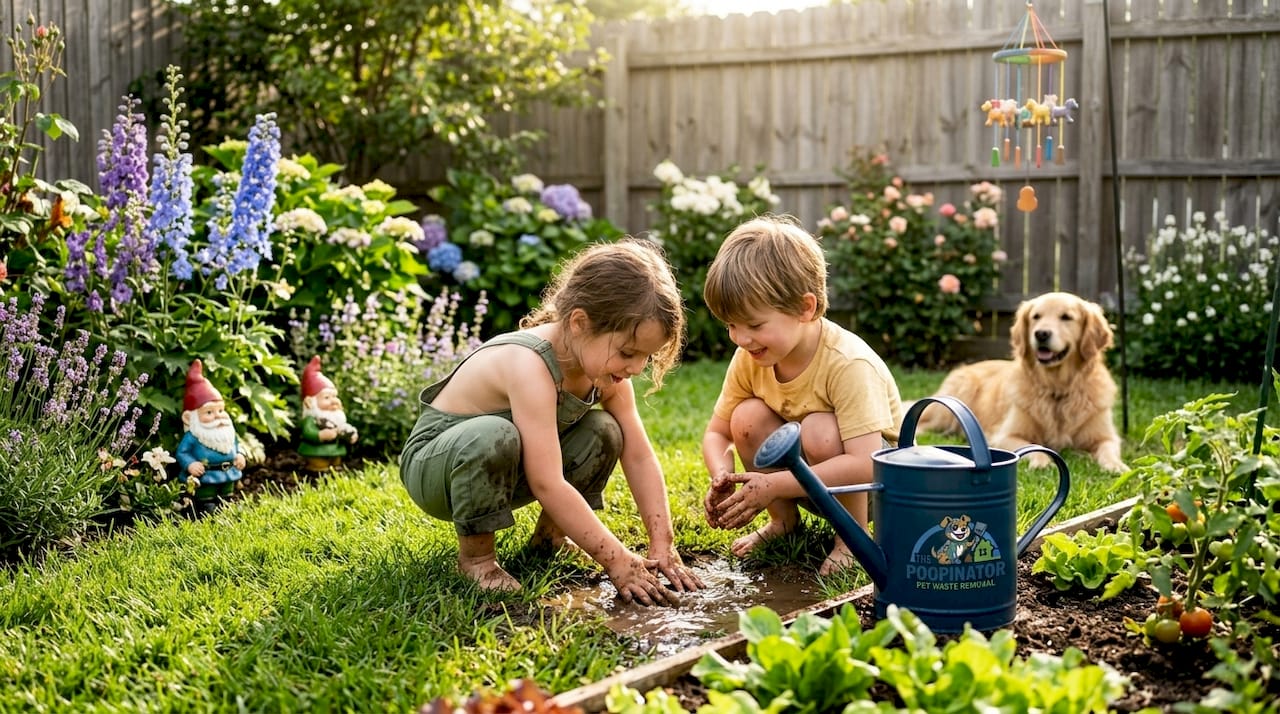
Children are the highest-risk group because they play on the ground and frequently touch their faces. Hand-to-mouth contact with contaminated soil is one of the most common transmission routes for intestinal parasites. Adults with compromised immune systems face similar vulnerabilities. These are not theoretical risks. They are documented transmission pathways that daily waste removal directly interrupts.
There is also a growing concern about antibiotic-resistant bacteria in dog feces. These bacteria transfer resistance genes to soil microbes, potentially entering the food chain and making infections harder to treat. This is a global health issue, and responsible pet waste disposal is one of the ways individual households contribute to managing it.
Pro Tip: After picking up waste, wash your hands with soap and water even if you wore gloves. Giardia cysts can transfer during the bagging process if bags tear or spill.
The fertilizer myth, debunked
People repeat this one constantly. “Dog poop is natural, it will break down and fertilize the grass.” It sounds reasonable until you look at what actually happens.
Cow and horse manure work as fertilizers because those animals are herbivores. Their digestive systems produce nutrient profiles that benefit soil. Dogs eat meat, and their waste has a completely different chemical composition. It is high in nitrogen at concentrations that burn and kill grass rather than feed it. That brown dead spot in your lawn? That is what dog poop fertilization actually looks like.
| Factor | Cow/horse manure | Dog feces |
|---|---|---|
| Diet source | Herbivore | Carnivore |
| Nitrogen level | Moderate, soil-safe | High, grass-burning |
| Pathogen content | Low after composting | High, persists in soil |
| Fertilizer value | Established, effective | None; causes damage |
| Safe to compost at home | Yes | Not reliably safe |
Decomposition is also much slower than most people expect. In optimal conditions, dog waste can take 9 weeks to fully break down. In cold or dry weather, that timeline stretches considerably. During that entire window, the pathogens remain active and transmissible. The waste may fade from sight while the contamination footprint quietly expands through rain and foot traffic spreading fecal particles across a broader area.
Home composting sounds like a responsible alternative, but the science does not fully support it yet. Research shows that home composting dog waste carries unresolved questions about parasite kill rates, drug residues, and microplastic release from compostable bags. Until those are resolved, bagging and placing in the trash remains the most reliably safe disposal method.
Practical tips for keeping your yard clean
Knowing the risks is one thing. Building habits that actually stick is another. The good news is that managing dog waste does not require much time if you set up a simple routine.
Here is a step-by-step approach that works for most dog owners:
- Pick up immediately after your dog goes. This is the single most effective habit. It prevents rain from spreading waste and minimizes the window for pathogen exposure.
- Do a full yard sweep at least twice a week. Even if you catch most deposits in real time, a scheduled sweep catches anything you missed.
- Bag waste and place it in a sealed outdoor trash bin. Double-bagging reduces odor and leak risk. Never flush dog waste, as many municipal systems are not designed to handle it.
- Store bags and a scooper near your back door. Friction is the enemy of good habits. When tools are right there, you will actually use them.
- Check high-traffic areas of your yard more frequently. Dogs tend to use the same spots repeatedly, so those areas need more attention.
Beyond the daily routine, a few tools make the job faster:
- A long-handled scooper lets you work without bending down, which matters in a large yard
- Biodegradable bags reduce plastic waste while still containing pathogens safely during trash disposal
- A dedicated outdoor waste bin with a tight lid keeps odors down and pests out
If you have multiple dogs or a large property, the manual workload adds up quickly. That is where professional pet waste services offer real value, handling the task on a scheduled basis so you never fall behind.
Community and environmental benefits of consistent cleanup
Cleaning up after your dog is not only about your yard. It contributes to something larger. Communities where dog owners consistently pick up waste have measurably cleaner parks, lower bacteria counts in local waterways, and fewer reported cases of zoonotic illness. That is a direct return on a small, regular habit.
Routine waste management sits within what scientists call the One Health framework, which connects human, animal, and environmental health as an interconnected system. When one piece is neglected, the effects ripple outward. Consistent pet waste removal addresses all three dimensions at once.
The community benefits are concrete and worth naming:
- Public parks stay safer for children and other pets
- Local rivers and lakes experience less nutrient and bacterial contamination
- Neighbors can enjoy shared outdoor spaces without the frustration of navigating other people’s negligence
- It models responsible pet ownership for others in your community
Neighborhoods where cleanup is normal also tend to have stronger social cohesion. It signals respect for shared spaces. That kind of culture does not happen on its own. It starts with individual choices made consistently.
My take on why most people underestimate this
I have spent years working with dog owners who genuinely love their animals, and almost every one of them has said some version of “I know I should do it more regularly” when it comes to waste pickup. The gap between knowing and doing is real, and I think it comes from one specific misunderstanding.
People picture dog poop as a nuisance, not a hazard. Once it stops being visible, they assume the problem is gone. What I have seen again and again is that the invisible problem is actually the bigger one. Parasite eggs in your soil. Bacteria in your lawn furniture area. Contamination tracked inside on shoes and paws. The absence of visible waste does not mean the absence of risk.
I also hear the fertilizer excuse a lot. I understand why it sounds logical, but the chemistry simply does not support it. Dogs are not cows. Their digestive output does not improve your yard. It degrades it, slowly and invisibly.
The honest truth is that daily removal is a five-minute task at most for one dog. What makes it feel burdensome is not the time. It is the lack of a habit and the mistaken belief that skipping is harmless. Once you understand what you are actually preventing, the behavior tends to change. Not out of guilt, but out of genuine understanding.
— William
Keep your yard clean with The Poopinator
If picking up after your dog is something you know matters but struggle to stay on top of, you are not alone. Life gets busy, yards get big, and the task falls behind.
The Poopinator is a professional pet waste removal service built specifically for dog owners who want a clean, safe yard without adding another chore to their week. With over 20 years of combined experience and a commitment to eco-friendly waste disposal, The Poopinator handles everything from single-dog yards to high-traffic multi-pet properties. Service plans range from bi-weekly to twice-weekly visits, depending on your needs. If you are dealing with waste buildup in your yard, The Poopinator can restore your outdoor space to something the whole family can actually enjoy. Hundreds of five-star reviews back that promise.
FAQ
Is dog poop actually harmful if left in the yard?
Yes. Dog waste contains pathogens including Giardia, E. coli, and roundworm eggs that persist in soil for months to years, posing infection risks to children, pets, and adults with weakened immune systems.
How often should dog waste be removed from a yard?
Daily removal is the recommended standard. Removing waste every day limits how long infectious pathogens remain active on the ground and prevents rain from spreading contamination to a wider area.
Can dog poop be used as fertilizer?
No. Dog feces contain pathogen levels and nitrogen concentrations that damage grass and contaminate soil rather than improving it, unlike composted herbivore manure from cows or horses.
What is the safest way to dispose of dog waste?
Bagging waste and placing it in the household trash is currently the safest and most practical disposal method. Home composting dog waste is not yet considered reliably safe due to unresolved questions about pathogen elimination.
Does dog poop affect local water quality?
Yes. Rain carries waste nutrients and bacteria through storm drains directly into rivers and lakes, contributing to algae blooms and elevated bacterial counts in local waterways, since stormwater typically bypasses treatment plants entirely.