
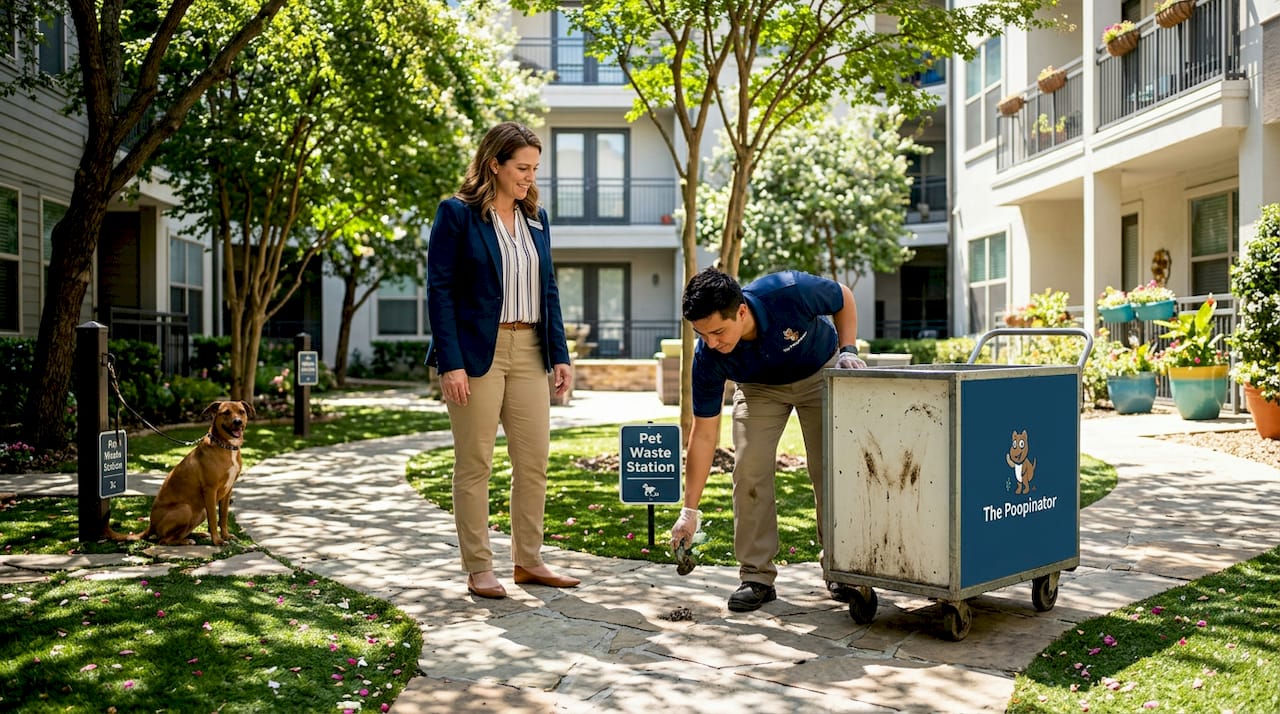
Dog waste complaints surged 35.8% in NYC in May 2026 alone. If you manage a property with dogs on it, that number should get your attention. Understanding what is commercial pet waste service is the first step toward solving a problem that affects health, property value, legal liability, and the daily experience of every resident or visitor who walks your grounds. This guide breaks down exactly how these services work, what they cost, and why more property managers and pet owners are treating them as a necessity rather than a luxury.
Table of Contents
- Key takeaways
- What commercial pet waste service is and how it operates
- Benefits of commercial pet waste services
- How commercial pet waste services work in practice
- Cost considerations for commercial pet waste removal
- Legal responsibilities and public health regulations
- My take on why this service is underestimated
- Keep your property clean with Thepoopinator
- FAQ
Key takeaways
| Point | Details |
|---|---|
| What the service covers | Commercial pet waste service includes scheduled pickup, station maintenance, and eco-friendly disposal on shared or managed properties. |
| Health and safety matter | Dog waste carries pathogens like hookworms and Salmonella, making professional removal a public health priority. |
| Property value is at stake | A clean, waste-free property can increase its value by up to 7%, making service costs a smart investment. |
| Regulations are tightening | Laws like NYC’s proposed SCOOP Act show that fines and enforcement are increasing for unmanaged pet waste. |
| Cost depends on scope | Pricing varies by property size and visit frequency, but professional service typically outperforms DIY for larger properties. |
What commercial pet waste service is and how it operates
A commercial pet waste service is a professional, contracted operation that removes dog waste from shared or managed outdoor spaces on a regular schedule. This is not the same as a neighbor with a bag and good intentions. It is a structured system designed for properties where multiple dogs use the same grounds every single day.
Typical clients include apartment complexes, homeowner associations, dog parks, office campuses, retail centers, and municipal parks. Any property where dogs are welcome and where waste accumulates faster than one person can manage it is a candidate for this kind of service.
The core components of commercial pet waste management generally include:
- Scheduled waste pickup: Technicians visit on a set calendar, collecting and bagging all visible waste from designated areas.
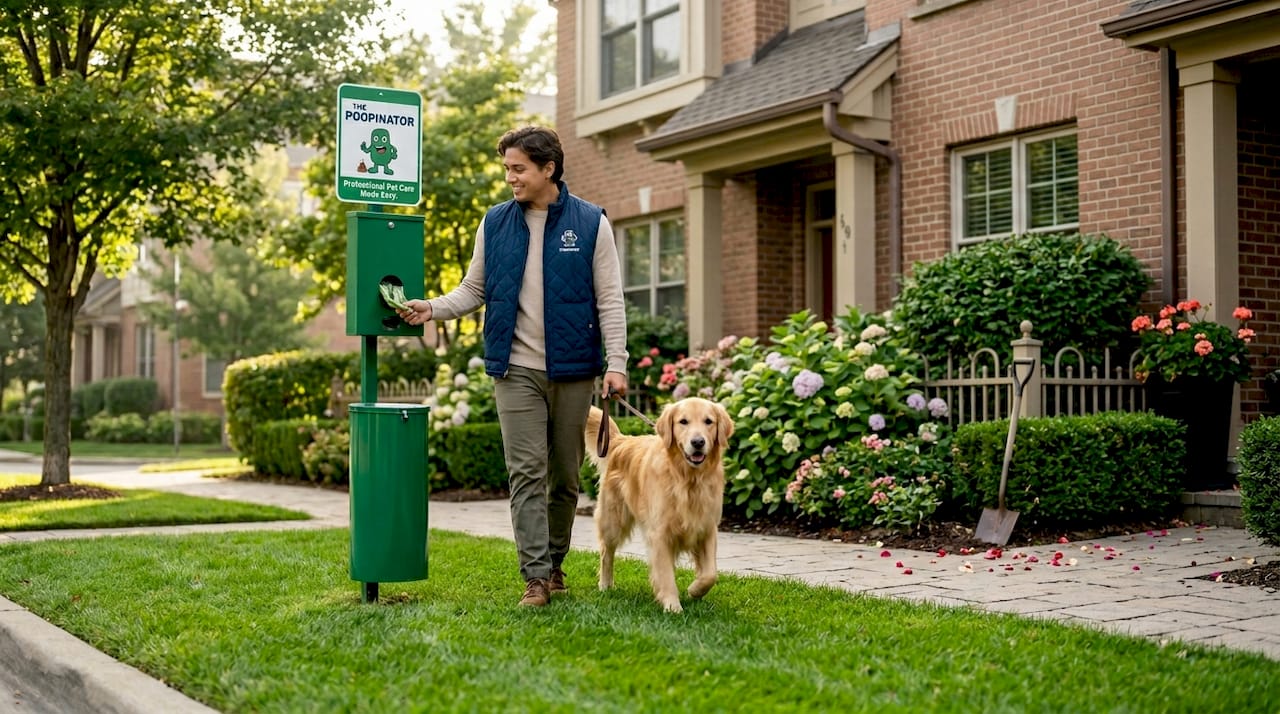
- Pet waste station installation and servicing: Dispensers stocked with bags and lined waste bins are placed at high-traffic spots and restocked regularly.
- Sanitization: Many providers apply deodorizing treatments or sanitizers to the area after pickup to reduce bacteria and odor.
- Eco-friendly disposal: Responsible providers use waste disposal methods that minimize environmental impact rather than simply tossing bags into a standard landfill bin.
Service frequency is flexible. Visits can be weekly, bi-weekly, or on demand depending on the number of dogs using the property and the client’s budget. A small HOA with 20 dog-owning households might do fine with twice-weekly service. A large apartment complex with 200 dogs may need daily visits.
Pro Tip: When evaluating a commercial service, ask specifically about their disposal method. True eco-conscious providers will be able to describe exactly how waste leaves your property and where it goes.
Benefits of commercial pet waste services
The most obvious benefit is cleanliness. But the reasons to invest in professional pet waste removal go much deeper than aesthetics.
Health protection for your residents and guests
Dog waste is not just unpleasant. It is a genuine public health hazard. Dog waste contains pathogens including hookworms, Salmonella, and Leptospirosis. These organisms survive in soil and grass long after the waste itself has washed away. Children playing on lawns, residents walking barefoot, and pets sniffing around are all at risk. A professional removal service dramatically reduces pathogen load in shared spaces.
Property value and curb appeal
A clean, waste-free property can increase property value by up to 7%. That is not a trivial number when you are managing a multi-unit residential building or a commercial campus. Prospective tenants and buyers notice the condition of outdoor spaces immediately. Waste on the ground signals neglect, and neglect costs you money at lease renewal time.
Resident retention and satisfaction
Professional pet waste removal reduces resident complaints and acts as a measurable retention tool. Pet owners represent a large and growing segment of renters and homeowners. When you offer clean, well-maintained outdoor spaces as part of the living experience, you give them a concrete reason to stay.
“Pet waste management is increasingly viewed as a resident retention amenity that improves satisfaction and reduces complaints.” — Pet Waste Management Services: Are They Worth It?
Legal and liability protection
Unmanaged pet waste creates legal liability and infrastructure damage that can cost property managers far more than a service contract ever would. Slip-and-fall incidents, drainage contamination, and regulatory fines are all real risks. A documented, professional service creates a paper trail showing you are actively managing the issue.
How commercial pet waste services work in practice
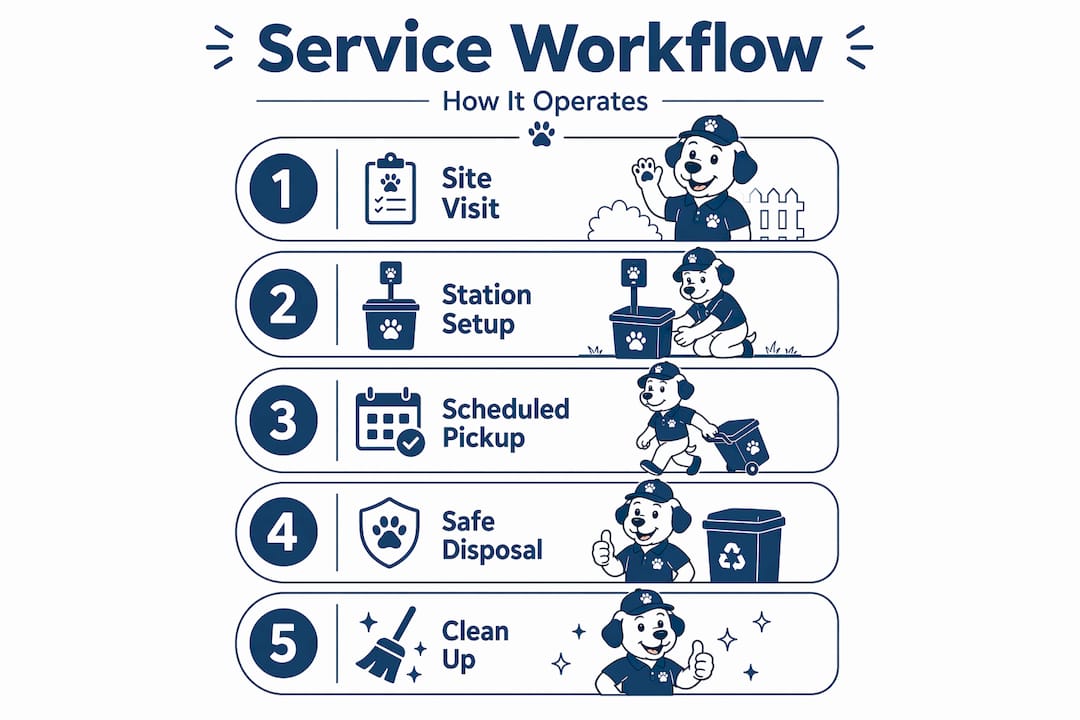
Understanding the day-to-day workflow helps you know what to expect and how to integrate a service into your existing property management routine. Here is how a typical service operates from start to finish:
- Initial property assessment. The provider walks the property to identify high-traffic dog areas, optimal station placement locations, and any existing waste accumulation that needs a one-time deep clean before regular service begins.
- Station installation. Bag dispensers and waste bins are installed at key entry points, along walking paths, and near dog relief areas. The provider handles all hardware and placement.
- Scheduled service visits. On agreed days, a technician arrives and systematically covers the entire service zone, collecting all visible waste and disposing of it according to the contract terms.
- Station restocking and maintenance. During each visit, bag dispensers are refilled, waste bins are emptied and relined, and any damaged equipment is flagged for replacement.
- Sanitization treatment. After pickup, the provider may apply a pet-safe deodorizer or sanitizing spray to high-use areas, reducing odor and bacterial presence between visits.
- Service documentation. Many providers offer digital reports or visit logs so property managers have a clear record of every completed service, useful for compliance and resident communication.
The service workflow varies by company, but the best providers treat each visit as a complete maintenance event rather than just a quick pickup. Technologies used across the industry include color-coded bags for tracking, GPS-logged service routes, and biodegradable liners for waste bins.
Cost considerations for commercial pet waste removal
Pricing for commercial pet waste removal is not one-size-fits-all. The cost depends on property size, visit frequency, and service scope, and understanding these variables helps you budget accurately.
Smaller properties with infrequent service might see costs starting around $50 to $100 per visit. Larger multi-acre properties with daily service and multiple waste stations can run several hundred dollars per month. The key is comparing that number against the real cost of doing nothing.
| Factor | DIY or No Service | Professional Service |
|---|---|---|
| Labor cost | Staff time diverted from core duties | Included in contract |
| Consistency | Dependent on staff availability | Scheduled and guaranteed |
| Health risk management | Minimal to none | Systematic pathogen reduction |
| Regulatory compliance | Reactive at best | Proactive documentation |
| Resident satisfaction | Lower, more complaints | Higher, fewer complaints |
| Long-term property costs | Higher due to damage and fines | Lower through prevention |
Investing in professional service avoids fines and expensive remediation that can result from unmanaged waste. When you factor in the cost of a single regulatory fine, one slip-and-fall incident, or the loss of a long-term tenant due to poor property conditions, the monthly service fee starts to look like a bargain.
Pro Tip: Ask providers for a per-dog or per-unit pricing model if your property has a predictable dog count. This often produces more accurate quotes than flat-rate pricing for mid-sized properties.
Legal responsibilities and public health regulations
The legal side of commercial pet waste management is getting more serious, not less. Property owners and managers need to understand where their responsibility begins and how services help them stay on the right side of the law.
Here is what the current regulatory environment looks like:
- Local ordinances: Most municipalities already require pet waste cleanup on public and commercial property. Fines for noncompliance vary by city but are increasingly enforced.
- NYC’s proposed SCOOP Act: The NYC Council’s SCOOP Act pushes for more bag stations, clearer signage, and stronger enforcement, with DSNY fines reaching up to $250 per violation.
- Stricter enforcement trends: Stricter enforcement is placing more responsibility directly on commercial property owners, not just individual pet owners.
- Infrastructure requirements: Emerging regulations in several states are beginning to require documented waste management plans for properties above a certain size or dog density.
- Liability exposure: Beyond fines, property managers face civil liability if a visitor is injured or becomes ill due to conditions that a reasonable maintenance program would have prevented.
The public health argument is equally compelling. Dog waste pathogens do not stay in one spot. Rain carries them into storm drains, groundwater, and nearby water bodies. Families using shared green spaces, especially children, face direct exposure. A professional commercial service is one of the most effective tools for reducing this risk at scale.
My take on why this service is underestimated
I have worked with property managers and dog owners long enough to see the same pattern repeat itself. Someone decides they can handle pet waste management in-house, assigns it to a maintenance worker as a side task, and then wonders six months later why residents are still complaining and the grass near the dog run smells like a kennel.
The mistake is treating pet waste removal as a simple chore rather than a specialized service. The difference matters. A trained technician knows where waste hides, how to sanitize effectively, and how to document service for liability purposes. A maintenance worker with a bag does not.
What surprises most property managers I talk to is the resident satisfaction angle. They expect to hear about health and compliance, and those matter. But the feedback I hear most often after a property starts professional service is that residents feel more respected. The message a clean property sends is that management cares about the details. That feeling keeps people renewing leases.
I also think the cost objection is usually based on a narrow view of the numbers. People compare the service fee to zero and call it expensive. The honest comparison is service fee versus the total cost of complaints, fines, staff time, and tenant turnover. That math almost always favors the professional service.
If you are managing any property where dogs are a regular presence, the question is not whether you need commercial pet waste management. The question is how long you are willing to wait before you get it.
— Craig
Keep your property clean with Thepoopinator
If you are ready to stop managing pet waste on your own and start working with a team that treats it as the serious job it is, Thepoopinator is built for exactly that.
Thepoopinator brings over 20 years of combined experience to residential and commercial properties, with eco-friendly disposal methods and flexible scheduling that fits your property’s needs. Whether you need bi-weekly cleanups or more frequent visits, the service is built around your yard and your timeline. Hundreds of five-star reviews back up what the team delivers: clean, odor-free outdoor spaces that residents and guests actually enjoy using. If you are in Indiana or Florida, check out pet waste removal in Westfield or dog poop cleanup in Orlando to get started.
FAQ
What is a commercial pet waste service?
A commercial pet waste service is a professional operation that removes dog waste from shared outdoor spaces on a scheduled basis, typically serving apartment complexes, HOAs, parks, and businesses. It includes pickup, station maintenance, and eco-friendly disposal.
How does a commercial pet waste service work?
A provider assesses the property, installs waste stations, and sends technicians on a set schedule to collect waste, restock bag dispensers, and sanitize high-use areas. Most services offer weekly, bi-weekly, or on-demand visit options.
What does commercial pet waste service cost?
Pricing depends on property size, visit frequency, and service scope, with smaller properties starting around $50 to $100 per visit and larger properties running several hundred dollars per month. Professional service typically delivers better long-term value than DIY approaches for multi-unit properties.
What are the main benefits of pet waste service for property managers?
The main benefits include reduced health risks from pathogens, improved curb appeal, stronger resident retention, and protection from legal liability and regulatory fines. A clean property can also increase its value by up to 7%.
Are property managers legally required to manage pet waste?
Most municipalities have ordinances requiring waste cleanup on commercial and shared properties, and enforcement is increasing. Proposed legislation like NYC’s SCOOP Act signals a national trend toward stricter accountability for property owners who fail to manage pet waste responsibly.
Recommended
- Home – The Poopinator – Professional Pooper Scooper and Pet Waste Removal Service
- Dog Waste Problems in Westfield, IN? Here’s the Pooper Scooper Service That Actually Works – The Poopinator – Professional Pooper Scooper and Pet Waste Removal Service
- Reliable Pet Waste Removal in Westfield, IN – The Poopinator – Professional Pooper Scooper and Pet Waste Removal Service