
Most dog owners picture a poop scooper service as someone wandering around the yard with a bag, grabbing what they can see. The reality is far more systematic. Understanding what does a poop scooper visit include helps you know exactly what you are paying for and why it matters for your dog’s health, your lawn, and your family’s safety. From tool sanitization before the first step onto your property to the confirmation text you receive when the job is done, professional pet waste removal is a defined process with real standards. Here is everything you need to know.
Table of Contents
- Key takeaways
- What a poop scooper visit includes, step by step
- Health and yard benefits of regular pet waste removal
- What to expect from service quality and professionalism
- Cost, frequency, and common questions
- My take on what makes professional service worth it
- Ready for a yard you can actually use?
- FAQ
Key takeaways
| Point | Details |
|---|---|
| Visits follow a set process | Technicians use a grid-pattern sweep to find all waste, not just the obvious piles. |
| Sanitization prevents spread | Tools and footwear are disinfected between every yard to stop parasite transmission. |
| Regular service beats occasional cleanup | Frequent removal breaks the parasite lifecycle and keeps your lawn from developing dead spots. |
| Pricing depends on several factors | Yard size, number of dogs, and visit frequency all affect the cost of poop scooping. |
| Technicians can flag health issues | A good scooper notices waste abnormalities and alerts you before a vet visit becomes urgent. |
What a poop scooper visit includes, step by step
The process starts before the technician even opens your gate. Here is how a professional pet cleanup service visit typically unfolds from start to finish.
-
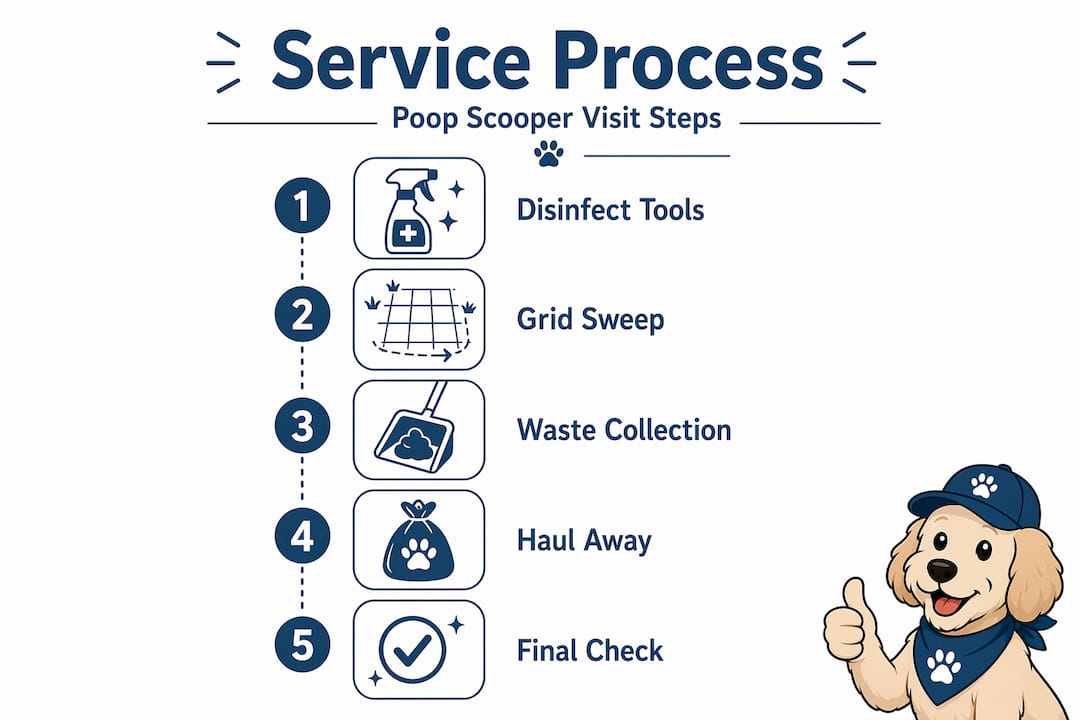
Tool and footwear disinfection. Before entering your yard, the technician disinfects their scooping tools and shoe covers. Sanitizing between yards prevents worms, bacteria, and other pathogens from traveling from a previous client’s property to yours. This step is non-negotiable with reputable providers.
-
Systematic grid sweep. The technician walks the yard in a methodical grid pattern rather than scanning randomly. This approach covers every corner, including shaded areas under bushes and along fence lines where waste tends to hide. You would be surprised how many piles a casual walk misses.
-
Collection and bagging. Waste is collected using rakes, scoops, or tongs depending on the terrain and grass type. Everything goes into sealed bags to contain odor and bacteria during transport.
-
Waste removal or disposal. Most services haul the waste off your property entirely. Some providers offer on-site disposal into a designated bin if you prefer. For context, flushing dog waste without the bag is actually one of the more environmentally responsible disposal methods, since municipal water treatment systems are designed to handle it.
-
Final walkthrough. A thorough technician does a second pass to catch anything missed during the first sweep, especially in high-traffic areas of the yard where dogs tend to go most often.
-
Service confirmation. Once the job is complete, you receive a notification. Clients typically get a door hanger, scoop ticket, or a text and email message confirming the visit. Some companies include a photo or brief note about yard conditions.
Pro Tip: Ask your provider whether they disinfect tools between each client yard, not just at the start of the day. This single question tells you a lot about their professional standards.
Health and yard benefits of regular pet waste removal
Skipping regular cleanup is not just an aesthetic problem. It is a health risk for your pets, your kids, and your lawn.
- Parasite control. Consistent waste removal is the most effective vet-approved strategy for breaking the parasite lifecycle. Roundworms and hookworms can survive in soil for months. Waiting two or three weeks between cleanups gives larvae time to mature and reinfect your dog.
- Reduced disease transmission. Dog feces carries bacteria like E. coli and Salmonella. A regular scooper service removes this risk before it accumulates to dangerous levels.
- Lawn health. Dog waste is not fertilizer. It is too acidic and nitrogen-rich. Waste accumulations create dead brown patches in your grass that take weeks to recover, if they recover at all.
- Odor reduction. A yard that gets cleaned weekly smells like a yard. One that gets cleaned monthly smells like a kennel.
Here is a direct comparison of service approaches:
| Factor | Occasional or DIY cleanup | Regular professional service |
|---|---|---|
| Parasite control | Incomplete, larvae can mature | Consistent, breaks the lifecycle |
| Lawn health | Dead spots likely | Grass stays healthy and even |
| Time commitment | Hours of your weekend | Zero time from you |
| Disease risk | Elevated with buildup | Minimized with each visit |
| Odor management | Reactive, after the smell starts | Proactive, before odor builds |
The difference between once-a-month DIY and weekly professional service is not just convenience. It is a fundamentally different outcome for your yard and your pets.
What to expect from service quality and professionalism
Knowing how poop scooping works is one thing. Knowing what separates a good provider from a mediocre one is what actually protects you as a customer.
Reputable poop scooper services operate with clear professional standards. Here is what those look like in practice.
Sanitization consistency. As noted earlier, tools should be disinfected between every yard. This is the single biggest indicator of whether a company takes cross-contamination seriously. Ask about their protocol directly.
Reliable scheduling. You should be able to count on your technician showing up on the agreed day, every time. Missed visits mean waste buildup, which defeats the purpose of the service entirely. Providers worth hiring offer makeup visits or credits when they miss a scheduled appointment.
Communication about your pet’s health. This is one of the most underrated benefits of professional service. Scoopers who visit regularly get familiar with what is normal for your dog. They act as an early diagnostic team by flagging changes in stool consistency, color, or volume that might signal illness. That kind of observation is genuinely useful.
Pet-safe techniques and products. Any disinfectants or deodorizers used on your property should be safe for pets and children. Ask specifically about what products are used and whether they are pet-friendly.
- Technicians should wear gloves and shoe covers on every visit.
- Service confirmations should arrive promptly after each visit, not hours later.
- Providers should have a clear policy for handling gated yards, aggressive dogs, or special access instructions.
- Customer service should be reachable if something goes wrong or you need to reschedule.
Pro Tip: Check whether your provider carries liability insurance. Accidents happen, and a professional company will have coverage for property damage or injury during a visit.
Cost, frequency, and common questions
Understanding the pet waste removal details around pricing helps you choose the right plan without overpaying or underbuying.
Typical pricing runs around $20 per week per property, though this varies significantly based on yard size, your zip code, and the number of dogs. A small yard with one dog in a lower-cost market might run $15 per visit. A large yard with three dogs in a high-demand area can push $40 or more.
Here are the factors that most directly affect your cost:
- Number of dogs. More dogs means more waste per visit, which takes more time. Most providers charge incrementally per additional dog.
- Visit frequency. Twice-weekly service costs more per month than weekly, but the per-visit rate is often lower. If you have multiple dogs or a small yard that fills up fast, twice-weekly is worth the investment.
- Yard size and terrain. Larger yards take longer to sweep. Yards with dense landscaping, slopes, or gravel areas require more careful work.
- Initial cleanup fee. If your yard has not been serviced in a while, expect a one-time deep-clean charge before regular visits begin. This is standard practice, not a red flag.
On tipping: it is not required, but it is appreciated. A small tip at the end of the month or during the holidays is a thoughtful gesture for a service that most people would genuinely rather not do themselves.
Regarding legal compliance, many municipalities require pet waste removal from private property. Fines for non-compliance can range from $50 for a first offense to over $200 for repeat violations. A regular service keeps you on the right side of local ordinances without any extra effort on your part.
My take on what makes professional service worth it
I have spent a lot of time around the pet waste removal industry, and the thing that surprises most dog owners is how much a good scooper actually observes. People assume it is a mechanical task. You show up, you pick things up, you leave. But the technicians who do this work consistently get to know your yard and your dog’s patterns in ways that turn out to be genuinely useful.
I have seen cases where a scooper flagged a change in a dog’s stool that turned out to be an early sign of a digestive issue. The owner got ahead of it before it became a vet emergency. That is not a fluke. It happens regularly when you have someone paying close attention on a weekly basis.
The other thing I want to push back on is the idea that DIY cleanup is “just as good.” It is not, and the data backs this up. The parasite lifecycle argument alone should settle it. Most dog owners who clean up themselves do it every week or two, and they miss spots. That is enough time and enough coverage gaps for larvae to develop in soil. Professional service done on a consistent schedule, with a grid sweep, is categorically more effective.
The industry has also matured significantly. The best providers today operate with the same professionalism you would expect from any home service. Scheduling apps, photo confirmations, sanitization protocols, and customer portals are standard at the top end. If your current provider does not offer at least a service confirmation after each visit, you are working with someone operating below current standards.
— Craig
Ready for a yard you can actually use?
If this breakdown of what to expect from a poop scooper has you thinking it is time to stop doing this yourself, Thepoopinator makes the process simple. With over 20 years of combined experience, eco-friendly disposal methods, and flexible plans from bi-weekly to twice-weekly service, Thepoopinator handles the work so you get your yard back.
Thepoopinator currently serves dog owners across multiple areas. If you are in Indiana, check out poop scooper service in Westfield for local coverage details. Florida customers can explore dog poop cleanup in Orlando or Winter Garden poop scooping for service options near you. Hundreds of five-star reviews back up what the process delivers: a clean, safe yard without any effort on your end.
FAQ
What does a poop scooper visit include exactly?
A professional visit includes tool disinfection before entry, a full grid-pattern sweep of your yard, waste collection and bagging, removal of the waste from your property, and a service confirmation via text, email, or door hanger.
How often should I schedule poop scooper services?
Weekly service works well for most single-dog households. If you have two or more dogs or a smaller yard, twice-weekly visits prevent buildup and keep parasite risk low. Bi-weekly is the minimum recommended for maintaining yard health.
How much does a poop scooper visit cost?
Pricing averages around $20 per week but varies based on yard size, location, and number of dogs. Initial deep-clean visits for neglected yards typically carry a one-time higher fee before regular service pricing applies.
Do poop scoopers take the waste with them?
Most professional services haul the waste off your property entirely. Some offer on-site disposal into a designated container. Confirm the disposal method with your provider before booking if this matters to you.
Can a poop scooper help identify health issues in my dog?
Yes. Technicians who visit regularly become familiar with your dog’s normal waste patterns and can alert you to changes in consistency, color, or frequency that may indicate a health issue worth discussing with your vet.
Recommended
- Home – The Poopinator – Professional Pooper Scooper and Pet Waste Removal Service
- Dog Poop Cleanup in Orlando, FL – The Poopinator – Professional Pooper Scooper and Pet Waste Removal Service
- How It Works – The Poopinator – Professional Pooper Scooper and Pet Waste Removal Service
- News – The Poopinator – Professional Pooper Scooper and Pet Waste Removal Service