
TL;DR:
- Yard sanitation dogs use scent detection to precisely locate pet waste overlooked in outdoor spaces, improving safety and cleanliness. They eliminate pathogens, reduce environmental contamination, and save time compared to manual cleanup, supporting healthier yards. Regular professional detection services help dog owners comply with local laws and protect water quality while maintaining a hygienic environment.
Yard sanitation dogs are specially trained working dogs that detect and locate pet waste in outdoor spaces, serving as a precision tool for maintaining cleaner, safer yards. The broader industry term for this practice is scent-detection-based waste management, and it sits within the growing field of canine-assisted sanitation. The role of yard sanitation dogs matters because unmanaged dog feces carries Giardia, Salmonella, and E. coli, all of which can wash into water systems and create community-wide health risks. For dog owners who want a yard that is genuinely safe for kids, pets, and bare feet, understanding how these dogs work and what they prevent is the starting point.
What is the role of yard sanitation dogs in pet waste management?
Yard sanitation dogs fill a specific gap in pet waste management: they find what human eyes miss. A standard visual scan of a yard after a dog goes outside will catch obvious deposits, but shaded corners, tall grass patches, and areas near fencing are easy to overlook. Sanitation dogs use their scent detection ability to locate every waste site, including older, partially degraded deposits that still carry pathogens.
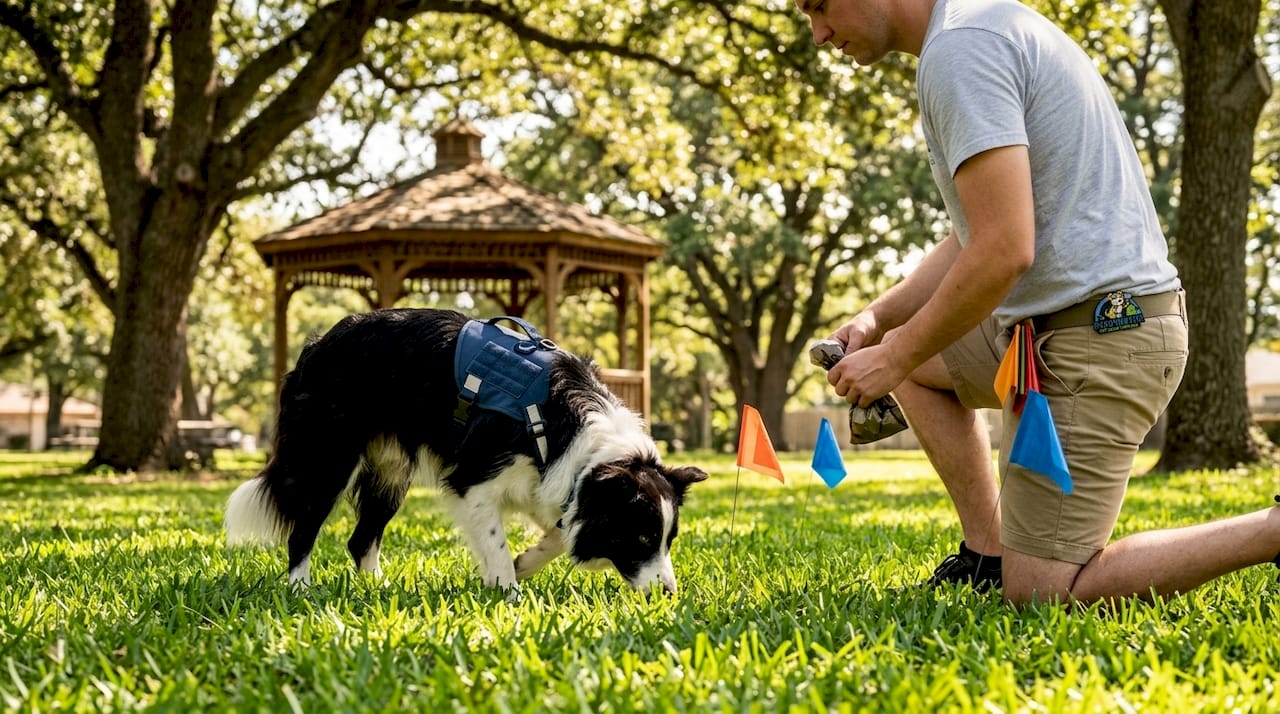
The American Kennel Club’s 2024 guidance confirms that dog waste is not safe fertilizer. It does not break down harmlessly into the soil. Instead, it introduces bacterial and parasitic loads that persist and spread. This makes thorough detection, not just occasional cleanup, the standard that actually protects your yard.
Sanitation dogs are not a novelty. They operate on the same scent-work principles used by dogs in search-and-rescue, narcotics detection, and medical alert roles. The difference is the target odor. These dogs are conditioned to alert their handler to the precise location of fecal matter, allowing for complete removal rather than a best-guess sweep. The result is a yard where contamination sources are systematically eliminated rather than reduced.
How do sanitation dogs work in detecting yard waste?
The training process for a yard sanitation dog follows a structured scent-imprinting protocol. Handlers introduce the target odor at low concentrations and reward the dog for alerting to it. Over time, the threshold drops and the dog learns to detect trace amounts in complex outdoor environments with competing smells from grass, soil, and other animals.
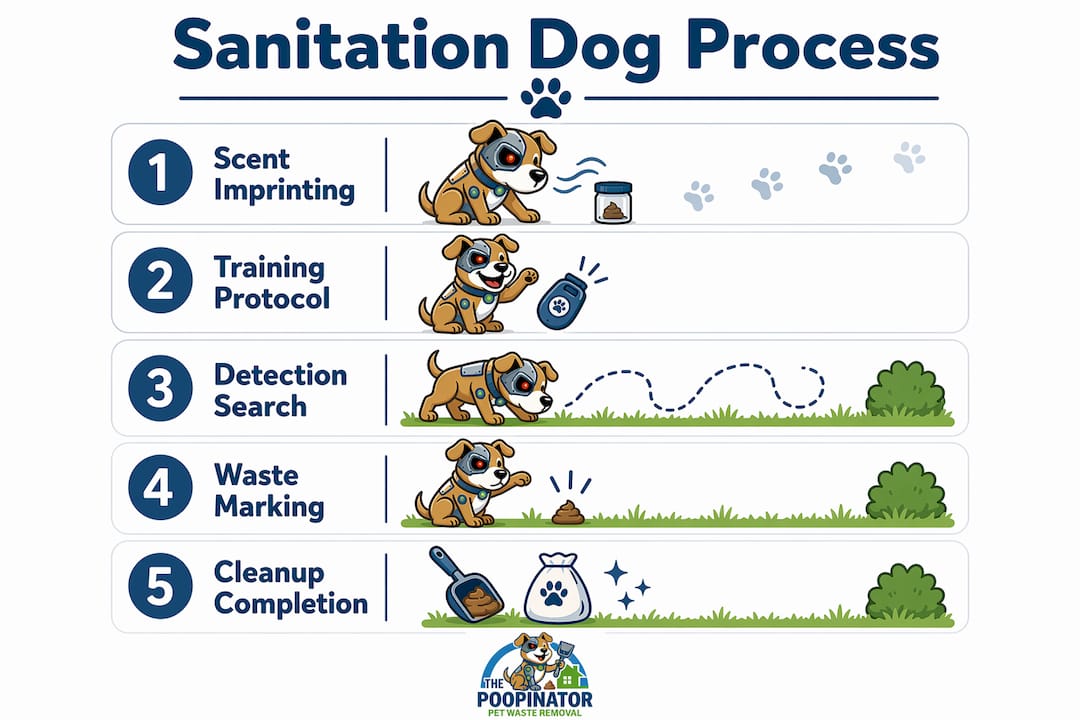
In practice, a sanitation dog works a yard in a methodical pattern, similar to how a detection dog clears a building. The handler reads the dog’s body language for alert signals, marks the location, and removes the waste. This process covers the full yard rather than the areas the owner happens to walk through.
Here is how the detection and cleanup sequence typically works:
- Scent imprinting: The dog is trained on the specific odor profile of dog feces, including aged and partially buried deposits.
- Grid search: The handler guides the dog through the yard in overlapping passes to avoid missed zones.
- Alert and mark: The dog signals a find, the handler marks the spot, and waste is bagged for disposal.
- Post-cleanup hygiene: Tools and gloves are sanitized after each session to prevent recontamination, a step the American Kennel Club recommends as non-negotiable.
- Disposal: Waste goes into sealed bags for municipal trash or a dedicated waste service, not into home compost bins.
Pro Tip: If you are working with a sanitation dog service, ask whether the handler uses separate tools for each yard visit. Cross-contamination between properties is a real risk if equipment is not sanitized between jobs.
Compared to manual scooping, sanitation dogs cover more ground with greater accuracy. Compared to mechanical lawn treatments or deodorizing sprays, they remove the actual source rather than masking it. That distinction matters because nutrient runoff from unremoved waste degrades water quality in local lakes and rivers regardless of how the yard smells on the surface.
What are the key benefits of yard sanitation dogs versus other cleanup options?
The benefits of yard sanitation dogs go beyond a tidier lawn. They address three distinct problems at once: pathogen control, environmental protection, and quality of life for the people and animals using the space.
On the health side, dog feces carry parasites and bacteria that survive in soil for weeks. Children playing in a yard with undetected deposits are at direct exposure risk. Sanitation dogs eliminate the deposits that manual cleanup misses, reducing that exposure window significantly.
On the environmental side, improper disposal contributes to algae overgrowth in waterways through nutrient runoff. A yard that looks clean but still has buried or decomposing waste is still contributing to that problem. Complete removal, which sanitation dogs make possible, is the only way to interrupt that contamination pathway.
Clean yards also support better mental wellbeing for both pets and their owners. Dogs are more relaxed and willing to use outdoor spaces when those spaces are not contaminated with the waste of other animals. Owners report spending more time outdoors when the yard is genuinely clean rather than just visually acceptable.
| Method | Strengths | Limitations |
|---|---|---|
| Sanitation dogs | High detection accuracy, covers full yard, finds aged deposits | Requires trained handler, ongoing service cost |
| Manual scooping | Low cost, immediate control | Misses hidden or aged waste, labor intensive |
| Lawn treatments or deodorizers | Reduces odor quickly | Does not remove pathogens or stop runoff |
| Home composting | Reduces landfill waste | Pathogen elimination is unreliable at home scale |
The time savings are also real. A dog owner with a medium-sized yard and two dogs can spend 20 to 30 minutes per week on manual cleanup and still miss deposits. A trained sanitation dog covers the same yard in a fraction of the time with a higher completion rate. For busy households, that efficiency is a genuine advantage. You can read more about what happens when waste goes unremoved in your yard at The Poopinator’s breakdown of the long-term consequences.
How can dog owners integrate yard sanitation dogs into their routine?
Integrating sanitation dogs or a sanitation dog service into your yard maintenance routine works best when it follows a consistent schedule rather than an as-needed approach. Sporadic cleanups allow pathogen loads to build between visits.
- Assess your yard’s waste volume. Count how many dogs use the space and how often. A single small dog produces far less waste than two large breeds. This determines whether a weekly or twice-weekly service schedule makes sense.
- Choose between training your own dog or hiring a service. Training a personal dog for scent detection is possible but requires months of consistent work with a certified handler. Most homeowners find a professional service more practical and cost-effective.
- Set a fixed cleanup schedule. Twice-weekly visits prevent waste from aging to the point where it becomes harder to detect and more deeply embedded in soil. Bi-weekly visits work for lower-volume yards.
- Combine detection with proper disposal. Bagged waste should go into municipal trash, not home compost. Industrial composting is safer for pathogen elimination than home setups, which cannot reliably reach the temperatures needed to neutralize bacteria and antibiotic residues.
- Maintain hygiene after every session. Wash hands thoroughly, sanitize any tools used, and keep cleanup equipment separate from garden tools. Treating waste hotspots as contamination sources, not just messes, is the mindset that prevents recontamination.
Pro Tip: Mark known problem areas in your yard with small flags before a sanitation dog visit. This helps the handler prioritize zones and gives you a record of where your dog tends to go, which is useful for training and yard management.
For owners who want to go further with eco-friendly disposal methods, combining sanitation dog detection with responsible bagging and municipal disposal creates a complete system that protects both your yard and the local environment.
What legal and community rules apply to yard sanitation and pet waste?
Pet waste management is not just a personal health choice. It carries legal weight in many municipalities, and the enforcement is getting stricter.
- Municipal fines are real and significant. Yonkers, New York, enforces fines up to $5,000 for repeat dog waste violations and requires owners to carry waste removal supplies at all times when walking a dog.
- Bag dispenser programs signal community expectations. Cities that install public waste bag dispensers are signaling that compliance is expected, not optional. Using them is the baseline, not a courtesy.
- Neighbor complaints carry weight. Unmanaged pet waste in a shared or visible yard space is one of the most common sources of neighbor disputes in residential neighborhoods. Proactive sanitation removes that friction entirely.
- Water quality regulations extend to private property. In some jurisdictions, runoff from residential yards that contributes to waterway contamination can fall under environmental compliance rules. Consistent waste removal is the simplest way to stay clear of that liability.
Municipal enforcement efforts like Yonkers demonstrate that yard sanitation is a compliance issue, not just a courtesy to neighbors. Staying ahead of local regulations protects you legally and keeps your relationship with your community intact.
Key takeaways
Yard sanitation dogs are the most thorough method for eliminating pet waste from outdoor spaces because they detect what manual cleanup consistently misses, preventing pathogen spread and environmental contamination at the source.
| Point | Details |
|---|---|
| Detection accuracy matters | Sanitation dogs find aged and hidden deposits that visual cleanup misses entirely. |
| Pathogens persist in soil | Dog waste carries Giardia, Salmonella, and E. coli that survive in yards for weeks without full removal. |
| Environmental impact is real | Unremoved waste drives nutrient runoff into waterways, causing algae overgrowth and degraded water quality. |
| Legal risk is growing | Cities like Yonkers impose fines up to $5,000 for repeat violations, making compliance a financial priority. |
| Hygiene extends beyond removal | Sanitizing tools and washing hands after cleanup prevents recontamination of the yard and living spaces. |
Why I think most dog owners underestimate this problem
I have spent years watching how dog owners approach yard sanitation, and the pattern is consistent. Most people do a visual sweep, pick up what they see, and consider the job done. The problem is that a yard can look perfectly clean and still be carrying a significant pathogen load from deposits that decomposed into the soil or were missed in shaded areas.
What changed my perspective was learning how contamination actually travels. It is not just about stepping in something unpleasant. It is about bacteria and parasites moving from soil to hands to mouths, especially with children and dogs who spend time low to the ground. The contamination pathway to waterways is equally invisible. Rain moves what is in your yard into storm drains and eventually into local water systems. You never see it happen, so it is easy to dismiss.
Sanitation dogs solve the visibility problem. They find what you cannot see. Paired with a consistent disposal routine and basic hygiene practices, they represent the most complete approach to yard waste management available to residential dog owners. The owners I have seen get the most out of this approach treat it as a system, not a one-time fix. They schedule regular visits, they maintain their tools, and they combine detection with responsible disposal. That combination is what actually moves the needle on yard health.
— William
Keep your yard genuinely clean with The Poopinator
The Poopinator offers professional pet waste removal services built around the same principle that makes sanitation dogs effective: complete removal, not just surface cleanup. With bi-weekly and twice-weekly plans designed for busy households and high-activity yards, The Poopinator brings over 20 years of combined experience and a commitment to eco-friendly disposal to every visit. If you are in the Westfield, IN area and want a yard that is safe for your family and pets, professional waste removal from The Poopinator is the practical next step. Hundreds of five-star reviews back up what the service delivers: a yard you can actually use.
FAQ
What does a yard sanitation dog actually do?
A yard sanitation dog uses scent detection to locate pet waste in outdoor spaces, including aged or hidden deposits that visual inspection misses. The dog alerts its handler to each location, allowing for complete removal rather than a partial cleanup.
Are sanitation dogs better than manual scooping?
Sanitation dogs detect waste with greater accuracy and cover more ground than manual scooping, particularly in larger yards or areas with tall grass and shaded corners. Manual scooping remains useful for daily maintenance but misses the deposits that create the highest pathogen risk.
How often should yard sanitation be done?
Twice-weekly cleanup is the standard recommendation for yards with multiple dogs or high activity levels, while bi-weekly visits work for lower-volume spaces. Consistent scheduling prevents waste from aging into the soil where it becomes harder to detect and remove.
Is dog waste really that harmful if left in the yard?
Dog feces carries Giardia, worms, Salmonella, and E. coli and is not safe as a lawn fertilizer. Left in place, it contributes to soil contamination, pest attraction, and nutrient runoff into local waterways.
What are the legal consequences of ignoring pet waste laws?
Enforcement varies by city, but Yonkers, New York, imposes fines up to $5,000 for repeat violations and requires owners to carry waste removal supplies when walking dogs in public. Most municipalities have similar ordinances with escalating penalties for non-compliance.