
A single dog generates up to 274 pounds of solid waste every year. Multiply that by a yard with two or three dogs, and you start to understand why the tools professional pooper scoopers use matter far more than most pet owners realize. The right equipment separates a quick, hygienic cleanup from a frustrating, back-breaking ordeal. Whether you manage your own yard or run a pet waste removal business, knowing what the pros reach for, and why, gives you a real edge in keeping outdoor spaces clean, safe, and odor-free.
Table of Contents
- Key takeaways
- Tools professional pooper scoopers use: how to choose the right ones
- 1. Rake and bin scoopers
- 2. Hinged claw-style scoopers
- 3. Extendable-handle grabber tools
- 4. Dustpan-style debris collectors
- 5. Odor-blocking tie-and-toss waste bags
- 6. Upright-storage scoopers
- 7. Portable, foldable travel scoopers
- 8. Comparing professional pooper scooper tools at a glance
- 9. Situational recommendations for tool selection and use
- My honest take after years in the field
- Let Thepoopinator handle it with the right tools every time
- FAQ
Key takeaways
| Point | Details |
|---|---|
| Durability drives performance | Aluminum construction outperforms plastic for professional, high-volume use. |
| Ergonomics protect your body | Long handles and proper grip design prevent back strain during frequent cleanups. |
| No-touch tools protect health | Specialized scoopers reduce direct contact with bacteria and parasites in pet waste. |
| Match tool to terrain | Rake and bin systems work best on grass; claw scoopers suit hard surfaces better. |
| Odor control matters | Tie-and-toss odor-blocking bags reduce smell buildup on tools and in disposal areas. |
Tools professional pooper scoopers use: how to choose the right ones
Before you spend money on any equipment, you need to understand what separates a professional-grade tool from a basic backyard scooper. The difference is not just price. It comes down to six specific factors.
Durability and material quality. Professional-grade scoopers commonly cost $90 or more and are built from rust-resistant aluminum. Standard plastic models run $15 to $30 and tend to crack or warp with heavy use. Plastic hinges and triggers fail quickly under the repetitive stress of daily professional work. Aluminum holds up.
Ergonomics and handle length. A long handle prevents constant bending, which is the number one cause of back strain in this line of work. Look for handles that allow you to stand fully upright during operation.
Capacity. If you are cleaning up after multiple dogs or servicing a large yard, you need a tool that can handle volume without requiring constant trips to the trash.
Hygiene features. No-touch disposal reduces exposure to bacteria and parasites. This is not optional for professionals. It is a baseline requirement.
Surface compatibility. Some tools work beautifully on grass but struggle on gravel or concrete. Know your terrain before you buy.
Cost vs. frequency of use. For a homeowner cleaning up twice a week, a mid-range tool works fine. For a professional running five or six yards a day, the economics of a durable, higher-cost tool pay off fast.
Pro Tip: Buy the best aluminum scooper you can afford upfront. Replacing cheap plastic tools every few months costs more in the long run, and your back will thank you.
1. Rake and bin scoopers
The rake and bin system is the workhorse of professional pet waste removal. You use a wide-tined rake to gather waste and sweep it into a matching bin, all without touching the ground. Rake and bin tools outperform claw-style scoopers for large volumes and uneven terrain, making them the go-to for pros clearing multiple piles in a single visit.
These systems shine on grass, where the tines can get underneath waste without digging into the turf. They also handle leaves, debris, and mixed material without clogging. For any yard with more than one dog, this is the tool you want leading your kit.
2. Hinged claw-style scoopers
The claw scooper uses a spring-loaded or hinged jaw mechanism to grab and close around waste. It is fast, precise, and excellent for quick pickups on hard surfaces like concrete, pavement, or decking.
Where claw scoopers fall short is volume. Each grab picks up one pile at a time, so they slow you down in a yard full of deposits. That said, they are the preferred tool for on-the-go use during dog walks or for cleaning up around patios and driveways where a rake would scratch the surface.
3. Extendable-handle grabber tools
These are essentially claw scoopers with telescoping handles that adjust to different heights. The adjustability makes them genuinely useful for professionals who work with clients of varying heights, or for yards where reaching into tight corners matters.
The best models lock firmly at each length setting with no wobble. Avoid any grabber tool where the extension mechanism feels loose. That flex transfers directly into missed grabs and frustration.
4. Dustpan-style debris collectors
A long-handled dustpan paired with a matching rake or broom is underrated in professional circles. It works exceptionally well on flat surfaces and can scoop large amounts of waste in a single motion. For kennels, dog runs, or concrete-heavy yards, this combination is often faster than any other tool.
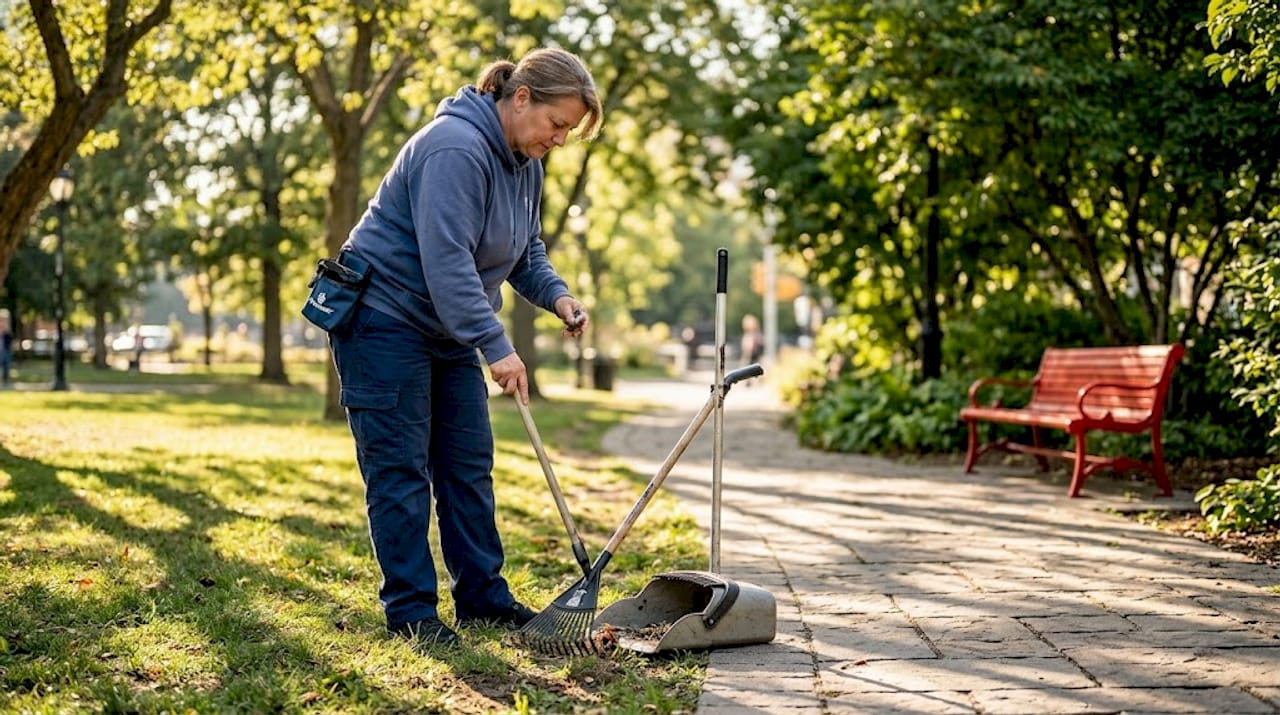
The key is finding a dustpan with a deep enough basin to prevent spillage during transfer to a waste bag or bin. Shallow dustpans create mess. Deep ones keep everything contained.
5. Odor-blocking tie-and-toss waste bags
The bag is not a secondary consideration. Odor-blocking bags with secure closures minimize direct contact and reduce smell buildup on tools and in transport containers. Professionals who skip quality bags end up with tools that smell permanently and clients who notice.
Look for bags that attach directly to your scooper or belt clip so you are never fumbling for one mid-cleanup. The best systems let you drop waste directly into the open bag without touching it, then seal and dispose in one motion.
6. Upright-storage scoopers
This feature gets overlooked, but it matters. Upright storage keeps the tool’s business end off the ground between uses, which reduces contamination and keeps the tool cleaner between sessions. For professionals storing tools in a vehicle or service shed, this design detail extends the life of the tool and reduces odor transfer.
7. Portable, foldable travel scoopers
For dog walkers or professionals who work on the move, a compact foldable scooper that fits in a bag or clips to a leash is a practical addition. These are not heavy-duty tools, but they fill a specific need: quick, hands-free pickup in public spaces without carrying a full-size scooper.
The best foldable models are made from lightweight but sturdy materials and open and close with one hand. Avoid flimsy designs that require two hands to operate while you are also managing a dog on a leash.
8. Comparing professional pooper scooper tools at a glance
| Tool type | Best surface | Capacity | Durability | Best for |
|---|---|---|---|---|
| Rake and bin | Grass, turf | High | High (aluminum) | Multi-dog yards, pros |
| Claw scooper | Hard surfaces | Low | Medium | Walks, patios, quick grabs |
| Extendable grabber | Mixed | Low-medium | Medium-high | Versatile daily use |
| Dustpan and rake | Concrete, flat | High | Medium-high | Kennels, dog runs |
| Foldable travel scooper | Any | Low | Low-medium | Dog walkers, travel |
Pro Tip: Professionals running high-volume routes should carry at least two tool types: a rake and bin system for yard cleanups and a claw or grabber for tight spots. One tool rarely covers every situation.
9. Situational recommendations for tool selection and use
Matching the right tool to the right situation is where experience really shows. Here is how to think through it:
For multi-dog households or professional yard routes: Lead with the rake and bin system. It clears the most ground in the least time. Pair it with odor-blocking disposal bags to keep the bin from absorbing smell between uses.
For dog walkers and on-the-go cleanup: A compact claw scooper or foldable grabber with a bag attachment is the practical choice. Keep spare bags in your pocket, not in a bag you have to dig through.
For maintaining tools between uses: Rinse tools with a diluted disinfectant spray after each session. Let them air dry before storage. Never store a wet scooper in an enclosed vehicle. The smell compounds fast.
For preventing ergonomic injuries: Use a handle length that lets you stand upright without leaning forward. Aluminum construction and handle length together reduce the strain that builds up over dozens of pickups per day.
For odor control in disposal: Tie bags immediately after each deposit. Do not let an open bag sit in the sun. Heat accelerates odor and bacteria growth, and nobody wants that in their vehicle or near a client’s property.
You can also check out how it works at Thepoopinator to see how professional-grade tool selection plays into a full-service waste removal workflow.
My honest take after years in the field
I have watched a lot of people buy the wrong tools. They grab a $15 plastic claw scooper from a big-box store, use it for three weeks, and then wonder why cleanup feels like a chore. The hinge cracks. The grip slips. They are bending at the waist fifty times per yard visit.
Here is what I have learned: the pros are not using fancy tools for the sake of it. They are using them because specialized tools protect health and make the job physically sustainable. No-touch operation is not a luxury feature. It is how you avoid transferring bacteria to your hands, your vehicle, and your next client’s yard.
The other thing most people underestimate is storage. I have seen professionals leave tools lying flat on the ground between uses, then wonder why the tool smells and why clients are not renewing service. Upright storage is a small habit that makes a big difference.
My contrarian view: you do not need ten different tools. You need two or three excellent ones that cover your most common situations. Buy aluminum, buy long handles, buy quality bags. That is 90% of the battle.
— Craig
Let Thepoopinator handle it with the right tools every time
If choosing between rake systems, claw scoopers, and odor-blocking bags sounds like more than you want to manage, that is exactly where Thepoopinator comes in. With over 20 years of combined experience, the team uses professional-grade, high-capacity tools on every single visit, so you never have to think about which scooper works on your grass type or whether your bags are odor-blocking enough.
Thepoopinator offers bi-weekly and twice-weekly cleanup plans built for busy households and high-activity yards alike. Every visit uses the efficient dog waste management equipment that pros trust, paired with eco-friendly disposal methods that protect your yard and your neighborhood. If you are in the area, check out the Westfield pooper scooper service or explore all service areas to see if Thepoopinator covers your neighborhood.
FAQ
What tools do professional pooper scoopers use most often?
Professionals most commonly use aluminum rake and bin systems for large yard cleanups and hinged claw scoopers for hard surfaces. Odor-blocking bags are a standard part of every kit.
Why do pros prefer aluminum over plastic scoopers?
Aluminum construction resists rust and holds up under daily heavy use, while plastic hinges and triggers tend to crack and fail quickly. Professional-grade aluminum tools also help prevent back strain with longer, sturdier handles.
How do I choose between a rake and bin vs. a claw scooper?
Use a rake and bin system for grass yards with multiple dogs or high waste volume. Choose a claw scooper for hard surfaces, quick pickups, or on-the-go use during walks.
How should professional tools be cleaned after use?
Rinse tools with a diluted disinfectant spray after each session and allow them to air dry completely before storage. Storing tools upright keeps the contact surfaces off the ground and reduces odor buildup.
Are odor-blocking bags worth it for regular pet owners?
Yes. Odor-blocking bags reduce smell on your tools and in your trash, and they minimize direct contact with waste. They are worth the small extra cost for anyone cleaning up more than once or twice a week.
Recommended
- Home – The Poopinator – Professional Pooper Scooper and Pet Waste Removal Service
- Dog Poop Cleanup in Orlando, FL – The Poopinator – Professional Pooper Scooper and Pet Waste Removal Service
- Dog Poop Scooping in Winter Garden, FL – The Poopinator – Professional Pooper Scooper and Pet Waste Removal Service
- How It Works – The Poopinator – Professional Pooper Scooper and Pet Waste Removal Service