If your dog is pregnant, hire a professional pet-waste removal service to handle yard cleanup rather than doing it yourself, and book either a one-time visit or a recurring plan. A trained technician removes waste before it becomes a parasite or bacteria risk, keeps your pregnant dog’s environment sanitary without you bending, lifting, or handling soiled material, and confirms every visit with photos or a text. Start by checking service availability or requesting a quote for your address.
TL;DR:
- Weekly or twice-weekly cleanup plans are recommended during pregnancy to prevent waste buildup and reduce parasite and bacteria risks.
- Service duration varies from 10 to 20 minutes for small yards, with larger or multiple-dog households requiring longer, but process consistency remains the same.
- Always confirm that the provider is insured, offers clear pricing, and includes on-site bagging and secure disposal options before booking.
- Inform the service provider about your pregnant dog during booking and specify her resting or whelping areas to ensure proper attention and minimized stress.
- Eco-friendly disposal methods and re-service guarantees are key advantages of scheduled professional cleanup services, especially during sensitive pregnancy periods.
Table of Contents
- What Does a Pregnant Dog Poop Cleanup Appointment Include?
- How Much Does Scheduled Pet Waste Removal Cost?
- How Do I Book a Reliable Cleanup Service?
- What Happens When the Technician Arrives?
- Why Eco-Friendly Scheduled Cleanups Work Better
- Sanitation Precautions for Pregnant Dogs During Cleanup
- Handling Waste That May Carry Parasites or Pathogens
- Keeping a Pregnant Dog Calm During Cleanup Visits
- Telling Your Provider About a Pregnant Dog
- Why Households Choose a Scheduled Pro Service
- Book The Poopinator for Your Yard
- Sources
- FAQ
What Does a Pregnant Dog Poop Cleanup Appointment Include?
A standard visit follows the same core routine whether you have one dog or five, though pregnancy adds a layer of care to how the technician handles disposal and access. The technician walks the entire yard, not just the obvious spots. Fence lines, shaded corners, and dog runs collect waste that owners miss during a quick glance, and those hidden piles are exactly where parasites like roundworms survive longest in soil.
A full appointment typically covers:
- Complete yard scan for every pile, including edges, mulch beds, and shaded areas where waste tends to hide
- Pile-by-pile pickup and on-site bagging, using tools and bags the technician brings, not yours
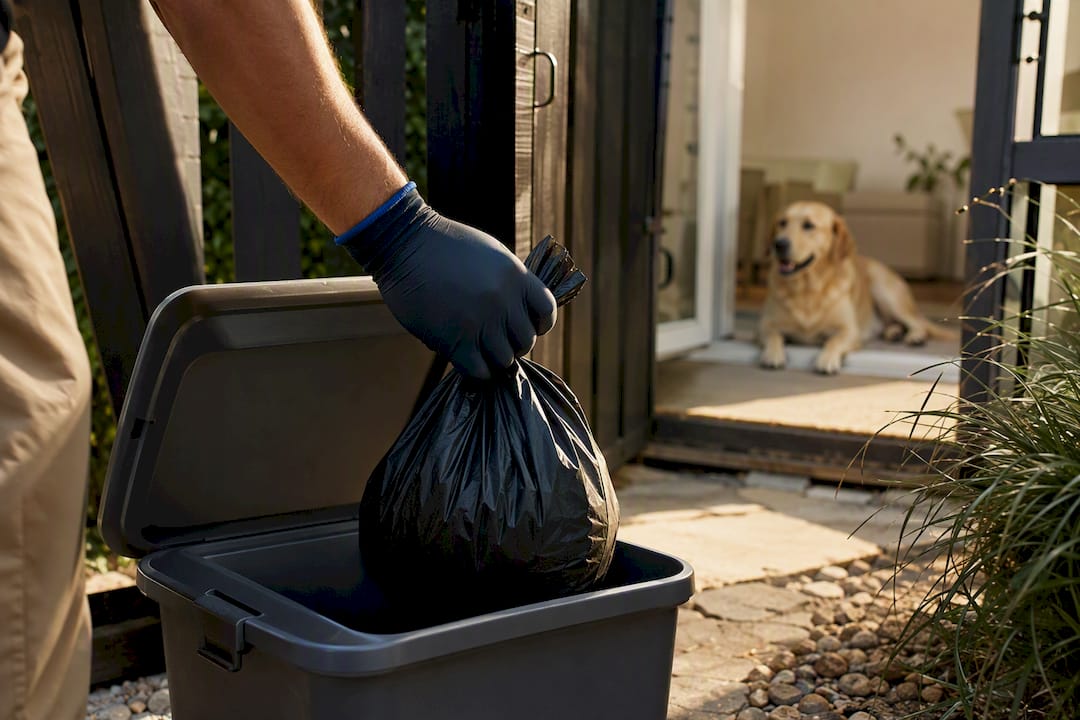
- Disposal choice: bags left sealed in your outdoor bin, or hauled away entirely if you choose that add-on
- Optional deodorizing treatment, useful for keeping a pregnant dog’s resting areas free of lingering odor
- Before-and-after gate photos or on-the-way text alerts, so you know exactly when the technician arrives and leaves
For an average residential yard, the scan and cleanup typically takes about 10 to 20 minutes. Larger yards or multi-dog households run longer, but the process itself doesn’t change. This matters more than it sounds during pregnancy: a fast, predictable visit means less time your dog spends near a stranger in the yard, and less waste sitting around accumulating bacteria between visits.
How Much Does Scheduled Pet Waste Removal Cost?
Most providers offer four basic plan types: one-time cleanup, weekly, bi-weekly, and twice-weekly. Which one fits depends less on your budget and more on how fast waste accumulates in your specific yard, especially with a pregnant dog whose hygiene needs are higher than usual.
Typical pricing benchmark: weekly visits for one dog usually run $15 to $30, while one-time cleanups range from $50 to $150 depending on yard size and how much waste has built up before the first visit.
A few factors move the price up or down:
- Yard size: a quarter-acre lot takes longer to scan than a small fenced patio
- Number of dogs: more dogs means more piles per visit, even at the same frequency
- Haul-away versus leave-in-bin: hauling waste off-site instead of leaving bagged trash in your bin typically adds $5 to $15 per visit
- Accumulation level: a first-time cleanup after weeks of neglect costs more than a routine bi-weekly stop
For a pregnant dog, frequency matters beyond convenience. Waste sitting in a yard for a week or more becomes a bigger contamination risk, particularly if other dogs, wildlife, or unfamiliar surfaces are nearby. Twice-weekly or weekly service keeps the yard consistently usable, which is exactly what a household managing a pregnant dog’s whelping prep needs.
How Do I Book a Reliable Cleanup Service?
Not every provider runs the same operation, and a few minutes of vetting saves you from a bad first experience. Ask these questions before you book:
- Does the provider service your specific area? Confirm this before discussing anything else.
- What exactly is included in a standard visit? Get a straight answer on scanning, bagging, and disposal, not a vague description.
- What’s the disposal method? Ask whether bags stay in your bin or get hauled away, and whether that’s an extra charge.
- How do they access your yard? Gate code, spare key, lockbox, or a scheduled meet-and-greet for the first visit. You typically don’t need to be home once access is established.
- How do they confirm the visit happened? Photos, texts, or an app notification should be standard, not something you have to ask for twice.
Red flags to walk away from: no clear pricing before you commit, no mention of insurance when asked directly, no visible reviews anywhere online, or a company that gets vague when you ask about re-service. Have your address, dog count, and preferred schedule ready when you call. It speeds up booking and gets you an accurate quote on the first try.
Pro Tip: Mention that your dog is pregnant when you book, even before the technician arrives. It changes how they approach the yard, and a good provider will ask follow-up questions instead of brushing past it.
What Happens When the Technician Arrives?
Most services follow a tight, predictable sequence once your appointment is scheduled. You’ll typically get a text when the technician is on the way, which gives you time to secure your dog indoors if you prefer she not be in the yard during the visit.
Once on-site, the process is straightforward:
- Full scan of the yard, including spots you might not check yourself
- Scoop and bag every pile found, using the technician’s own tools
- Optional deodorizing pass if you’ve added that to your plan
- Before-and-after gate photos, or a completion text confirming the job is done
You choose upfront whether bagged waste stays sealed in your outdoor bin or gets hauled away by the technician. If you spot a missed pile after the visit, most reputable companies will return and re-service the area at no extra cost within a short window, usually just by sending a photo or a quick message. That guarantee matters more than people expect. It’s the difference between a company that treats your yard as a one-off job and one that treats it as an ongoing responsibility.
Why Eco-Friendly Scheduled Cleanups Work Better
Waste sitting in a yard doesn’t just smell bad. It breaks down unevenly, attracts flies, and contaminates soil in ways that plain scooping once a week doesn’t fully solve. Eco-friendly scheduled cleanup is one of the more effective approaches to cutting yard odor and keeping outdoor space usable, especially in warmer climates where waste breaks down fast and smells faster.
Regular, eco-conscious pickup does two things at once: it removes the waste before it becomes an odor and bacteria problem, and it disposes of it in a way that doesn’t just push the environmental cost somewhere else.
The Poopinator builds its service around this exact model, pairing eco-friendly disposal methods with flexible scheduling:
- Bi-weekly and twice-weekly plan options for households with varying yard activity levels
- Eco-friendly disposal practices rather than the cheapest possible dumping methods
- Experienced teams with multiple positive customer reviews backing the service record
For a household managing a pregnant dog, a scheduled plan removes the guesswork. You’re not deciding week to week whether the yard needs attention. It’s already handled, on a predictable rhythm, with disposal that doesn’t cut corners.
Sanitation Precautions for Pregnant Dogs During Cleanup
Pregnant dogs have a lower tolerance for environmental stressors than dogs outside of gestation, and that includes bacterial and parasitic exposure from yard waste. A pregnant dog’s immune system is working overtime to support developing puppies, which makes consistent sanitation more important than it would be otherwise.
The biggest precaution is simple: reduce the time waste sits in the yard. Fresh waste is less likely to have developed the parasite loads that older piles carry, so tightening your cleanup frequency during pregnancy, even temporarily, lowers exposure risk. If your dog is due within a few weeks, consider bumping a bi-weekly plan up to weekly, or a weekly plan up to twice-weekly.
Ask your provider to pay extra attention to areas where your pregnant dog rests, sunbathes, or spends the most time, since those spots see the most direct contact. If she has a whelping area set up outdoors or near a doggy door, flag that specific zone so the technician treats it as a priority stop, not just part of the general scan.
Disinfecting hard surfaces near waste sites, such as patios or concrete runs, is worth asking about as an add-on if your provider offers it. Standard grass and soil areas don’t need chemical disinfectant, since aggressive cleaners can do more harm than good in a space your dog uses daily. The goal is thorough removal, not saturation with products that introduce a different set of risks.
Handling Waste That May Carry Parasites or Pathogens
Dog waste can carry roundworms, hookworms, giardia, and other pathogens that pose a real risk to a pregnant dog and, in some cases, to the puppies she’s carrying. This is one of the strongest arguments for hands-off professional removal instead of DIY scooping. A trained technician handles waste with the same tools and bagging method on every visit, minimizing cross-contact between piles and reducing the chance that contaminated material spreads across the yard.
Proper handling starts with immediate bagging at the point of pickup, not collecting waste in an open container and bagging it later. Sealed bags prevent parasite eggs and bacteria from being tracked elsewhere in the yard on shoes, paws, or tools. This is exactly why on-site bagging is a standard part of every reputable service call rather than an optional step.
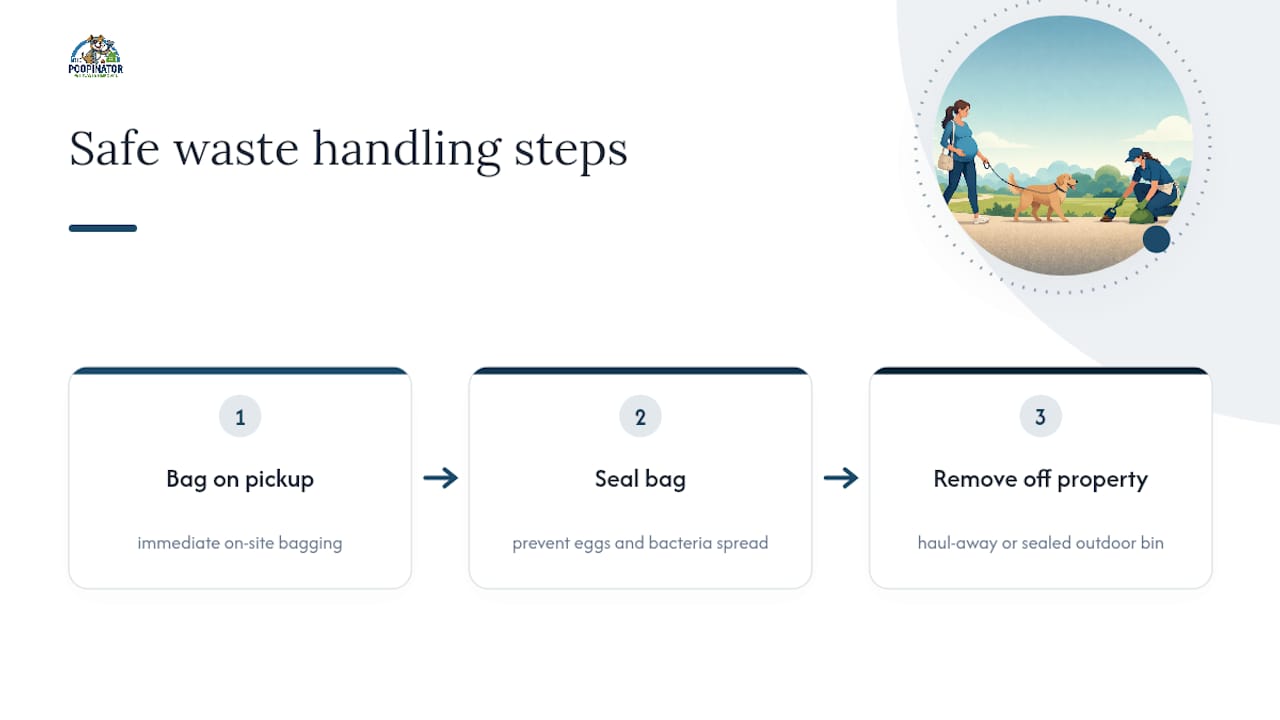
Disposal choice matters here too. Leaving sealed bags in your outdoor bin is fine for regular household trash pickup, but haul-away service removes the material from your property entirely, which some households prefer specifically because it eliminates any chance of a pregnant dog investigating a full trash bin before collection day. If your dog has access to the area where bins are stored, haul-away is worth the extra cost during pregnancy.
Avoid composting dog waste at home, even if you compost other yard debris. Standard home composting doesn’t reach temperatures high enough to reliably kill parasite eggs, and using that compost near an area your pregnant dog frequents defeats the purpose entirely. Professional disposal methods are built to handle this safely, which is one more reason DIY approaches fall short during pregnancy specifically.
Keeping a Pregnant Dog Calm During Cleanup Visits
A pregnant dog is often more sensitive to unfamiliar noise, movement, and strangers in her space, particularly in the final weeks before whelping. Managing stress during a cleanup appointment isn’t complicated, but it does take a little planning.
The simplest fix is timing. If your dog naps at a predictable time or tends to get anxious in the late afternoon, ask the provider whether they can schedule visits during a calmer window instead. Many services offer flexible arrival windows rather than a fixed minute, so this is usually a reasonable request.
Keeping your dog indoors during the visit is the most reliable way to avoid any stress altogether. Since most technicians don’t need you home and don’t need interaction with your dog to do the job, there’s no real downside to securing her inside for the ten or fifteen minutes the cleanup takes. If she’s an outdoor dog by habit, a temporary indoor stay during the appointment window is a small adjustment with a clear benefit.

If your dog does stay outside, ask the technician to skip any direct interaction, petting, or attempts to move her out of the way. A calm, quiet pass through the yard that treats her as part of the landscape rather than something to greet works better than a friendly technician trying to say hello. Most professional cleanup companies train for this already, but it’s worth confirming rather than assuming.
Telling Your Provider About a Pregnant Dog
Communicating your dog’s condition to the provider before the first visit changes how the whole appointment gets handled, and it costs you nothing but a sentence during booking. Don’t wait until the technician is already on-site to mention it.
When you book, say plainly that your dog is pregnant and roughly how far along she is. This gives the provider context for two things: how much care to take around her physical space, and how urgent it might be to tighten your cleanup frequency as her due date approaches. A provider who takes this seriously will usually ask a follow-up question or two, which is a decent sign you’re dealing with a company that pays attention.
If your dog has a specific resting or whelping area outdoors, describe its location clearly, whether that’s near a doggy door, under a covered patio, or in a fenced-off section of the yard. Ask the technician to treat that zone as a priority during the scan rather than an afterthought.
It’s also worth flagging any behavioral quirks tied to pregnancy, such as increased guarding instincts or unusual skittishness, so the technician knows to keep interaction minimal without being caught off guard. None of this requires a long conversation. A few clear sentences at booking, repeated once in the appointment notes if the platform allows it, is enough to make sure the visit goes smoothly for everyone involved, including the dog who has the least say in the matter.
Why Households Choose a Scheduled Pro Service
Busy schedules and physical limitations are the two biggest reasons households stop scooping the yard themselves, and pregnancy in the household, human or canine, tends to tip the decision. Bending, lifting, and handling waste directly isn’t something anyone wants to prioritize during a demanding stretch of life.
What tends to sell people on a scheduled plan isn’t the novelty of it. It’s the reliability. Once a provider has a track record of showing up, confirming the visit, and re-servicing when something’s missed, the yard stops being a recurring decision and becomes something that’s just handled. That removes a small but real source of mental clutter from a week that already has enough of it.
A consistent plan also means the yard stays usable on a predictable basis, which matters more than people expect once a dog’s needs, or a household’s routine, start changing.
— William
Book The Poopinator for Your Yard
Scheduled dog waste removal services are built to help households keep the yard clean without adding another task to the week. Plans often include bi-weekly, weekly, and twice-weekly options, plus one-time cleanups for households that need a single reset before a busy stretch or new arrival.
Every visit uses eco-friendly disposal methods rather than the cheapest possible dumping option, and the team backs its work with over 20 years of combined experience and hundreds of five-star reviews. If you want compostable bag options for your own touch-ups between visits, ZERO’s puppy waste bags are a solid eco-friendly pick.
Start by checking whether The Poopinator serves your area, or head straight to the Orlando service page to see plan details and request a quote today.
FAQ
Is it safe to leave pregnant dogs in the yard during cleanup?
Most dogs handle a quiet ten to fifteen minute cleanup fine, but keeping a pregnant dog indoors during the visit avoids any stress from an unfamiliar person nearby entirely.
How often should yard cleanup happen with a pregnant dog?
Weekly or twice-weekly service is usually recommended over bi-weekly during pregnancy, since fresher waste removal lowers exposure to parasites and bacteria in the final weeks before whelping.
Does The Poopinator offer one-time cleanups, not just scheduled plans?
Yes, The Poopinator offers one-time cleanup visits alongside bi-weekly, weekly, and twice-weekly scheduled plans, so a single pre-whelping yard reset is available without committing to a recurring service.
What should I tell a cleanup provider about my pregnant dog?
Mention her pregnancy and due date at booking, point out any whelping or resting area in the yard, and ask the technician to avoid direct interaction with her during the visit.
Do professional services dispose of waste safely for parasite control?
Reputable providers bag waste on-site immediately and offer haul-away disposal, which reduces cross-contamination risk compared to leaving waste to sit or attempting home composting.