
TL;DR:
- Regular yard cleanup is essential for new dog owners to prevent health risks and maintain hygiene, requiring at least weekly attention. Using bio-enzymatic cleaners and responsible disposal methods, such as biodegradable bags or composters, effectively manages waste and reduces environmental impact. Establishing consistent routines, stocking supplies nearby, and avoiding harsh chemicals help create a safe and odor-free outdoor space for your family and pets.
Yard cleanup for new dog owners is the practice of regularly removing pet waste and maintaining hygienic outdoor spaces to protect both your dog and your family’s health. What new dog owners should know about cleanup goes well beyond grabbing a bag and moving on. The right tools, the right products, and a consistent schedule make the difference between a yard that stays safe and one that quietly becomes a health hazard. This guide covers everything from cleanup frequency and enzymatic cleaners to eco-friendly disposal and the professional services that take the work off your plate.
How often should new dog owners clean up the yard?
Yard waste management is not a once-a-week task. The standard recommendation for new dog owners is to clean the yard at least once or twice per week, and more frequently if you have multiple dogs or a high-traffic yard. Letting waste accumulate creates real health risks, including exposure to parasites like roundworms and bacteria like E. coli that can survive in soil for months.
The good news is that building a routine is straightforward. A consistent pickup schedule keeps your yard safe for kids and pets and prevents odors from baking into the ground during warm months.
Here is a simple framework to get started:
- Pick a fixed day or two each week for full yard sweeps. Sunday and Wednesday work well for most households.
- Do a quick scan after every outdoor session with your dog, especially during the first weeks of training.
- Use a quality pooper scooper with a long handle to avoid bending and speed up each pass.
- Keep a dedicated waste bin near the yard exit so bags go directly into containment.
- Add a second weekly sweep if you own a large breed or more than one dog.
New puppies require even more attention indoors. Puppies need outdoor trips at least every two hours, plus after every meal and nap. That frequency means accidents happen fast, and your response time matters.
Pro Tip: Set a phone reminder for your two weekly yard sweeps. Treating it like a recurring appointment is the single fastest way to build the habit.
What cleaning products actually work on dog waste stains?
The most effective products for removing dog waste stains and odors are bio-enzymatic cleaners. These products biologically digest uric acid crystals, which are the compounds responsible for that persistent ammonia smell. Standard household cleaners cannot break down uric acid crystals, which is why a spot cleaned with dish soap or all-purpose spray often still smells and attracts repeat marking.
Here is a direct comparison of the main product categories:
| Product Type | Breaks Down Uric Acid | Safe for Pets | Prevents Repeat Marking |
|---|---|---|---|
| Bio-enzymatic cleaner | Yes | Yes (pet-safe formulas) | Yes |
| Dish soap or all-purpose spray | No | Generally yes | No |
| Bleach-based cleaner | No | No | No |
| Ammonia-based cleaner | No | No | No (worsens marking) |
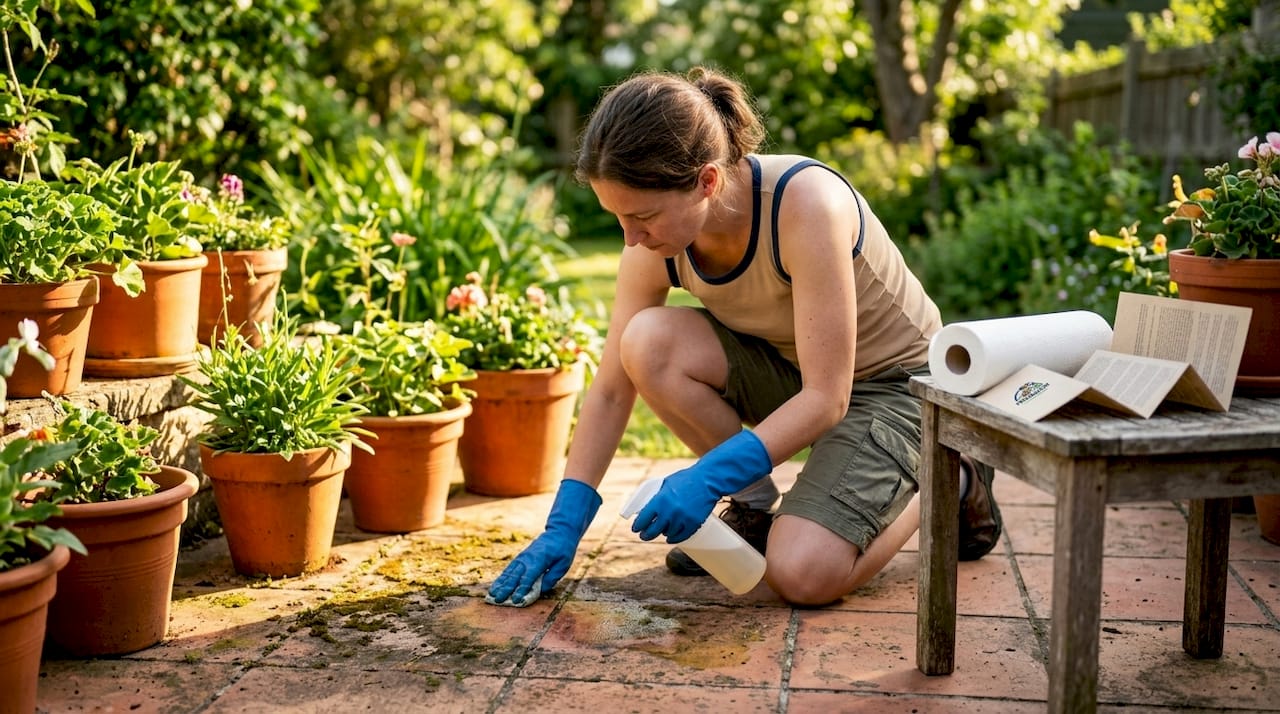
The application method matters as much as the product itself. Follow this sequence every time:
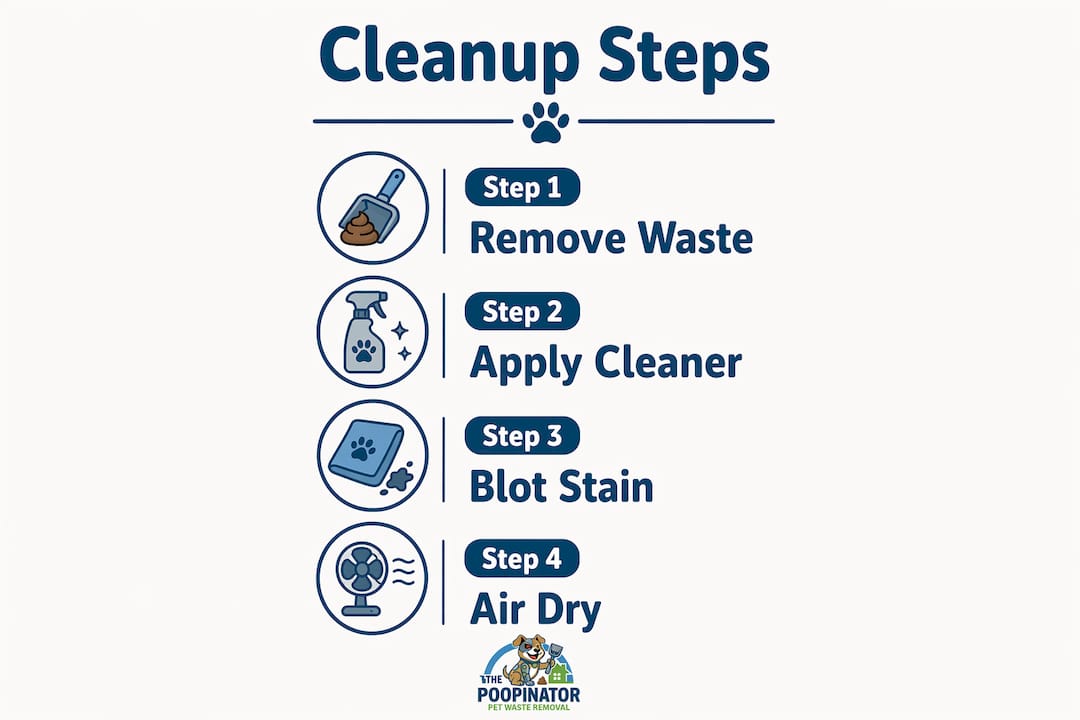
Step 1: Remove loose material first. Blot or scoop up as much of the mess as possible before applying any product. Removing loose debris first prevents you from spreading the contamination further into carpet fibers or soil.
Step 2: Apply the enzymatic cleaner generously. Saturate the stained area and let it sit. Enzymatic cleaners require 10–15 minutes of dwell time to fully digest the proteins. Do not rush this step.
Step 3: Blot, do not scrub. Scrubbing pushes the stain deeper. Blot from the outside of the stain inward.
Step 4: Allow to air dry completely. Heat from a dryer or steam cleaner can permanently set the odor compounds into fabric.
One critical warning: avoid bleach, ammonia, and steam cleaning on any pet stain. Ammonia smells like urine to a dog, which actively encourages them to mark the same spot again. Bleach damages carpet fibers and creates a toxic surface for pets who lick or walk on treated areas.
Pro Tip: Always choose pet-safe enzymatic cleaners specifically labeled as non-toxic. Many enzymatic formulas contain chemicals that irritate puppies who sniff or contact treated surfaces before they fully dry.
What are the biggest cleanup challenges for new dog owners?
New dog owners face a predictable set of obstacles in the first weeks. Understanding them in advance cuts cleanup time and reduces frustration significantly.
-
Repeat accidents in the same spot. Dogs return to areas that still carry their scent. If a standard cleaner was used the first time, the uric acid crystals remain and act as a beacon. The fix is re-treating with a bio-enzymatic cleaner and allowing full dwell time.
-
Mess spread during cleanup. Rushing to clean without removing loose material first pushes waste further into carpet or grass. Capture loose material first, then treat the residue, then clean the surrounding area.
-
Punishing accidents after the fact. This is one of the most common and damaging mistakes. Accidents are behavioral data, not defiance. Punishing a dog after the fact does not teach them where to go. It damages trust and makes training slower.
-
Dirty paws tracking mess indoors. A mat and a damp towel at every door entry solves this. Wiping paws at the door and brushing your dog regularly prevents dirt and odor from spreading through the house.
-
Not having supplies within reach. If your enzymatic cleaner is under the kitchen sink and the accident is in the bedroom, you lose critical response time. Keeping supplies near high-use areas like crates, doors, and puppy zones cuts cleanup time and prevents stains from setting.
The best new dog owner cleanup checklist is a simple one: enzymatic cleaner, paper towels, a pooper scooper, biodegradable bags, and a paw-wiping mat at every entry point. Stock these before your dog comes home, not after the first accident.
How should new dog owners dispose of waste responsibly?
Eco-friendly dog waste disposal is the practice of removing and discarding pet waste in ways that minimize environmental contamination. This matters more than most new owners realize. Dog waste left on the ground washes into storm drains and waterways, carrying bacteria and nutrients that degrade water quality.
Here is what actually works for responsible disposal:
- Biodegradable waste bags break down significantly faster than standard plastic bags in landfill conditions. Brands like Earth Rated and Pogi’s are widely available and affordable.
- Dedicated yard waste bins with lids keep odors contained between trash pickup days and prevent wildlife from accessing waste.
- Pet waste composting systems like the Doggie Dooley work by using enzymes and water to break down waste underground. Check local regulations before installing one, as some municipalities restrict composting of pet waste near water sources.
- Flushing dog waste is not recommended. Most municipal water treatment systems are not designed to process pet waste pathogens effectively.
For a deeper look at what actually works in practice, The Poopinator has a detailed breakdown of eco-friendly disposal methods worth reading before you set up your yard system.
| Disposal Method | Eco-Friendly | Practical for Most Yards | Notes |
|---|---|---|---|
| Biodegradable bags + trash | Moderate | Yes | Best general option |
| Pet waste composter | High | Yes (with space) | Check local rules |
| Standard plastic bags + trash | Low | Yes | Avoid if possible |
| Flushing | Low | No | Not recommended |
Commercial pooper scooper services handle disposal for you, which removes the guesswork entirely. For busy households, this is often the most practical solution.
Key takeaways
Effective yard cleanup for new dog owners requires consistent scheduling, the right products, and responsible disposal practices from day one.
| Point | Details |
|---|---|
| Clean at least twice weekly | More frequent pickup prevents parasite buildup and keeps odors from setting into soil. |
| Use bio-enzymatic cleaners | Only enzymatic products break down uric acid crystals and stop repeat marking behavior. |
| Follow the correct cleaning sequence | Remove loose material first, then treat residue, then blot dry to avoid spreading mess. |
| Dispose of waste responsibly | Biodegradable bags and pet waste composters reduce environmental impact significantly. |
| Keep supplies within arm’s reach | Stocking enzymatic cleaner and bags near crates and doors cuts response time and prevents set stains. |
The habit nobody talks about enough
I have spoken with hundreds of new dog owners over the years, and the pattern is almost always the same. They invest in a great dog, a great crate, and great food. Then the first accident happens and they grab whatever cleaner is under the sink. Three weeks later they cannot figure out why their dog keeps going in the same corner.
The truth is that cleanup is a system, not a reaction. The owners who figure this out in week one spend far less time scrubbing in month three. The ones who treat every accident as a crisis, punish their dog, and use the wrong products end up with a dog that is confused and a house that smells.
My honest advice: buy a quality enzymatic cleaner before your dog comes home. Set your yard cleanup days in your calendar right now. Put a paw-wiping mat at every door today. These are not complicated steps. They are just steps most people skip because they seem unnecessary until they are not.
Consistency beats perfection every time. A yard that gets cleaned twice a week on a schedule is cleaner than one that gets a deep clean once a month. Small habits compound fast, and your dog and your family will both feel the difference within weeks.
— William
Let the poopinator handle the hard part
Keeping up with yard waste is one of those tasks that is easy to fall behind on, especially in the first months of dog ownership when you are managing training, vet visits, and a new routine all at once.
The Poopinator offers bi-weekly and twice-weekly yard cleanup plans designed specifically for busy dog owners who want a clean, safe yard without adding another item to their to-do list. With over 20 years of combined experience and hundreds of five-star reviews, The Poopinator uses eco-friendly disposal methods that protect your yard and the environment. If you are in the Westfield, IN area, check out professional yard cleanup that takes the guesswork out of waste management entirely.
FAQ
How often should i clean up dog waste in the yard?
Clean your yard at least once or twice per week. If you have multiple dogs or a large breed, increase to three times weekly to prevent parasite and bacteria buildup.
Do enzymatic cleaners actually work better than regular cleaners?
Yes. Bio-enzymatic cleaners digest uric acid crystals that standard cleaners leave behind. Those crystals cause lingering odors and signal dogs to mark the same spot repeatedly.
What should be on a new dog owner cleanup checklist?
Stock enzymatic cleaner, paper towels, biodegradable waste bags, a long-handled pooper scooper, and a paw-wiping mat at every entry point before your dog comes home.
Are biodegradable waste bags worth it?
Biodegradable bags break down faster than standard plastic in landfill conditions and reduce long-term environmental impact. Brands like Earth Rated are widely available at most pet retailers.
When should i consider a professional pooper scooper service?
Consider a professional waste removal service if yard cleanup is falling behind your schedule, you own multiple dogs, or you want consistent eco-friendly disposal without managing it yourself.