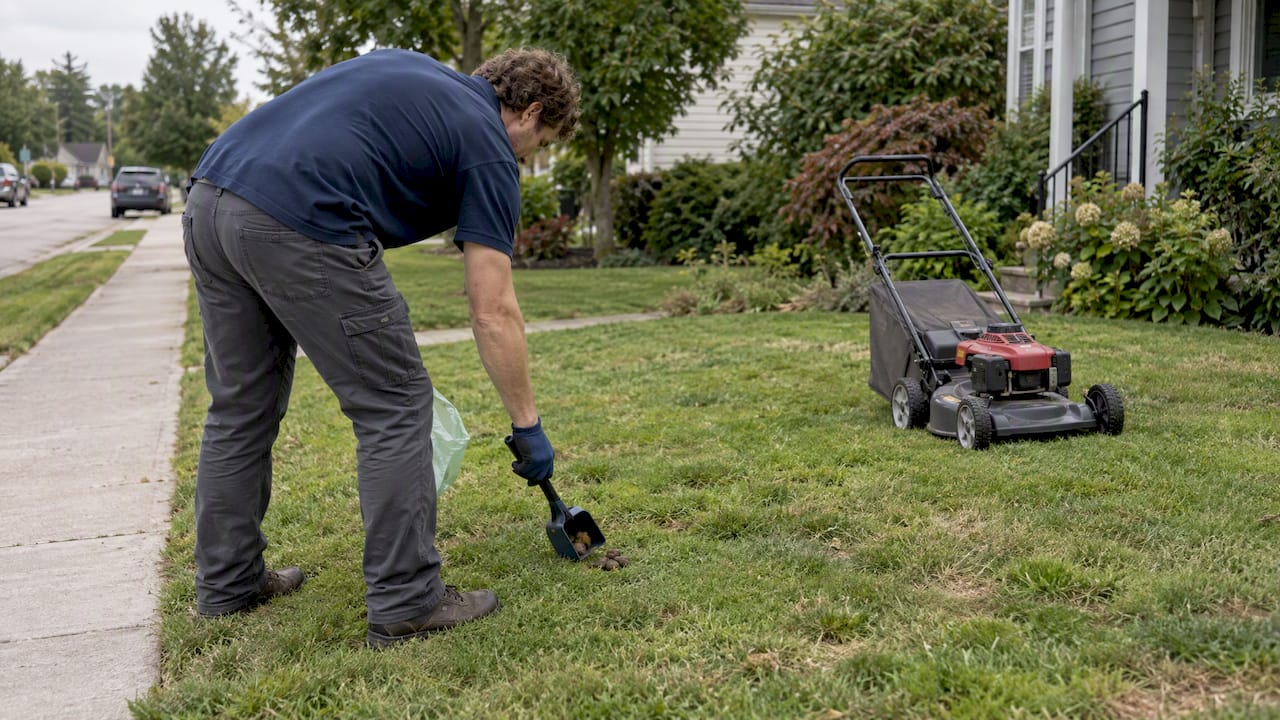
Pick up dog poop before you mow, every time, and never mow over fresh waste. Doing so protects your lawn from nitrogen burn, keeps parasites and bacteria from spreading across the yard, and saves your mower deck from a mess. For recurring buildup, safe disposal and a scheduled cleanup plan solve the problem for good.
TL;DR:
- Roundworm eggs can embryonate in soil within one to four weeks and remain infective for long periods, exposing children and pets who play there.
- Bag waste for household trash; flush it only where local rules allow and the home connects to municipal sewage, and never bury or compost it.
- Remove waste daily rather than waiting for mowing day, because waste left for 48 hours or longer causes more turf and bacterial damage.
- For an existing nitrogen burn, soak the area with water, add fresh soil, and reseed; avoid lime unless the damaged patch is large.
Table of Contents
- How Dog Poop Damages Lawns and Why It’s More Than Just Ugly
- How to Remove and Dispose of Dog Poop Safely
- How Landscapers and Lawn Pros Handle Dog Poop
- Preventive Yard Setups and Habits to Reduce Damage and Cleanup Time
- The Poopinator Perspective: Scheduled Cleanup Plans and What They Solve
- The Real Lesson Behind All the Lawn Care Advice
- Get Started With Scheduled Pet Waste Removal
- FAQ
- Sources
How Dog Poop Damages Lawns and Why It’s More Than Just Ugly
A pile of dog waste left on the grass for a few days does more than smell bad. Dog feces carry concentrated nitrogen and acid that scorch grass blades and roots when they sit in one spot, leaving the yellow or brown patches many homeowners mistake for a watering problem. Unlike spread fertilizer, waste delivers that nitrogen in one dense dose, and the lawn underneath often takes weeks to recover.
The health risk runs deeper than turf color. According to the CDC, mowing over fresh waste can spread parasite eggs such as roundworm and hookworm across the entire yard, turning one pile into a lawn-wide contamination problem. Those eggs are resilient: toxocariasis guidance from the CDC explains that roundworm eggs shed in feces embryonate in soil over one to four weeks and can stay infective for long periods, putting kids and pets who play on the grass at risk long after the original mess is gone.
The problem doesn’t stop at the property line. Pet waste is recognized as a source of nutrient and bacterial pollution in urban waterways, according to EPA stormwater guidance, which is why many cities now promote pet-waste stations and cleanup habits as part of their water-quality programs.
What waste left on the lawn actually causes:
- Nitrogen and acid burn that kills grass in concentrated spots
- Soil contamination from parasite eggs that survive for weeks or longer
- Bacterial spread when a mower blade or wheel drags waste across clean turf
- Runoff contamination that carries nutrients and bacteria into local storm drains
How to Remove and Dispose of Dog Poop Safely
A simple, repeatable routine turns cleanup from a dreaded chore into a two-minute habit. Here’s the order that works:
- Scan the yard first. Walk the mowing path before you start the engine and scoop anything you see, even small pieces.
- Use the right tool for the mess. A long-handled scoop works for firm waste; for runny stool, scoop a scrap of cardboard or a scoop of clumping cat litter under it before lifting, then hose the spot down.
- Bag it. Tie off a standard poop bag and drop it straight into household trash, which AKC guidance calls the most convenient and reliable disposal method.
- Flush where it’s allowed. If your home connects to a municipal sewage system, flushing bagged waste (bag removed first) is an accepted option, a point EPA guidance also recommends where local rules permit it.
- Skip burying and backyard composting. AKC notes that home composting for garden use isn’t recommended because pathogens can survive the process, and burying carries its own contamination risk if done near vegetable beds or wells.
- Wash your tools and your hands. Rinse the scoop, spray down your shoes if needed, and wash up before touching anything else.
Pro Tip: Keep a dedicated bucket of bags, a scoop, and a pair of old garden gloves by the back door so cleanup never gets skipped before mowing day.
Never toss waste or bags into a storm drain, and never leave a filled bag sitting on the grass, since both routes send bacteria straight into local water or right back onto your lawn. The one rule that prevents most damage: if you see it, don’t mow over it.
How Landscapers and Lawn Pros Handle Dog Poop
Hiring a mowing crew doesn’t mean the poop problem disappears, it just moves to a different set of hands. Most professional crews follow a version of the same routine homeowners should use, with a few differences shaped by scale and liability.
- A quick sweep or scoop of the yard happens before the mower comes out, often as a standard first step on the job.
- Some crews will skip a section entirely and return another day if waste is heavy, rather than risk spreading it.
- Many companies add a small pet-waste surcharge or offer a bundled waste-pickup add-on alongside recurring mowing, which keeps the crew’s schedule predictable and avoids surprise delays on-site.
- After the job, crews often hose down the mower deck and wheels to prevent buildup that can affect traction and cutting quality on the next property.
- Workers typically wear gloves during pickup and wash hands or sanitize before moving to the next task.
If you work with a mowing service, ask up front whether waste removal is included or billed separately. Clear communication about yard condition before each visit keeps the relationship smooth and avoids last-minute fees.
Preventive Yard Setups and Habits to Reduce Damage and Cleanup Time
The fastest way to cut cleanup time is to make pickup predictable instead of reactive, similar to seasonal yard cleanup strategies described in spring and fall yard cleanup. A few yard and routine changes go a long way.
- Set up a designated potty area, sometimes called a pooch patch, using gravel or a hardy ground cover, and place it near where you keep bags and a trash bin.
- Some municipal programs use long-grass zones and dedicated waste stations to manage pet waste in public spaces, a model EPA guidance highlights, and the same idea scales down easily to a backyard corner.
- Water the spot right after your dog urinates to dilute concentrated nitrogen before it burns the grass.
- Raise your mower deck height slightly in high-traffic pet areas, since longer blades tolerate occasional nitrogen exposure better than a tight cut.
- Stick to a fixed pickup schedule rather than waiting until mowing day, since waste that sits for 48 hours or more does more turf and bacterial damage than waste removed daily.
Pro Tip: For an existing nitrogen-burn spot, soak the area heavily with water to dilute the nitrogen, then topdress with fresh soil and reseed; skip chemical neutralizers unless the patch is large, since lime used carelessly can shift soil pH more than it helps.
Grass choice matters too. Tougher, deeper-rooted species tend to recover faster from nitrogen spikes than thin, shallow turf, so if your yard has chronic bare patches in the dog’s favorite spot, a tougher seed blend in that section can cut your repair work significantly. For more on how waste affects turf specifically, see our breakdown of dog poop grass damage.
The Poopinator Perspective: Scheduled Cleanup Plans and What They Solve
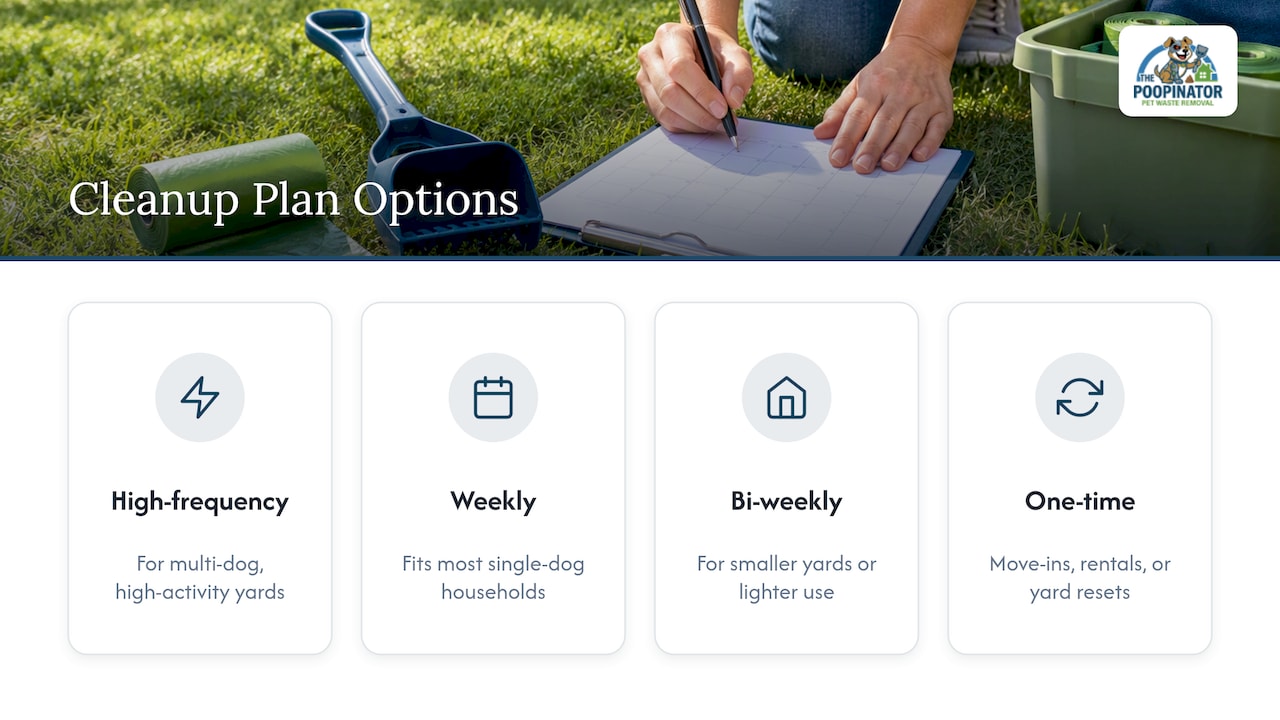
Our scheduled plans are designed around the fact that pickup frequency, not effort on any single day, is what actually protects a lawn. A more frequent visit suits high-activity yards with multiple dogs, a weekly plan fits most single-dog households, and a bi-weekly plan works for smaller yards or lighter use. For move-ins, rentals, or a yard that needs a reset, a one-time visit can clean the space in a single trip.
We bring extensive experience to every yard we service, and we dispose of what we collect using eco-friendly methods rather than cutting corners. Many positive customer reviews reflect the consistency aimed for on every visit, regardless of location.
At sign-up, we confirm yard size, dog count, and the frequency that fits your routine, then handle the rest on schedule, helping prevent surprises when mowing.
The Real Lesson Behind All the Lawn Care Advice
Most lawn care advice treats dog waste as a mowing-day inconvenience, something to glance at before you start the engine. That framing undersells the problem. The damage that matters most, the parasite persistence the CDC describes and the runoff pollution the EPA tracks, happens on the days you don’t mow at all, while waste sits in the grass doing quiet harm.
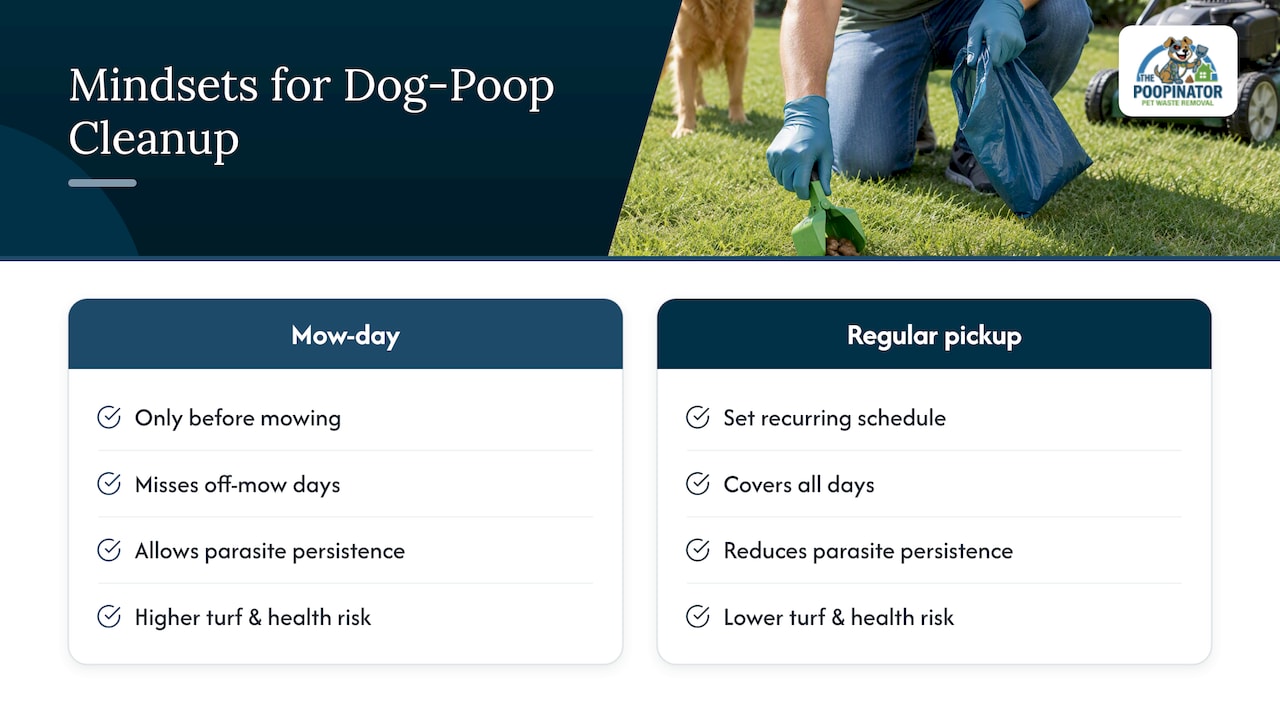
The homeowners who avoid turf damage and health risk aren’t the ones with the best mowing-day routine. They’re the ones who treat pickup as a standing schedule, not an occasional task triggered by an overgrown lawn. If you take one thing from this guide, make it that shift: stop thinking about poop cleanup as a pre-mowing chore and start thinking about it as its own recurring job, done on its own clock.
That’s the gap between advice that sounds responsible and a routine that actually keeps a lawn healthy.
— William
Get Started With Scheduled Pet Waste Removal
We make the switch from reactive scooping to a scheduled plan simple. Visit our how it works page to see exactly what each plan includes and how scheduling prevents the turf damage and contamination covered in this guide.
Before you request a quote, have a few details ready:
- Your yard’s approximate size and layout
- How many dogs use the yard and how often
- The pickup frequency that fits your routine, from twice-weekly to bi-weekly
We handle collected waste using eco-friendly disposal methods on every visit, and our plans flex from a single reset cleanup to standing weekly service. If you’re weighing a one-time visit against a recurring plan, our one-time cleanup cost guide breaks down what to expect at sign-up.
FAQ
How can I safely dissolve dog poop in my lawn?
There is no household product that safely “dissolves” dog waste in place. Standard practice is to remove it promptly, bag it, and dispose of it in household trash, which AKC guidance identifies as the most convenient and sanitary method.
How do landscapers deal with dog poop?
Most crews scoop or sweep visible waste before mowing starts, and many either skip heavily soiled sections and return later or add a pet-waste pickup charge to the job. Crews typically clean the mower deck afterward and wash up to avoid spreading bacteria to the next property.
What to put on a lawn for dog poop?
Nothing needs to be applied directly to waste. After removal, water the affected spot to dilute residual nitrogen, then topdress with soil and reseed if a brown patch has already formed.
Is it okay to mow the lawn with dog poop still on it?
No. Mowing over fresh waste spreads bacteria and parasite eggs, including roundworm and hookworm, across the entire yard, according to CDC guidance. Always clear visible waste before starting the mower.
Sources
- CDC — Healthy Pets, Healthy People: Dogs
- EPA — Stormwater best management practice: Pet waste management
- AKC — Dog poop cleanup