

TL;DR:
- Eco-friendly pet disposal in Indiana emphasizes prompt waste removal combined with methods like in-ground digesters, flushing where permitted, or professional pickup services that prioritize environmental responsibility. Most biodegradable bags only offer genuine benefits when paired with approved composting systems or digesters, as municipal programs rarely accept pet waste, rendering many eco labels ineffective. Proper disposal is regulated by Indiana law, requiring timely handling of dead animals, while combining multiple methods often provides the most practical and sustainable solution for households.
Indiana eco-friendly pet disposal options are methods that manage pet waste with minimal environmental harm, using approaches suited to the state’s local regulations, soil conditions, and municipal infrastructure. Pet waste is a classified water pollutant, not a fertilizer, and leaving it on the ground sends pathogens and nitrogen directly into Indiana’s waterways. The right disposal method depends on your property type, your municipality’s rules, and how much time you can realistically commit. Organizations like Indiana DNR, Earth911, and services like The Poopinator each play a role in helping Hoosier pet owners make smarter, greener choices.
1. Indiana eco-friendly pet disposal options: the full list
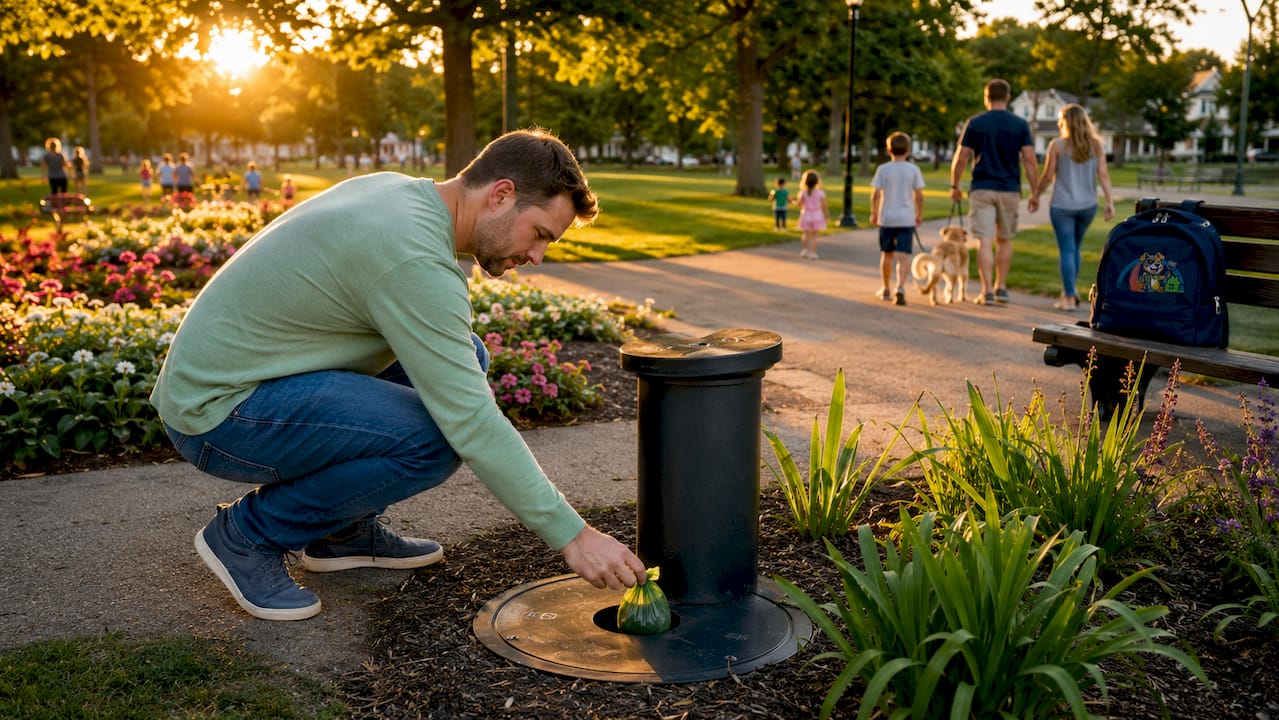
The most practical green pet disposal methods available to Indiana residents are flushing, in-ground digesters, municipal composting where accepted, and professional pickup services. Each works differently depending on your yard, your city, and your household setup. Here is a breakdown of every option worth considering.
-
Flushing pet waste routes waste to wastewater treatment facilities, which are designed to handle pathogens. Flushing pet waste works only without the bag and only where local rules and septic systems allow it. Indiana homeowners on septic systems should check with their provider before using this method regularly.
-
In-ground pet waste digesters are buried containers that use microbial activity to break down waste in your yard. They require well-draining soil and perform best in moderate temperatures. Indiana winters significantly slow digester activity, so expect reduced capacity from November through March.
-
Municipal composting programs are the rarest option. South Bend’s composting facilities, for example, do not accept pet waste as part of yard waste collection. Before assuming your city accepts it, call your local solid waste district directly.
-
Professional pet waste pickup services like The Poopinator collect and dispose of waste on a scheduled basis, removing the burden from the homeowner entirely. This is the most consistent option for households with multiple dogs or limited time.
-
Home composting systems using bokashi fermentation or dedicated worm bins can process dog waste safely, but standard backyard compost piles are not sufficient due to pathogen risks.
Pro Tip: Call your Indiana county solid waste management district before investing in any composting setup. Acceptance rules change, and a five-minute phone call can save you significant time and money.
2. How biodegradable and compostable pet waste bags actually work in Indiana
Biodegradable pet waste bags are one of the most misunderstood products in the green pet care space. The label sounds responsible, but the outcome depends entirely on where the bag ends up.
| Bag type | What it means | Indiana disposal reality |
|---|---|---|
| Conventional plastic | Does not break down | Landfill only |
| “Biodegradable” (uncertified) | May fragment into microplastics in landfill | Landfill, no benefit |
| Certified compostable (ASTM D6400) | Breaks down in industrial composting conditions | Useful only with digester or accepted program |
The ASTM D6400 standard is the certification that actually matters. Bags meeting this standard break down in industrial composting environments without leaving toxic residue. The problem is that most municipal composting programs do not accept dog waste, so even a certified compostable bag ends up in a landfill where it cannot biodegrade properly. This means the bag’s eco benefit is only realized if you pair it with a home digester or a program that actually accepts pet waste.
Uncertified “biodegradable” bags are the worst offender. Many products labeled biodegradable fragment into microplastics under landfill conditions, which is worse than a standard plastic bag in some respects because the contamination is harder to detect and contain.
Pro Tip: Look for the BPI (Biodegradable Products Institute) certification logo alongside ASTM D6400 on any bag you buy. That combination confirms the bag has been independently tested, not just labeled by the manufacturer.
For Indiana pet owners using an in-ground digester, certified compostable bags are the right choice. For everyone else, a standard bag sent to landfill is often the honest outcome, and that is worth acknowledging rather than hiding behind a green label.
3. Indiana’s regulations for pet waste and pet remains disposal
Indiana law sets clear expectations for how pet waste and pet remains must be handled, and the rules differ significantly between daily waste and end-of-life situations.
-
Indiana Code § 15-17-11-20 requires timely disposal of dead animals, generally within 24 hours of the owner becoming aware of the death, to prevent nuisance and public health hazards.
-
Indiana DNR permits burial, incineration, rendering, and composting for dead wildlife removal from private property, with safety precautions recommended for each method.
-
Local government rules around pet remains disposal vary by city and county. Indianapolis, Carmel, and Westfield may each have specific burial depth requirements or prohibitions on backyard burial near water sources or property lines.
-
Daily pet waste left on the ground or improperly disposed of creates legal liability in most Indiana municipalities. Pet waste is a known water pollutant, and ordinances in many Indiana cities require prompt collection.
-
The Indiana State Board of Animal Health governs livestock and farm animal disposal separately from household pets. Local regulations for pet remains can significantly change which methods are allowed in your specific city or county.
The practical takeaway is straightforward. For daily waste, pick it up promptly and dispose of it through one of the methods in this article. For pet remains, contact your local health department or solid waste district before choosing burial or any other method.
4. How to set up sustainable pet waste disposal at home in Indiana
Choosing the right home-based disposal method comes down to three factors: your property type, your municipality’s services, and how much maintenance you are willing to do consistently.
-
Check local municipal acceptance first. Before buying any equipment, confirm what your city or county solid waste district accepts. This single step eliminates options that will not work in your area and saves you from wasted investment.
-
Install an in-ground digester if you have a yard with good drainage. Products like the Doggie Dooley use enzymatic digestion to break down waste underground. Place the digester away from vegetable gardens and water features. Expect slower performance during Indiana winters when microbial activity drops significantly in cold soil.
-
Use bokashi fermentation for a more controlled home composting approach. Bokashi systems use beneficial microbes to ferment waste, including dog waste, in a sealed bucket. This process significantly reduces pathogens before the material is buried or added to a secondary compost system. It works well in apartments with outdoor space or small yards.
-
Flush waste where your plumbing allows. If you are on a municipal sewer system in Indianapolis, Carmel, or Fishers, flushing pet waste without the bag is a legitimate option. Always remove the bag first and confirm your local utility does not prohibit it.
-
Pick up waste on a strict schedule. The single highest-leverage action any Indiana pet owner can take is prompt collection. Disposal method matters far less if waste sits on the ground for days and washes into storm drains.
-
Apartment dwellers without yard access should use certified compostable bags with a bokashi bucket kept on a balcony or in a utility area, then bury the fermented output in a community garden bed if permitted.
Pro Tip: Set a phone reminder for waste pickup every 48 hours. Consistency prevents the buildup that makes any disposal system feel overwhelming and reduces the risk of runoff contamination in your yard.
For a deeper look at what actually works versus what sounds good on paper, The Poopinator’s guide on eco-friendly dog waste disposal cuts through the marketing noise with practical Indiana-specific advice.
5. Comparing costs, convenience, and eco benefits of each option
Choosing between disposal methods requires an honest look at what each one costs, how much time it takes, and what it actually does for the environment.
| Method | Upfront cost | Ongoing effort | Eco benefit | Indiana limitation |
|---|---|---|---|---|
| In-ground digester | $30 to $60 | Low (weekly loading) | High (diverts landfill) | Reduced in winter |
| Bokashi composting | $40 to $80 | Medium (bucket management) | High (pathogen reduction) | Requires outdoor burial space |
| Flushing | $0 | Very low | Medium (wastewater treated) | Septic systems excluded |
| Municipal composting | $0 | Low | High (if accepted) | Rarely accepted in Indiana |
| Professional pickup | $20 to $60/month | None | Medium to high | Depends on provider’s disposal method |
Professional pickup services deliver the best combination of consistency and convenience, particularly for households with two or more dogs. The environmental benefit depends on how the service disposes of collected waste, so asking your provider directly about their disposal method is worth the conversation. The Poopinator uses eco-conscious removal practices designed to minimize landfill impact across its Indiana service areas.
Key takeaways
The most effective Indiana eco-friendly pet disposal strategy combines prompt waste collection with a locally compliant method such as an in-ground digester, flushing where permitted, or professional pickup service.
| Point | Details |
|---|---|
| Prompt pickup is the foundation | Collecting waste immediately prevents runoff pollution regardless of disposal method chosen. |
| Compostable bags require the right system | ASTM D6400 certified bags only deliver eco benefits when paired with a digester or accepted composting program. |
| Municipal composting rarely accepts pet waste | South Bend and most Indiana cities exclude pet waste from yard waste programs; always verify locally. |
| Indiana law requires timely disposal | Indiana Code mandates dead animal disposal within 24 hours; daily waste rules vary by municipality. |
| Professional services fill the gap | Services like The Poopinator provide consistent, eco-conscious removal when home methods are impractical. |
What I’ve learned about eco pet disposal after years in Indiana yards
The biggest misconception I run into is that buying a green-labeled bag is the same as making a green choice. It is not. A certified compostable bag sitting in a landfill performs no better than a conventional plastic one. The label only matters if the disposal pathway supports it, and in most Indiana municipalities, that pathway does not exist yet.
What I have found actually works is treating prompt pickup as non-negotiable and then choosing a disposal method that fits your property honestly. A digester is excellent if you have a yard with decent drainage and you live through the winter knowing it will slow down. Bokashi works well for people who want more control and do not mind a small learning curve. Flushing is underused and perfectly valid for sewer-connected households.
The other thing worth saying directly: most pet owners do not need to choose just one method. Flushing works for daily cleanup, a digester handles overflow, and a professional service covers the weeks when life gets busy. Combining methods is not a compromise. It is actually the most realistic and effective approach for Indiana households.
Keep your yard clean and your footprint small with The Poopinator
The Poopinator serves dog owners across Westfield and the broader Indianapolis area with scheduled pet waste removal that takes the work off your plate entirely. With bi-weekly and twice-weekly cleanup plans built for busy households and high-activity yards, The Poopinator brings over 20 years of combined experience and hundreds of five-star reviews to every visit. If you want a yard that stays clean without sacrificing your environmental values, professional waste removal in Westfield is the most reliable next step. The Poopinator’s team handles collection and disposal so you do not have to guess whether you are doing it right.
FAQ
What is Indianapolis eco pet disposal?
Indianapolis eco pet disposal refers to waste management methods that minimize environmental harm, including flushing waste through municipal sewers, using in-ground digesters, or hiring professional services that follow responsible disposal practices.
Can I compost dog waste in my Indiana backyard?
Standard backyard composting is not sufficient for dog waste due to pathogen risks. Safe home composting requires dedicated systems like bokashi fermentation or in-ground digesters, which significantly reduce pathogens before soil integration.
Are biodegradable pet waste bags actually eco-friendly in Indiana?
Only bags certified to ASTM D6400 standards deliver genuine eco benefits, and only when paired with a composting system or digester that accepts them. Most Indiana municipal programs do not accept pet waste, so uncertified bags typically end up in landfill.
What does Indiana law say about disposing of a deceased pet?
Indiana Code § 15-17-11-20 requires disposal of dead animals within 24 hours of the owner becoming aware of the death. Allowed methods include burial, cremation, and rendering, but local city and county rules may impose additional restrictions on burial depth or location.
How do I find a pet waste disposal service in Indiana?
Professional services like The Poopinator operate across Westfield and the Indianapolis metro area, offering scheduled pickup plans. Check how The Poopinator works to find a plan that fits your yard size and pickup frequency needs.