TL;DR:
- Managing yard waste for large dogs requires dedicated tools, a properly designed potty zone, and a consistent cleanup routine. Implementing these strategies, including regular scooping and professional assistance when necessary, helps maintain a healthy, odor-free outdoor space. Proper surface choice and yard organization are crucial for effective waste management and environmental protection.
If you share your yard with a large breed, you already know the challenge is in a different league from what small dog owners deal with. A 90-pound Labrador or Great Dane produces waste that is significantly larger in volume, more damaging to grass, and quicker to create odor problems. To keep yard clean with large dog means going beyond casual weekend scooping. It means building a system. This guide covers the tools, the yard design, the routine, and when to bring in professional backup so your outdoor space stays healthy, safe, and actually enjoyable.
Table of Contents
- Key Takeaways
- How to keep your yard clean with a large dog
- Essential tools for large dog cleanup
- Designing your yard for easier cleanup
- Building an effective cleanup routine
- When to hire a professional waste removal service
- Troubleshooting common large dog yard problems
- What I have actually learned managing large dog yards
- Let The Poopinator handle the hard part
- FAQ
Key Takeaways
| Point | Details |
|---|---|
| Start with the right tools | A dedicated waste station with supplies at the ready makes daily cleanup faster and more consistent. |
| Design your yard for cleanup | A potty zone sized at least 12×12 feet, placed away from pathways, keeps waste contained and predictable. |
| Build a daily routine | Scooping every one to two days prevents odor buildup and reduces environmental contamination from runoff. |
| Know when to hire help | Professional services catch hidden corners and fence lines that most owners miss on their own. |
| Surface choice changes everything | Gravel, pavers, or artificial turf dramatically reduce mud, urine damage, and cleanup time compared to natural grass. |
How to keep your yard clean with a large dog
Owning a large breed is a joy, but let’s be honest about the reality on the ground. Bigger dogs mean bigger deposits, and those deposits carry real consequences beyond just an unpleasant yard. Pet waste contains nitrogen, phosphorus, bacteria, and parasites that can seep into stormwater and pollute local waterways. Leaving waste sitting even for a few days accelerates that process considerably.
Many communities are also tightening regulations. In some cities, local ordinances require cleanup on private property, not just public spaces. That means the cleanliness of your own backyard is not just an aesthetic preference. It is a legal and environmental responsibility.
The good news is that large dog yard cleanup becomes manageable once you approach it as a system rather than a chore you remember to tackle when things get bad enough.
Essential tools for large dog cleanup
You cannot maintain a clean yard without the right gear ready to go. Scrambling for supplies is how cleanup gets skipped. Here is what you need on hand.
The core toolkit:
- Heavy-duty waste bags (thicker gauge than standard bags, sold in bulk)
- A long-handled scooper or rake and pan set, so you are not bending constantly
- A sealed, odor-locking waste bin kept near your yard access door
- Pet-safe disinfectant spray for deodorizing grass and surfaces
- A pair of chemical-resistant gloves kept in a dedicated spot
- A garden hose with a spray nozzle for rinsing down hard surfaces
The placement of your waste station matters as much as what is in it. Set it up right next to the door your dog uses to exit. If supplies are ten steps out of the way, you will skip them on a rainy Tuesday morning.
| Tool | Why it matters for large dogs |
|---|---|
| Heavy-gauge waste bags | Standard bags tear under the volume and weight |
| Long-handled scooper | Reduces back strain during daily pickup |
| Sealed odor bin | Contains smell between trash pickup days |
| Pet-safe disinfectant | Kills bacteria without harming grass or paws |
| Chemical-resistant gloves | Protects against bacteria present in large waste volumes |
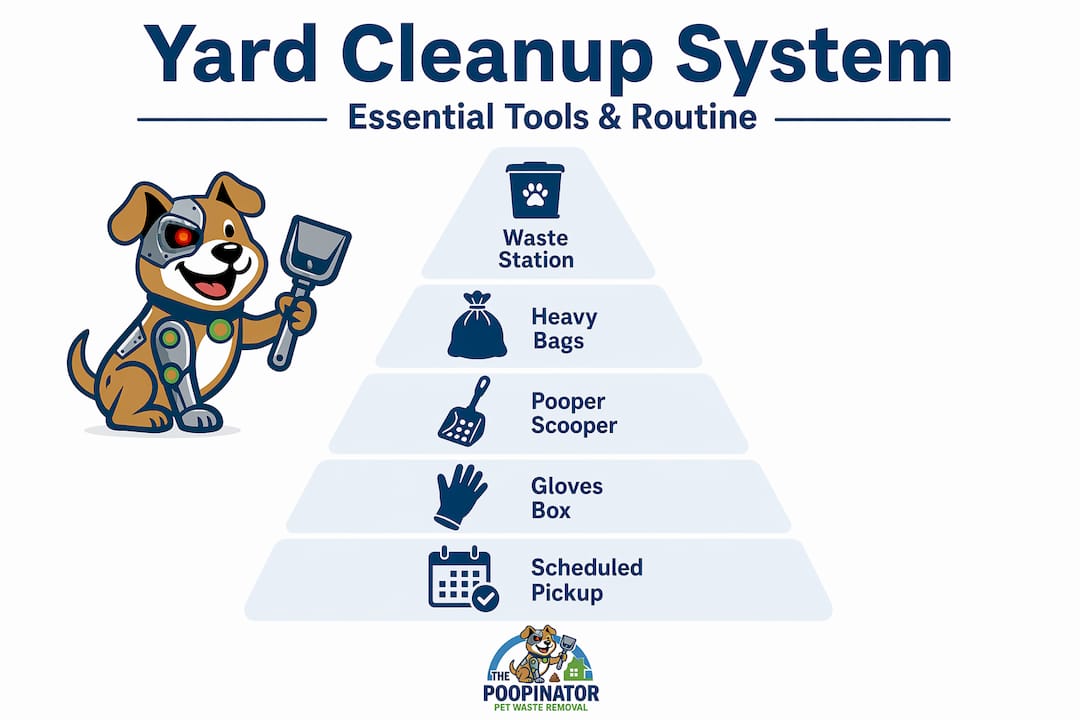
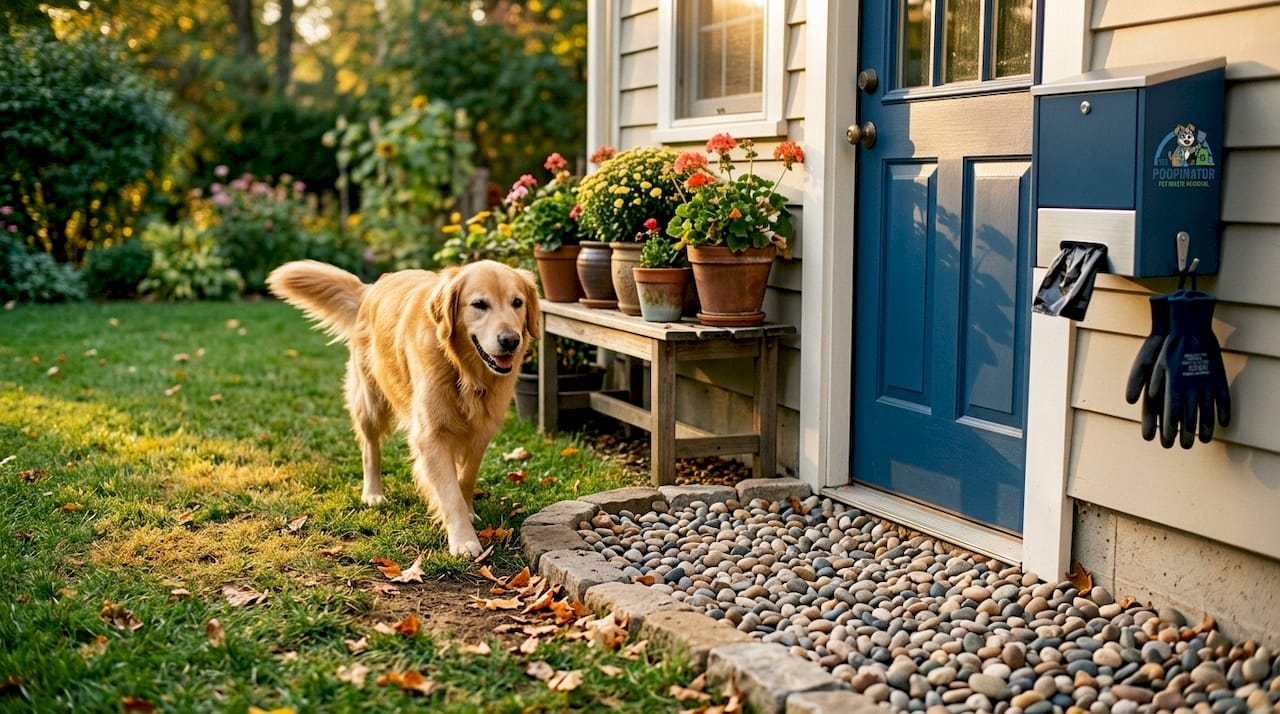
Pro Tip: Buy a small weatherproof storage box and mount it beside your back door. Stock it with bags, gloves, and a hand sanitizer. When everything lives in one spot, the barrier to doing a quick scoop drops to almost nothing.
Designing your yard for easier cleanup
This is where most large dog owners leave a lot of value on the table. They keep cleaning the same chaotic space instead of spending a weekend reorganizing it to make every future cleanup faster.
The single most effective change you can make is creating a dedicated potty area. For large breeds, that zone needs to be at least 12×12 feet to give them enough space to use it consistently. Place it away from your main lawn, in a corner, or along a fence line. Once your dog reliably uses that spot, your cleanup footprint shrinks dramatically.
Choosing the right surface
Natural grass is the default, but it is the worst performer in a high-traffic dog area. Urine burns the grass, paws churn up mud, and waste soaks into the soil quickly. Consider these alternatives.
Pea gravel is the most popular choice for potty zones. It drains immediately, does not compact, and you can rinse it down with a hose. Waste sits on top and is easy to see and scoop. The downside is that some large dogs like to scatter it, so you may need border edging.
Artificial turf is worth the upfront cost for serious cases. Turf drains quickly, resists urine damage, and holds up under heavy paw traffic far better than natural grass. It also stays visually clean, which matters if neighbors or guests use your outdoor space.
Door transition zones are often overlooked entirely. Placing pavers or gravel paths at access points creates a natural paw-scrubbing effect before your dog re-enters the house. This reduces the amount of waste and mud tracked indoors significantly.
Pro Tip: Install landscape edging around your designated potty zone. It creates a clear visual boundary for both you and your dog, and it stops waste from migrating into garden beds or grass areas you want to protect.
You can find additional hardscape ideas and backyard cleanup strategies that translate well to dog-friendly design if you want to go deeper on surface materials.
Building an effective cleanup routine
Consistency is the only thing that actually works. No amount of good tools or smart yard design compensates for irregular pickup. Here is a routine that accounts for the realities of large dog ownership.
- Scoop every one to two days at minimum. Large dogs produce enough waste that three or four days of accumulation creates a genuine odor and bacteria problem. Weekly or more frequent pickup significantly reduces environmental risks from nutrient runoff into stormwater.
- Start at the perimeter, not the center. Fence lines, garden bed edges, and corners along your home’s foundation are where waste hides longest. Work the edges first, then sweep toward the middle.
- Do a systematic grid pass. Break your yard into mental sections and move through each one deliberately rather than scanning randomly. Random scanning misses spots consistently.
- Rinse and disinfect the potty zone. Once per week, hit the dedicated area with a pet-safe enzymatic cleaner. This kills odor-causing bacteria and reduces the urine smell that can attract your dog back to spots outside the zone.
- Incorporate mowing into the schedule. Shorter grass makes waste visible and easier to spot during cleanup. Mow before scooping when possible.
- Use spot irrigation after disinfecting. A light rinse after applying cleaner dilutes residue and helps keep the zone fresh without over-saturating it.
“The most common mistake I see large dog owners make is treating cleanup as an occasional project instead of a daily two-minute habit. The math is simple: one minute of scooping today prevents twenty minutes of deep cleaning next week.”
You can build a detailed waste pickup schedule that accounts for your specific breed size, dog count, and yard layout if you want a written framework to follow.
When to hire a professional waste removal service
There is a point where self-managing stops making sense, and knowing that threshold is useful. Here are the signs that professional help is worth adding.
- You have two or more large dogs, where waste accumulation outpaces what a busy household can manage daily
- Your yard has complex landscaping with multiple areas where waste hides consistently
- You travel frequently and cleanup falls behind during absences
- Odor or lawn damage has become noticeable despite your best efforts
- You want to maintain a consistently high standard without dedicating mental energy to the task
Professional services operate with a level of thoroughness that is genuinely hard to replicate on your own. Services cover entire properties including hidden corners, flower beds, and fence lines using systematic inspection, then double-bag waste for sanitary disposal.
Most providers offer weekly, bi-weekly, or twice-weekly visits depending on the dog count and yard activity level. A professional poop scooper visit typically includes a full property sweep, not just a pass through the obvious open areas.
Cost varies by region and service frequency, but the time savings alone tend to justify it for households with two or more large dogs. You also stay compliant with any local ordinances that require private property cleanup.
Troubleshooting common large dog yard problems
Even with a good system in place, specific problems come up. Here is how to address the most common ones.
Persistent odor despite regular cleanup. If the smell lingers after scooping, bacterial residue in the soil is the culprit. An enzymatic cleaner applied weekly breaks down the organic compounds driving the smell rather than just masking them with fragrance.
Urine burn spots on grass. Large dogs deposit concentrated urine in high volumes. Diluting those spots immediately after your dog goes (with a quick hose rinse) significantly reduces nitrogen burns. You can also overseed damaged patches in spring with a urine-resistant grass variety like tall fescue.
Waste showing up outside the designated zone. This usually means the potty area is too small or too far from the dog’s preferred spots. The effectiveness of a dedicated potty zone depends on both size and position. Relocate it closer to where your dog naturally gravitates first, then reinforce the habit with consistent direction.
Seasonal challenges. Mud in spring, frozen ground in winter, and dry heat in summer all require minor adjustments. In winter, create a cleared path to the potty zone so your dog does not avoid it. In summer, increase rinse frequency to control odor in the heat.
Pro Tip: Sprinkle baking soda lightly over high-use grass areas once a week. It neutralizes odor without harming your lawn or your dog, and it costs almost nothing.
What I have actually learned managing large dog yards
I have been helping dog owners deal with yard cleanup long enough to say this plainly: most advice stops at the surface level. “Scoop regularly” is true but incomplete. The owners who struggle the most are not the ones who lack motivation. They are the ones who have not set up their yard and routine to reduce friction.
The two changes I have seen make the biggest difference are a dedicated potty zone and a stationed supply kit. Neither of those is glamorous. But when you combine them with even a loose daily schedule, the yard management problem shrinks to something genuinely manageable.
I have also seen people underestimate what professional service actually provides. It is not just convenience. For large dog households, the thorough inspection of hidden areas during cleanup catches waste accumulation that owners simply stop seeing after a while. Fresh eyes on a familiar space matter more than most people expect.
The dogs are worth every bit of this effort. But set the system up right, and the effort becomes small.
— William
Let The Poopinator handle the hard part
If you have a large breed or multiple dogs and your yard cleanup has started to feel like a second job, that is exactly the problem The Poopinator was built to solve.
The Poopinator offers bi-weekly and twice-weekly yard waste removal plans designed specifically for households with heavy waste output. Every visit covers the full property, including fence lines, garden edges, and hidden corners that standard cleanup misses. The team uses eco-friendly disposal methods and brings over 20 years of combined experience to every job.
For large dog owners in the Westfield area and beyond, The Poopinator offers reliable pet waste removal you can schedule around your life, not the other way around. Hundreds of five-star reviews back that up. Check current plans and service areas to find the option that fits your yard.
FAQ
How often should I clean up waste from a large dog’s yard?
Every one to two days is the recommended minimum for large breeds. More frequent pickup reduces odor, prevents lawn damage, and limits bacteria from reaching stormwater runoff.
What is the best surface for a large dog’s potty zone?
Pea gravel and artificial turf are the top performers. Both drain quickly, resist urine damage, and make waste easy to spot and scoop compared to natural grass.
How big should a dedicated potty area be for a large dog?
For large breeds, the potty zone should measure at least 12×12 feet. Smaller zones cause waste to spread unpredictably across the rest of the yard and make training the behavior harder to reinforce.
When does hiring a professional dog waste service make sense?
If you have two or more large dogs, a complex yard layout, or a schedule that leads to frequent cleanup gaps, a professional service is worth it. Services cover the full property thoroughly, including spots that most owners miss during self-managed cleanup.
Does dog waste actually harm my yard beyond the smell?
Yes. Urine burns grass through nitrogen overload, and solid waste introduces bacteria and parasites into the soil. Left too long, rainwater can carry those contaminants directly into local waterways.