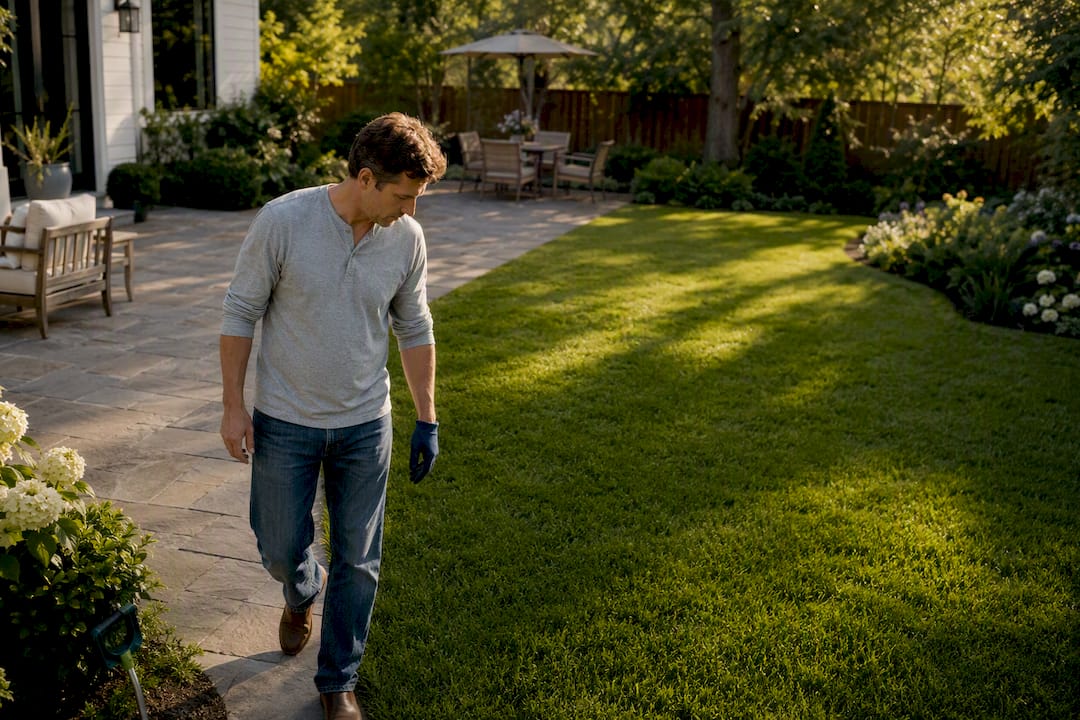
Scoop and seal every visible pile before you do anything else, then spot-treat the surface underneath with an enzyme cleaner rated for that material and let it dry completely. If a stain or smell won’t budge after initial treatment, stop tinkering and consider calling a professional one-time cleanup. Buyers notice yards fast, and a lingering odor during a walk-through can cost you more than the cleanup ever would.
TL;DR:
- Removing solid waste first is essential because spraying enzymes directly on the pile only spreads the problem and wastes product.
- Fresh messes take minutes to clean properly, but stains that sit for hours or days may require professional extraction or deep cleaning.
- Enzyme cleaners are effective for surface treatment, but wide lawn patches or persistent odors often need a professional cleanup to prevent inspection issues.
- Pet waste should always go in the regular trash, as composting or flushing poses health risks and environmental pollution concerns.
- A professional yard cleanup typically costs $100 for a single visit or between $15 and $30 per visit for recurring plans, depending on the frequency.
Table of Contents
- How Fast Home Showing Dog Poop Cleanup Actually Works
- What Goes in a Quick-Response Kit for Show Day
- How Do You Clean Dog Poop From Different Surfaces?
- Where Should Pet Waste Actually Go?
- Your Show-Day Timeline: What to Do and When
- When Is a Quick Fix Enough, and When Should You Call in Help?
- Book a Professional Cleanup Before Your Next Showing
- Sources
- FAQ
How Fast Home Showing Dog Poop Cleanup Actually Works
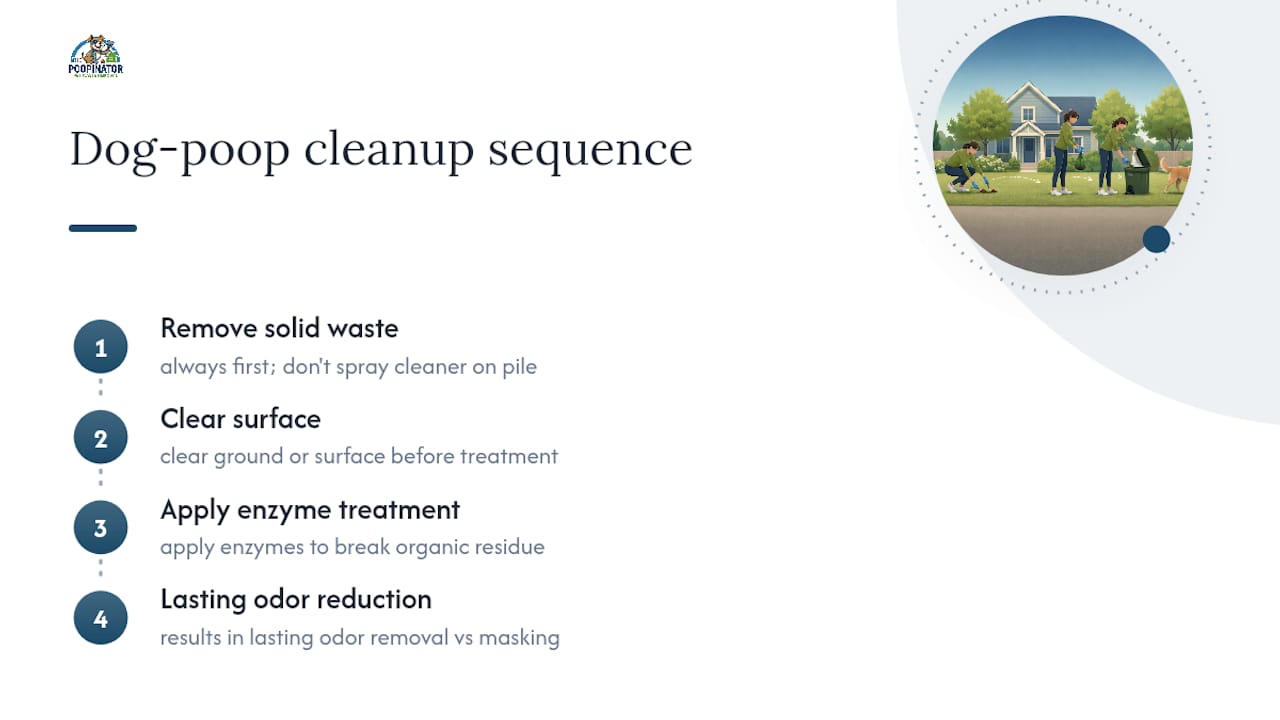
The mechanics are simple, but the sequence matters. You remove the solid waste first, always, before you touch a drop of cleaner. Spraying enzyme product on top of a pile just spreads the problem and wastes the product. Once the ground or surface is clear, the enzyme treatment breaks down the organic residue that causes the smell, rather than just masking it the way an air freshener or scented spray does. That distinction is the difference between a yard that smells clean for an afternoon and one that actually is.
Timing counts almost as much as technique. A fresh mess takes minutes to handle. One that’s been baking on a patio or soaking into carpet fibers for a day takes real effort, sometimes professional-grade extraction. If you know a showing is coming, plan to check the property in advance and again right before the agent arrives.
What Goes in a Quick-Response Kit for Show Day
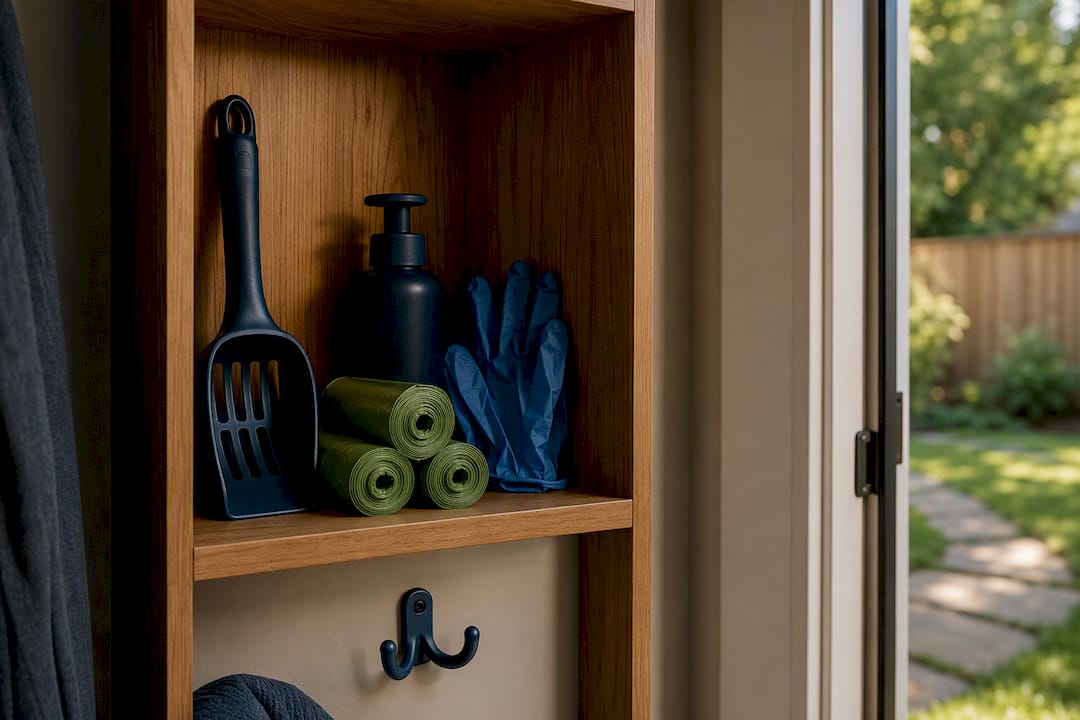
Keep a dedicated kit by the door you use most to access the yard. Digging through a garage for gloves while a buyer’s car pulls into the driveway is not a position you want to be in.
Pack it with:
- Disposable gloves (a full box, not a pair)
- Sturdy waste bags, doubled for extra security
- A small scoop or a disposable shovel you don’t mind tossing
- An enzyme spray safe for grass, turf, or hard flooring
- Paper towels or disposable cloths for blotting
- A small sealed bin or extra bags for double-bagging
- Baking soda or an odor-neutralizing powder
- A small broom or leaf blower to clear paths and patios fast
The five-minute walk-through before any showing should hit the same spots every time: the driveway, the front walk, the entry path, the section of backyard visible from the main windows, and the patio or deck. Scoop, seal, spot-treat, and open a window or door to let air move through before anyone arrives.
Pro Tip: Keep the kit assembled year-round, not just during listing season. A pre-packed station near the main yard exit means you’re never scrambling when a showing gets scheduled on short notice.
How Do You Clean Dog Poop From Different Surfaces?
Every surface has its own failure point. Get this wrong on hardwood and you’re not just dealing with a smell, you’re dealing with a warped floor that a buyer’s inspector will flag.
- Hard floors. Remove solids with a paper towel or plastic scraper first, then blot, never rub. Use a wood-safe cleaner and a barely damp cloth. Wood floor experts consistently warn against saturating the surface, since excess moisture can cause warping or finish damage that turns a five-minute cleanup into a flooring repair bill. Dry the spot immediately with a fresh towel.
- Carpet and rugs. Lift solids out, then blot from the edges toward the center so you’re not pushing the stain wider. Apply an enzyme cleaner and give it the dwell time listed on the label. Set-in odors on carpet almost always need extraction or a professional steam clean, not another round of spray. Test any product in a hidden corner first.
- Upholstery. Blot before you spray anything. Use a fabric-safe enzymatic product, let it sit, and air-dry fully. A couch or outdoor cushion that still smells after treatment usually needs a professional upholstery clean before a showing, not another can of spray.
- Artificial turf. Scoop solids off the surface, rinse if the manufacturer’s care guide allows it, and use a turf-safe enzyme cleaner. Good drainage underneath matters here. Harsh chemicals can shorten the life of the turf fibers, so skip anything labeled for concrete or hard surfaces. Partner guidance on managing odor on artificial grass covers rinse frequency and product choice in more depth.
- Natural grass. Scoop waste promptly and clip away heavily soiled blades if the mess has been sitting a while. Never compost pet waste or rinse it toward a storm drain. For lawn patches that have already browned, a small patch of fresh sod or a quick reseed job can hide the damage better than any cleaner during a tight showing window.
Getting the surface step wrong is the single fastest way to turn a routine cleanup into a line item on a buyer’s inspection report.
Where Should Pet Waste Actually Go?
Bag it and put it in the regular trash. That’s the guidance from public health and stormwater agencies across the country, and it holds regardless of yard size or dog breed. Pierce County’s public guidance is direct about it: pet waste carries pathogens, and composting or flushing it is not a safe option. Landfills are built to contain that kind of waste; your garden bed and your toilet are not.
There’s a real environmental reason behind that rule, not just a cleanliness preference. The EPA’s pet waste management guidance identifies dog waste as a leading source of bacteria and nutrient pollution in urban waterways, since uncollected waste washes into storm drains during the next rain and ends up in local streams and lakes.
For show-day presentation specifically:
- Concentrate your cleaning effort on sightlines: the front walk, the patio, anything visible from the driveway or main windows.
- A layer of fresh mulch can mask minor discoloration temporarily, but it’s a staging trick, not a substitute for removal.
- Masking sprays are a last resort. If you’re spraying air freshener instead of treating the actual source, buyers will smell the difference within a minute of walking in.
- If odor persists after a proper enzyme treatment, or a lawn patch looks discolored across a wide area, that’s your signal to bring in a professional rather than keep layering products on top of the problem.
Some cities take this seriously enough to enforce it directly. New York City can fine property owners up to $250 for failing to clean up animal waste in designated areas, which gives you a sense of how much weight municipalities put on this being handled, not ignored.
Your Show-Day Timeline: What to Do and When
Work backward from the showing time rather than trying to remember everything at once.
- Two or more hours before: Do a full sweep of the yard, not just the obvious spots. Address any problem zones you find, bag waste, and if trash pickup timing allows, get it out of sight. Contain your dog somewhere that won’t undo the work.
- Thirty to sixty minutes before: Spot-treat any remaining stains, open windows or doors to ventilate both the yard and the entryway, and clear pet bowls, beds, or toys from visible areas.
- Final ten to thirty minutes: Run through your five-minute checklist one more time. Remove any cleaning supplies or trash bags sitting in view. Move your dog off-site or into a closed room the buyer won’t be entering.
Tell your listing agent about any areas that needed extra attention or any faint odor that might still be noticeable. A quick heads-up lets the agent manage a buyer’s expectations instead of getting caught off guard by a question mid-showing.
When Is a Quick Fix Enough, and When Should You Call in Help?
Consistent cleanup reads as responsible ownership to most buyers, and that perception matters more than people give it credit for. A yard that’s clearly maintained signals a well-kept house overall, which reduces the small objections that can snowball into a lower offer.
Where a lot of sellers get it wrong is assuming another round of enzyme spray will fix what’s actually a deeper problem. If odor persists after correct treatment, or if you’re looking at a large discolored patch of lawn rather than a single spot, that’s not a spray-and-wait situation anymore. A professional cleanup at that point protects you from a buyer’s inspector flagging something that becomes a negotiation point.
For sellers with mobility limits or a packed schedule during a listing period, recurring waste removal services can eliminate last-minute cleaning stress.
— William
Book a Professional Cleanup Before Your Next Showing
Professional pet waste removal services can prepare a yard for showings without requiring you to master cleaning techniques the week your house hits the market. When a DIY kit and an afternoon of scrubbing only get you so far on set-in stains or wide lawn patches, a scheduled or one-time visit can clear the whole property, remove waste responsibly, and leave the yard ready for buyers.
If you’ve got one showing on the calendar, one-time pet waste removal runs $100 per visit and covers a full property sweep before buyers arrive. If your house is going to sit on the market for weeks with multiple showings, a recurring plan makes more sense: twice-weekly removal at $15 per visit, weekly at $20, or bi-weekly at $30, all through The Poopinator’s service plans. Before your crew arrives, just clear access to the yard, point out any trouble spots, and keep your dog indoors during the visit. Book your appointment now and stop losing sleep over what a buyer might find on the lawn.
Sources
- DSNY — Animal waste and cleaning (New York City)
- Pet waste | Pierce County, WA
- EPA — Pet waste management best practices (BMP fact sheet)
- CleaningBro — How to clean dog poop from hardwood floors
FAQ
How Do I Clean Dog Poop Fast Before a Showing?
Scoop and bag the solid waste immediately, then spot-treat the surface with an enzyme cleaner made for that material. Dry the area fully, especially on hardwood, and ventilate the space before buyers arrive.
Can I Just Spray Air Freshener Instead of Cleaning?
No. Masking sprays cover a smell temporarily but don’t remove the bacteria causing it, and most buyers can tell the difference within seconds. The EPA’s pet waste guidance points to actual removal, not masking, as the effective fix.
Is It Safe to Compost or Flush Dog Waste?
No. Pet waste carries pathogens that make composting and flushing unsafe, and municipal guidance recommends bagging it and putting it in the regular trash instead.
How Much Does Professional Pet Waste Cleanup Cost?
A one-time cleanup through The Poopinator runs $100 per visit, while recurring plans range from $15 to $30 per visit depending on frequency, all listed on The Poopinator’s service page.
What If the Yard Still Smells After Cleaning?
Persistent odor after a proper enzyme treatment usually means the waste has been sitting long enough to soak into soil or flooring below the surface. At that point, a professional cleanup addresses the deeper contamination that spot-treatment alone can’t reach.