Hiring a professional pet waste removal service is the most reliable fix for a yard buried in dog poop, whether you need a single deep-clean visit or a standing schedule. Companies like The Poopinator scoop, bag, and haul away waste using eco-friendly methods, following the same public health logic the EPA and CDC use to explain why runoff and pathogens make backyard buildup a real problem, not just an eyesore.
TL;DR:
- Bi-weekly service is usually sufficient for yards with one dog and moderate use, but weekly visits better prevent buildup in high-traffic or multi-dog yards.
- Always confirm whether waste disposal, supplies, and insurance are included in the quote to avoid unexpected costs or liability issues.
- Regular pickup is crucial because parasite eggs and bacteria can survive in soil for years, making frequent removal essential for health and sanitation.
- Pricing varies based on yard size, dog count, and visit frequency, with recurring plans typically offering lower cost per visit than one-time cleanups.
- Homeowners should start a consistent schedule early, since neglecting regular waste removal leads to larger, more time-consuming cleanups and increased health risks.
Table of Contents
- What Does a Professional Dog Waste Removal Visit Include?
- How Often Should You Schedule Pickup?
- What to Ask Before You Book a Service
- What Do EPA and CDC Guidelines Say About Dog Waste?
- How Much Does Dog Poop Removal Cost?
- What Homeowners Get Wrong About Dog Waste Removal
- Book Dog Waste Removal With The Poopinator
- Sources
- FAQ
What Does a Professional Dog Waste Removal Visit Include?
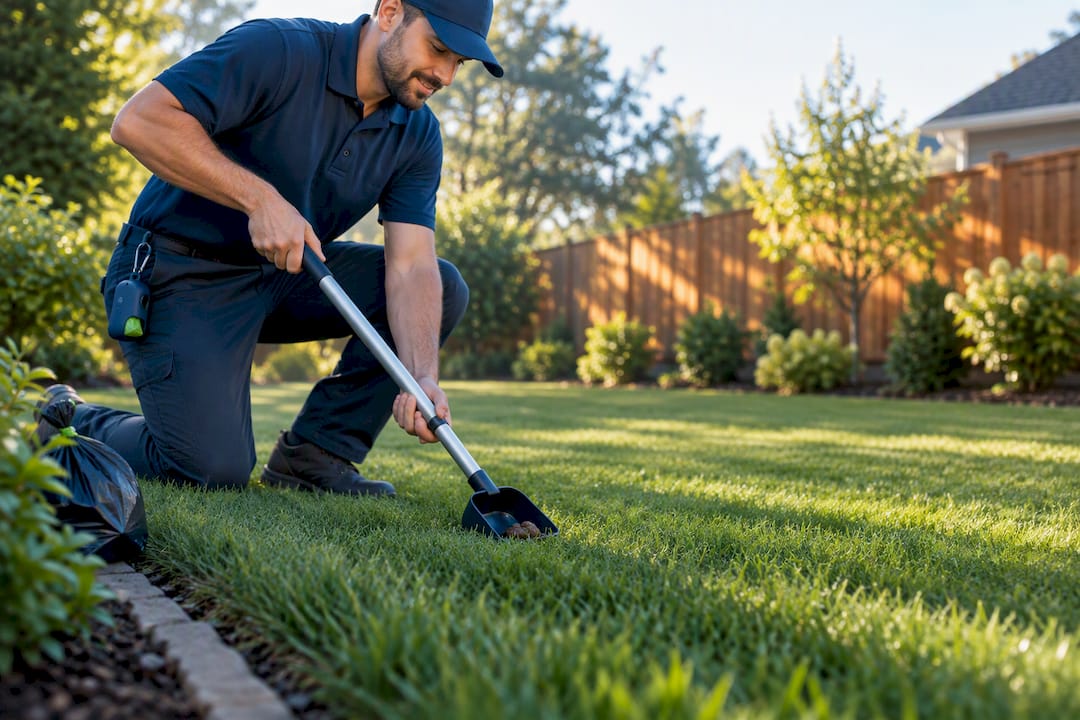
A standard visit follows the same basic routine regardless of yard size: a technician walks the property, scoops waste from the lawn and any high-traffic corners dogs favor, bags it, and either hauls it off-site or leaves it sealed in your trash bin depending on the plan. Fences, dog runs, and mulch beds get checked too, since waste tends to hide along edges where dogs sniff around.
Service types generally fall into three buckets:
- One-time cleanups for move-ins, home sales, or yards that got away from you over a season.
- Recurring visits on a bi-weekly, weekly, or twice-weekly cadence, matched to how many dogs use the yard.
- Event or emergency cleanups, like prepping a backyard before a party or dealing with an illness-related mess (parvo cleanups fall into this category and usually carry a separate fee, since they involve specialized biohazard procedures).
Before booking, confirm three operational details: whether bags and tools are included in the price, how waste gets disposed of, and whether the company carries insurance in case something on your property gets damaged during a visit. Reputable providers answer all three without hesitation, and how the process works should be spelled out clearly on their site.
How Often Should You Schedule Pickup?
Frequency comes down to three factors: how many dogs use the yard, how much your kids or pets actually spend time on the grass, and how much rain your region gets. Indianapolis winters and Orlando’s summer downpours both accelerate runoff, which is exactly the pathway the EPA flags when it lists pet waste as a contributor to nutrient and bacteria pollution in local waterways.
Here’s a simple way to match frequency to your situation:
- One dog, moderate yard use — bi-weekly service usually keeps things manageable without letting waste pile up between visits.
- Two or more dogs, or kids who play on the lawn daily — weekly service cuts down the odds of anyone stepping in something before it gets cleared.
- High-traffic yards, small lots, or multiple dogs — twice-weekly visits prevent the kind of buildup that turns a five-minute scoop into a thirty-minute slog.
- One-off situations — move-outs, home showings, or seasonal catch-up cleanups where a single visit resets the yard.
Pro Tip: If you’re on the fence between bi-weekly and weekly, watch your yard for two weeks. If waste is still visible in spots after rain, bump up the frequency before parasite eggs or bacteria get a chance to settle into the soil.
What to Ask Before You Book a Service
A few pointed questions upfront save you from surprise fees and vague promises later. Ask exactly how waste gets disposed of, whether bags and tools are included in the quoted price, whether the company carries liability insurance, and what happens if a scheduled visit gets rained out or missed.
Watch for these red flags during that conversation:
- Vague answers about disposal, like “we take care of it” with no specifics on haul-away versus your own trash bin.
- No mention of insurance when asked directly.
- Pricing that changes once you describe your yard size or dog count.
- Promises to “sanitize” or “sterilize” your lawn, which no legitimate provider can guarantee.
Pro Tip: A quick script works well here: “Do you haul waste off-site or leave it in my trash, is that included in the price, and are you insured?” A provider who answers all three without stumbling is usually one worth booking.
Run through a short checklist before you commit: confirmed disposal method, transparent per-visit or monthly pricing, proof of insurance, and a clear cancellation or reschedule policy. Providers vary quite a bit on the haul-away question specifically, so nail that detail down before the first visit rather than after.
What Do EPA and CDC Guidelines Say About Dog Waste?
Regular pickup matters for reasons that go beyond curb appeal, including managing allergens like pet dander as detailed in air duct cleaning and pet dander. The EPA identifies pet waste as a real contributor to nutrient and bacteria pollution in urban waterways, since rain washes uncollected waste into storm drains that often flow straight into local streams without treatment.
Dog waste can carry germs that make both people and animals sick, and the CDC advises picking it up from yards, public or private, and washing hands afterward as a basic hygiene step.
That guidance comes from the CDC’s dog and pet health resources, and it draws a distinction worth understanding: picking up waste reduces contamination, but it does not sterilize the ground underneath it. The CDC’s Giardia guidance is blunt about this. Removing feces by bagging and disposing of it cuts exposure risk significantly, but eliminating Giardia from soil and grass entirely is impractical, and harsh disinfectants have no business being sprayed on a lawn.
Some parasite eggs and worm larvae can survive in soil for weeks or even years, which is the strongest argument for frequent removal over occasional deep cleans. In practice, that means sealing waste in a bag for the trash, using professional haul-away where it’s offered, or flushing where your municipality allows it. Hosing waste toward a storm drain is never the answer, no matter how tempting it looks on a hot afternoon.

How Much Does Dog Poop Removal Cost?
Pricing tracks a handful of predictable variables: how many dogs you own, how big your yard is, how often you schedule visits, and how much waste has already piled up by the time someone shows up with a scoop. Distance from a provider’s service zone and one-off requests like post-storm or move-out cleanups can also push the price up.
Most companies structure pricing one of two ways:
- One-time flat fee for a single visit, often priced higher per visit since first cleanups take longer when waste has accumulated.
- Recurring per-visit pricing, where more frequent plans typically cost less per visit than sporadic one-off bookings, since technicians aren’t clearing weeks of backlog every time.
When you’re comparing quotes across providers, look past the headline number and check what’s actually included. A cheaper quote that excludes haul-away or charges extra for gate access isn’t actually cheaper once you add it all up.
What Homeowners Get Wrong About Dog Waste Removal
The question we hear most often is some version of “will this actually keep my yard clean between visits?” The honest answer is yes, as long as the schedule matches how the yard gets used. The biggest mistake homeowners make isn’t picking the wrong plan. It’s waiting too long to start one, letting waste accumulate until the first cleanup becomes a much bigger job than it needed to be.
The second mistake is disposal shortcuts. Tossing waste into a flower bed or hosing it toward the curb doesn’t solve anything. It just relocates the problem. Recurring plans consistently deliver more value than emergency one-offs, mainly because steady visits prevent the kind of backlog that turns a quick scoop into an hour of labor.
— William
Book Dog Waste Removal With The Poopinator
If you’ve read this far, you already know what separates a real cleanup service from someone with a scoop and a van: clear disposal practices, transparent pricing, and a schedule that actually matches your yard. That is the goal of services designed to meet diverse household needs rather than one-size-fits-all routes.
The lineup keeps things simple. Twice Weekly Pet Waste Removal is offered at a lower cost per visit suitable for high-traffic yards or multi-dog households. Weekly Pet Waste Removal is priced moderately for typical single-dog homes. Bi-Weekly Pet Waste Removal is available for infrequent yard use at a relatively higher per-visit rate. One-Time Pet Waste Removal is priced substantially higher as a flat fee for move-outs, catch-up cleanups, or special events. Full details on what each visit covers are on the plans and pricing page.
Your first visit typically includes a full walk of the yard to clear existing backlog, followed by your chosen schedule going forward. Landlords managing rental properties in Indianapolis or homeowners in Orlando dealing with summer rain runoff both fall squarely into what these plans are designed for. If you’re in the Orlando area specifically, the local Orlando cleanup page has service area details and booking access. Pick a plan, confirm your yard size, and get a visit on the calendar this week.
FAQ
How Often Should I Schedule Dog Poop Pickup?
It depends on dog count and yard use: bi-weekly works for one dog with moderate activity, weekly suits two or more dogs or kids who play outside daily, and twice-weekly fits small or heavily used yards. Providers like The Poopinator offer all three as standing plans so you can adjust as your situation changes.
Does Professional Pickup Disinfect My Yard?
No. Picking up waste reduces contamination significantly, but it does not sterilize soil or eliminate every pathogen, a limit the CDC’s Giardia guidance states directly. Any provider promising full sanitization is overselling what removal service can actually do.
Can Landlords Require Tenants to Use a Waste Removal Service?
Many landlords include pet waste cleanup in lease terms or hire a service directly to protect the property, especially for rentals with shared yards. It’s a practical way to avoid disputes over yard condition at move-out and keep runoff and odor issues from becoming a bigger maintenance headache.
What Does One-Time Pet Waste Removal Cost?
The Poopinator’s One-Time Pet Waste Removal is a flat $100 per visit, which covers move-outs, seasonal catch-up cleanups, or pre-event yard resets, detailed on the service pricing page.
Is It Safe to Hose Dog Waste Into the Storm Drain?
No. The EPA specifically identifies this practice as a source of nutrient and bacteria pollution in local waterways, since storm drains typically carry runoff straight to streams without treatment. Bagging waste for the trash or using professional haul-away are both safer, EPA-consistent options.