
TL;DR:
- A yard deodorizing service uses bio-enzymatic formulas to permanently break down pet waste odors at their source. These treatments are safe for pets, plants, and outdoor furniture and require proper application techniques for effectiveness. Regular treatments every 2 to 4 weeks prevent odors from returning and focus on identified hot zones for better results.
A yard deodorizing service is a professional treatment that removes pet waste odors by applying bio-enzymatic formulas that break down odor-causing compounds at the source rather than masking them. This is not the same as spraying a fragrance over your lawn. The industry term is “enzymatic odor remediation,” and it works on a biological level. Pet owners dealing with persistent urine and fecal smells need this distinction, because a scented spray will fail within hours while an enzymatic treatment delivers lasting yard smell removal. The Poopinator offers this type of professional service, combining waste removal with targeted deodorizing for yards that actually stay fresh.
What is a yard deodorizing service and how does it differ from sprays?
A yard deodorizing service applies bio-enzymatic agents that consume the organic proteins and uric acid causing odors, rather than covering them with fragrance. That distinction matters because uric acid crystals bond to soil particles and reactivate every time moisture hits them. A scented spray sits on top of the surface and evaporates within hours. An enzymatic formula digests the odor source permanently.
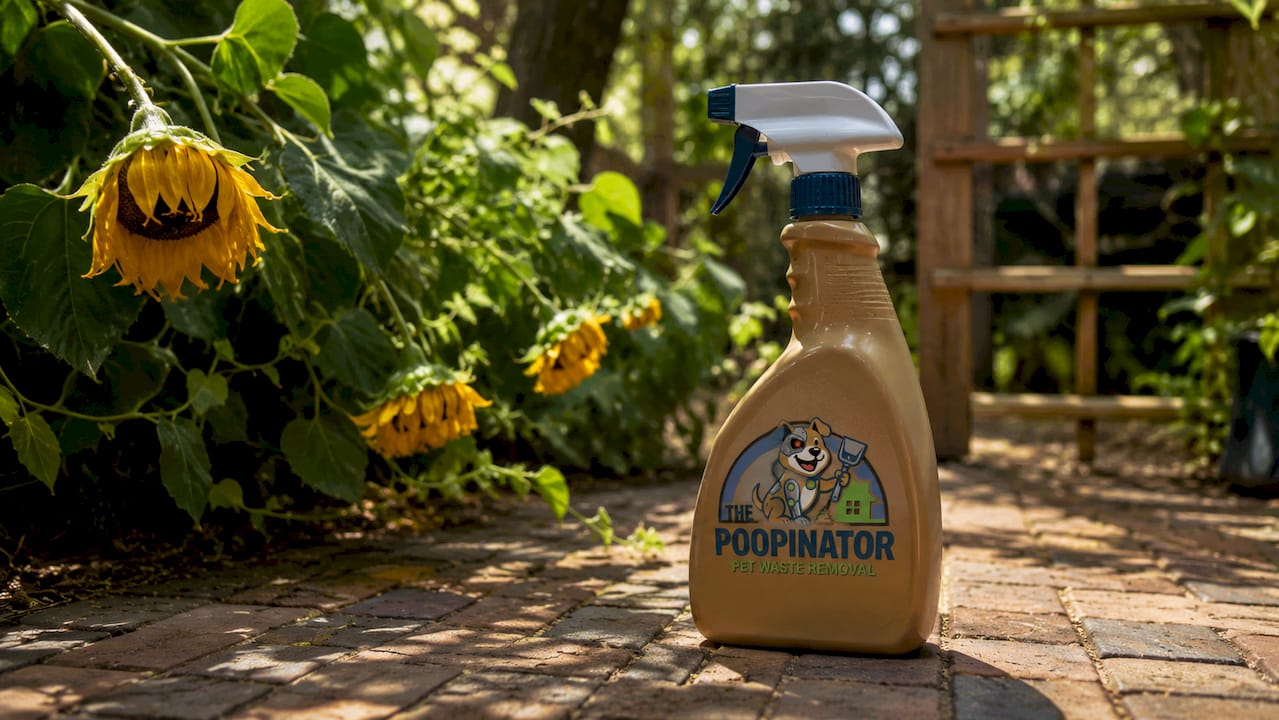
Bio-enzymatic products are safe for turf, plants, pets, and outdoor furniture when used as directed. Non-toxic, vet-approved formulations make them suitable for yards where dogs and children play daily. You do not need to keep pets off the lawn for days after treatment.
Professional yard deodorizing services typically apply these formulas using hose-end sprayers, which distribute the solution evenly across large areas. The technician identifies odor zones first, then applies the product at the correct dilution. This targeted approach is what separates a professional service from a generic store-bought spray.
How does enzymatic odor elimination actually work?
The science behind yard odor elimination is straightforward once you understand what creates the smell. Dog urine contains urea, creatinine, and uric acid. Bacteria break these compounds down and release ammonia and mercaptans, which are the gases you actually smell. Enzymatic cleaners introduce beneficial bacteria and enzymes that accelerate this breakdown, consuming the compounds before they off-gas.
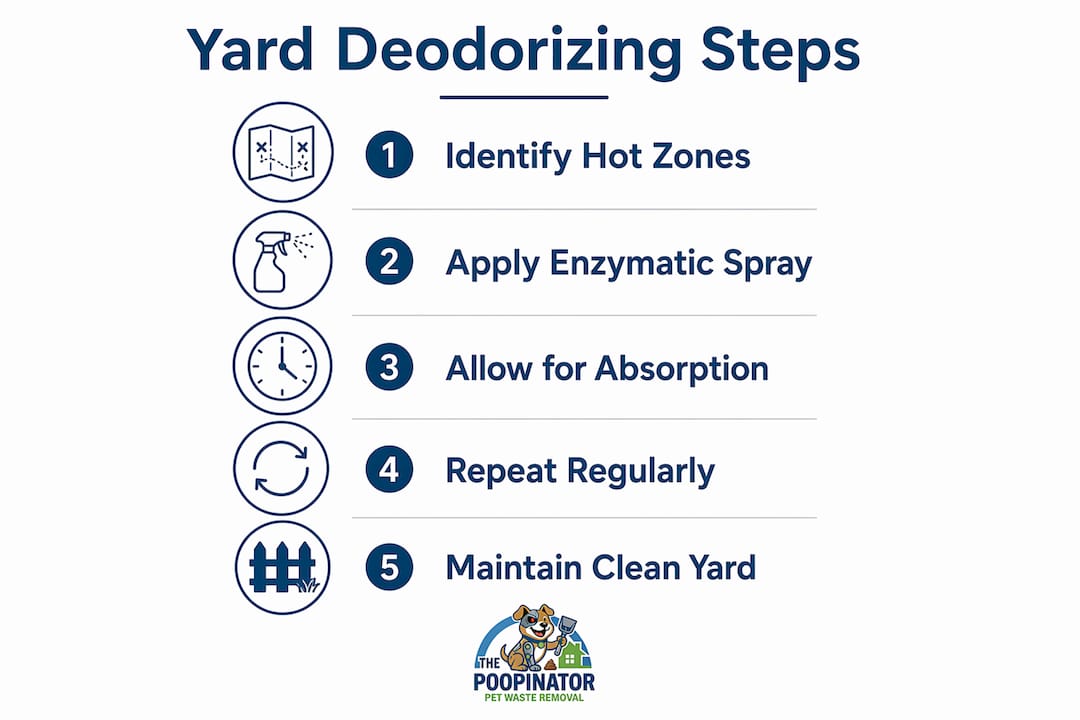
The key application detail is dwell time. Enzymatic cleaners require a minimum 10–20 minute dwell time without rinsing to work effectively. Rinsing too soon stops the enzymatic reaction before the uric acid is fully digested. Applying during the cooler parts of the day, such as early morning or late afternoon, prevents the solution from drying out too quickly and gives the enzymes time to work.
Here is what a professional application process looks like:
- Waste removal first. Solid waste must be cleared before any deodorizing treatment. Enzymes cannot penetrate through physical waste.
- Pre-wet the area. Lightly moistening the soil helps the enzymatic solution absorb deeper into the ground.
- Apply with a hose-end sprayer. This delivers even coverage across grass, gravel, and soil.
- Allow 10–20 minutes of dwell time. Do not rinse. Let the enzymes work.
- Repeat in high-traffic zones. Fence lines and dog runs may need a second pass.
Pro Tip: Apply enzymatic treatments in the early morning when temperatures are cooler and the soil is slightly damp from overnight humidity. This extends dwell time and improves absorption significantly.
Where are the odor hot zones in your yard?
Not all yard areas contribute equally to odor. Shaded corners, fence lines, and compacted or gravel areas accumulate uric acid far faster than open, sunny lawn sections. Understanding why this happens helps you treat smarter, not harder.
Sunlight breaks down organic compounds through UV exposure. Open lawn areas dry out quickly, which slows bacterial activity and reduces odor intensity. Shaded zones stay moist longer, giving bacteria more time to produce odor-causing gases. Compacted soil and gravel trap uric acid crystals in pockets where water cannot flush them out naturally.
Proper odor mapping accounts for roughly half of successful deodorizing. Skipping this step wastes product and leaves the worst spots untreated. A professional service identifies these zones before applying anything.
The most common odor hot zones in residential yards include:
- Fence bases and corners. Dogs mark these repeatedly, and the wood or concrete holds uric acid.
- Gravel or mulch dog runs. Porous materials absorb urine deeply and resist natural flushing.
- Shaded areas under decks or trees. Low airflow and moisture retention create ideal conditions for odor buildup.
- Soil-dense patches near gates. High-traffic entry points see concentrated waste deposits.
- Artificial turf sections. Synthetic fibers trap urine at the backing layer where natural breakdown cannot occur.
Understanding your yard’s specific hot zones is the foundation of effective outdoor odor solutions. Treating the whole lawn evenly when 80% of the smell comes from three specific spots is inefficient and expensive.
What is the recommended treatment schedule?
Consistency is what separates a yard that smells fresh from one that cycles between bad and worse. Enzymatic treatments applied every 2–4 weeks during warm months prevent odor rebound and protect lawn health. Warm weather accelerates bacterial activity, which means odors build faster and require more frequent attention.
A practical seasonal approach looks like this:
- Spring deep clean. After winter, uric acid that froze into the soil thaws and releases concentrated odors. A thorough enzymatic treatment of all hot zones in march or april sets a clean baseline.
- Monthly warm-season maintenance. From may through september, treat high-traffic zones every 2–4 weeks. Focus on fence lines, dog runs, and shaded corners.
- Fall reset. Before temperatures drop, apply a final treatment to reduce the organic load that will freeze into the soil over winter.
- Winter spot treatment. On warmer days above 50°F, spot-treat active areas. Enzymatic bacteria become less active in cold temperatures, so full treatments are less effective below this threshold.
Watering urine spots within 8 hours reduces nitrogen concentration and minimizes both odor intensity and grass damage. This simple habit between professional treatments makes a measurable difference in lawn health. You can read more about how pet waste damages grass and what to do about it.
Pro Tip: Keep a simple yard map and mark where your dog relieves itself most often. After two weeks, you will have a clear picture of your hot zones and can focus treatments precisely instead of spraying the entire lawn.
Common mistakes to avoid include applying enzymatic cleaners in direct midday sun, rinsing too soon after application, and skipping waste removal before treatment. Each of these errors cuts the effectiveness of even the best product.
What natural methods complement professional deodorizing?
Natural remedies work as a supplement between professional treatments. Baking soda, vinegar, and garden lime can neutralize odors temporarily, but they do not digest uric acid the way enzymatic formulas do. Think of them as maintenance tools, not replacements.
Here is how each natural option performs:
- Baking soda. Sprinkle on dry soil to absorb surface odors. Effective for 24–48 hours. Does not penetrate compacted soil.
- White vinegar diluted in water. Neutralizes ammonia odors on contact. Avoid using on grass directly, as the acidity can damage turf.
- Garden lime. Raises soil pH and reduces bacterial activity. Works well in gravel or dirt areas. Apply sparingly and keep pets off treated areas until dry.
- Odor-absorbing herbs. Planting lavender, rosemary, or mint near dog runs improves ambient air quality and deters some pests.
- Regular waste removal. Removing solid waste at least every 48 hours cuts the organic load that feeds odor-producing bacteria. This is the single most effective daily habit for yard smell removal.
Natural methods help, but they do not replace enzymatic treatment for persistent or concentrated odors. A fence line that has absorbed two years of urine will not respond to baking soda. That zone needs enzymatic remediation to break the cycle.
Key Takeaways
A yard deodorizing service works because bio-enzymatic cleaners digest uric acid and organic waste at the source, while targeted odor mapping and a consistent 2–4 week treatment schedule prevent odor from returning.
| Point | Details |
|---|---|
| Enzymatic vs. fragrance | Bio-enzymatic cleaners permanently digest odor sources; fragrances only mask smells for hours. |
| Dwell time is critical | Allow 10–20 minutes without rinsing for enzymes to fully break down uric acid. |
| Target hot zones first | Fence lines, shaded corners, and gravel areas hold the most odor and need focused treatment. |
| Treat every 2–4 weeks | Warm-month consistency prevents odor rebound and protects lawn health. |
| Natural methods supplement | Baking soda and lime help between treatments but cannot replace enzymatic remediation for persistent smells. |
What I have learned from watching yards get treated the wrong way
After years of observing how pet owners approach yard odor, the most common mistake is treating the symptom instead of the source. Homeowners buy a scented outdoor spray, apply it broadly across the lawn, and feel satisfied for about a day. Then the smell comes back, often stronger, because moisture reactivates the uric acid crystals that were never broken down.
The second mistake is skipping the mapping step. Spraying the entire yard when the real problem is a 6-foot stretch of fence line wastes product and time. I have seen yards where 90% of the odor came from one shaded corner that a dog used exclusively for two years. One targeted enzymatic treatment on that zone did more than months of broad spraying.
The third mistake is inconsistency. Pet owners treat once after the smell becomes unbearable, then stop. Enzymatic treatment works best as a maintenance system, not a crisis response. The common cleanup mistakes that worsen yard odors almost always trace back to irregular treatment schedules.
The science behind enzymatic cleaners is not complicated, but it does require patience. You have to let the product work. Rinsing after five minutes because you are not sure it is doing anything is the most reliable way to guarantee it does nothing. Trust the dwell time, treat the right zones, and repeat on schedule. That is the entire system.
— William
How The Poopinator keeps your yard consistently fresh
Yard odor control works best when waste removal and deodorizing happen together on a regular schedule. The Poopinator combines professional pet waste removal with targeted outdoor odor solutions, so you are not just cleaning up after the fact.
The Poopinator brings over 20 years of combined experience and hundreds of five-star reviews to every yard visit. Service plans include bi-weekly and twice-weekly options, built for busy pet owners who want consistent results without the effort. Whether you need a one-time spring deep clean or ongoing maintenance, The Poopinator handles both the waste and the odor. Check out the top pet waste removal providers to see how professional service compares, or go straight to reliable yard cleanup and get your yard back.
FAQ
What does a yard deodorizing service actually do?
A yard deodorizing service applies bio-enzymatic cleaners that digest uric acid and organic waste compounds in the soil, permanently eliminating odor rather than masking it with fragrance.
How often should I deodorize my yard if I have dogs?
Enzymatic treatments every 2–4 weeks during warm months prevent odor rebound. High-traffic zones like fence lines and dog runs may need attention more frequently.
Are yard deodorizing products safe for pets and grass?
Bio-enzymatic formulas are non-toxic and vet-approved for use on turf, plants, and outdoor surfaces where pets spend time. No extended quarantine period is required after application.
Why does my yard still smell after I spray it?
Most store-bought sprays use fragrance to mask odors rather than enzymatic action to remove them. The smell returns because the uric acid crystals in the soil were never broken down. Switching to an enzymatic formula and allowing the correct dwell time resolves this.
Can I deodorize my yard without professional help?
You can apply enzymatic cleaners yourself using a hose-end sprayer, but professional services add value through odor mapping, correct dilution, and consistent scheduling. Skipping the hot zone identification step is the most common reason DIY treatments underperform.
Recommended
- Home – The Poopinator – Professional Pooper Scooper and Pet Waste Removal Service
- Weekly Yard Upkeep with Pets: Your Practical Guide
- Why Yard Cleanup Reduces Pet Stress: A 2026 Guide
- Dog Waste Problems in Westfield, IN? Here’s the Pooper Scooper Service That Actually Works – The Poopinator – Professional Pooper Scooper and Pet Waste Removal Service